
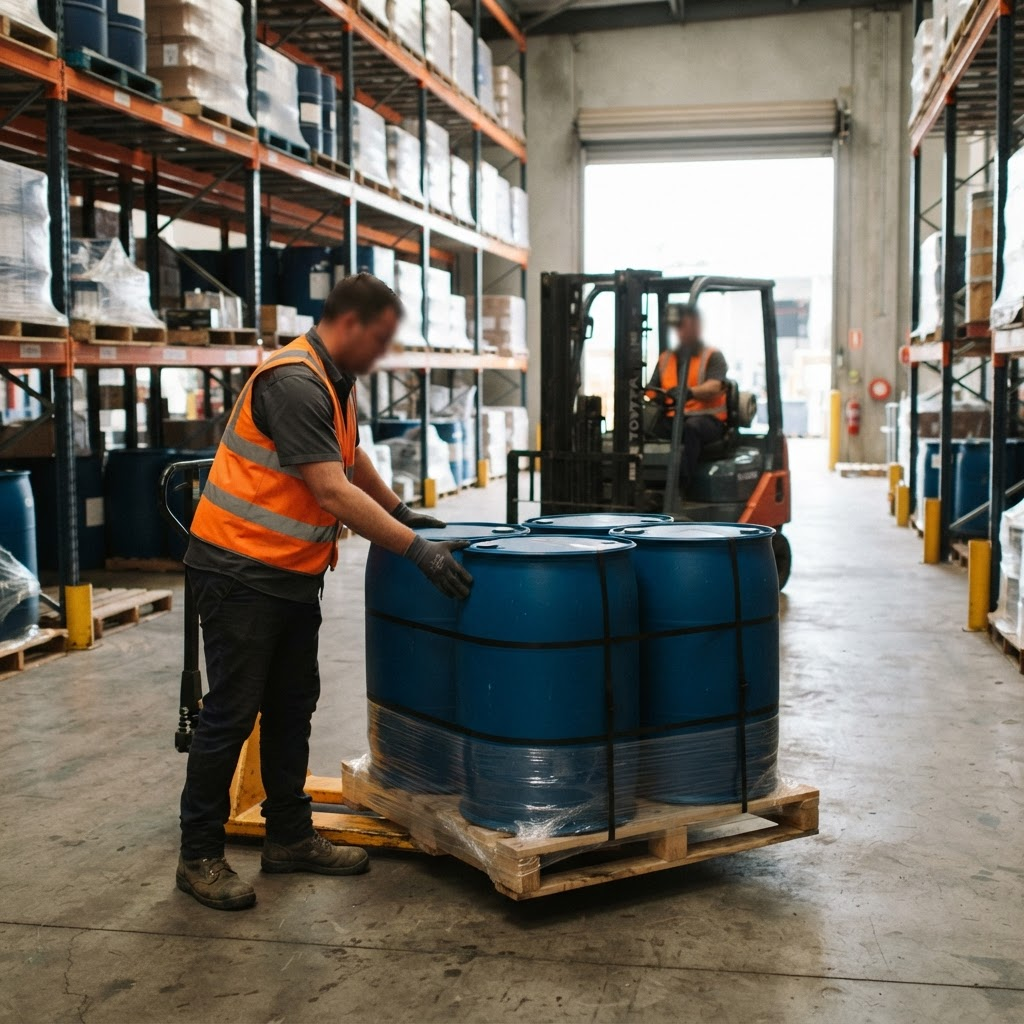
Warehouse and depot workers across NSW handle dangerous goods every shift — receiving placarded deliveries, decanting, storing class-labelled stock, loading trucks. The Store and Handle Dangerous Goods certificate (TLID0021) is the qualification that matches that job. This guide covers who needs it, what it costs, how long it takes, and how it differs from the drivers’ dangerous goods licence.
- The Store and Handle Dangerous Goods Course is the Statement of Attainment for the nationally accredited unit TLID0021
- $294 at Kells Safety Centre, delivered online and self-paced, with virtual seminar delivery available for groups
- Designed for warehouse, depot and loading staff who receive, store and handle dangerous goods but do not drive vehicles transporting ‘bulk’ dangerous goods
- Drivers of bulk dangerous goods need the separate drivers’ licence course (TLILIC0001)
Who Needs the Store and Handle Certificate?
The certificate suits workers whose role involves dangerous goods that are NOT being driven in bulk: warehouse staff, storepersons, forklift operators handling packaged DG, depot hands, loading dock teams and supervisors who sign off on storage areas. If your team’s obligations are covered by our store and handle obligations guide, this is the qualification that trains people to meet them.
It is not a licence. Under NSW law, storage and handling of dangerous goods in workplaces sits under work health and safety law, regulated by Safe Work NSW — a different regulatory stream from road transport, which the NSW EPA administers under the Dangerous Goods (Road and Rail Transport) Act 2008. Drivers of bulk dangerous goods need the EPA dangerous goods driver licence; warehouse staff need competence, trained to a nationally recognised unit.
What TLID0021 Covers
The unit trains the storage and handling side of dangerous goods management:
- Identifying dangerous goods in the workplace and reading class labels and safety data sheet information
- Storage requirements, including segregation of incompatible goods
- Handling procedures that prevent damage, leaks and exposure
- Responding to spills and incidents in a storage environment
- Documentation and record-keeping duties that attach to stored dangerous goods
The course runs online and self-paced at Kells Safety Centre, so staff can train around shift rosters, and virtual seminar delivery is available for groups — a practical option for fleet and warehouse teams that train together.
Course, Cost and Duration at a Glance
| Detail | Store and Handle Dangerous Goods (TLID0021) |
|---|---|
| Fee | $294 |
| Delivery | Online, self-paced; virtual seminar for groups |
| Unit | TLID0021 Store and Handle Dangerous Goods |
| Outcome | Nationally recognised Statement of Attainment |
| Best for | Warehouse, depot and loading staff |
| Not to be confused with | DG Licence (TLILIC0001) — for bulk drivers |
Training is delivered from Wetherill Park, with online delivery removing the distance barrier for teams across NSW — including Wollongong and South Coast operators who cannot always travel for face-to-face days.
How It Compares With the Other Dangerous Goods Courses
Choosing the right dangerous goods course in NSW comes down to what the person does with the goods:
- Drivers carrying bulk dangerous goods (receptacles over 500 litres or 500kg) — the Dangerous Goods Licence Course (TLILIC0001), two days, face-to-face, $618 all-inclusive.
- Packaged-goods drivers who don’t need the licence, and general handlers — Dangerous Goods Awareness training, online, $196.
- Warehouse, depot and storage staff — the Store and Handle certificate (TLID0021), online, $294.
- Drivers under fatigue management frameworks — separate fatigue courses, listed on the training courses page.
Many businesses pair it: drivers complete TLILIC0001 while warehouse teams complete Store and Handle, so every person who touches the goods is trained for their specific duties.
Does the Certificate Expire?
The Statement of Attainment itself does not expire — it evidences completion of a nationally recognised unit with Safe Work Australia-aligned training standards. Individual employers set their own refresher policies, and many NSW businesses schedule periodic refresher training as good WHS practice. Kells Safety Centre (RTO 91528) can advise on refresher options for teams.
How to Enrol
Enrolment runs through the Store and Handle Dangerous Goods course page: check the current fee and delivery details, enrol online, and start the self-paced modules. For group bookings and virtual seminar delivery, contact the team directly to arrange dates that fit shift rosters.
Key Takeaways:
- The certificate is the Statement of Attainment for TLID0021, a nationally recognised unit.
- $294, online and self-paced, with virtual seminar delivery for groups.
- Designed for warehouse, depot and loading staff — not bulk drivers.
- Storage/handling sits under WHS law (Safe Work NSW); road transport sits under the EPA regime.
- The Statement of Attainment does not expire; employers set refresher policies.
Frequently Asked Questions
What is the Store and Handle Dangerous Goods certificate?
It is the Statement of Attainment issued on completion of TLID0021, a nationally recognised training unit covering the identification, storage, handling and spill response duties that attach to dangerous goods in warehouse and depot settings.
Who needs the store and handle certificate in NSW?
Warehouse staff, storepersons, forklift operators, loading dock teams, depot hands and supervisors who receive, store or handle packaged dangerous goods. It trains the storage-side duties that WHS law requires of PCBUs and workers.
How much does the Store and Handle Dangerous Goods course cost?
$294 at Kells Safety Centre, delivered online and self-paced. Virtual seminar delivery is available for groups — contact the team to arrange group bookings.
How long does the store and handle course take?
It is self-paced online training, so completion time depends on the participant. There is no fixed classroom schedule, which is why it suits teams working rotating shifts.
Is the Store and Handle course the same as a dangerous goods licence?
No. The dangerous goods driver licence (TLILIC0001) is for drivers transporting bulk dangerous goods in receptacles over 500 litres or 500kg. Store and Handle (TLID0021) is for the storage and handling side — warehouse and depot work.
Can I do the store and handle course online in NSW?
Yes. Delivery at Kells Safety Centre is online and self-paced, with virtual seminar delivery available for groups.
Does the store and handle certificate expire?
The Statement of Attainment does not expire. Employers set their own refresher policies, and many businesses schedule periodic refresher training as part of their WHS program.
Which course should my warehouse team do instead of the drivers' licence?
Store and Handle Dangerous Goods (TLID0021) for storage and handling duties, or Dangerous Goods Awareness for general packaged-goods handling. Drivers carrying bulk goods need the DG licence course.
Do forklift operators need dangerous goods training in NSW?
If a forklift operator moves packaged dangerous goods as part of their role, WHS law requires the PCBU to ensure they are trained and competent for that task. The Store and Handle certificate (TLID0021) is the structured way to evidence that competence for storage and handling duties. Confirm your site's specific requirements with Safe Work NSW.
Is Store and Handle training required by law in NSW?
There is no single licence requirement for storing and handling packaged dangerous goods the way there is for transporting bulk loads. Instead, WHS law requires PCBUs to ensure workers are trained and competent for the tasks they perform — and TLID0021 is the nationally recognised unit that evidences that training for storage and handling duties.
What do I receive when I complete the Store and Handle Dangerous Goods course?
A nationally recognised Statement of Attainment for TLID0021, issued through Kells Safety Centre (RTO 91528). Keep it with your training records — employers and site auditors may ask to see evidence of dangerous goods training during site inductions or WHS audits.