
In NSW, a dangerous goods vehicle licence is required by transport operators and vehicle owners whenever a road vehicle carries bulk dangerous goods in one or more receptacles exceeding 500 litres or 500 kilograms capacity. Issued by the NSW EPA, this licence ensures transport vehicles comply with the Dangerous Goods (Road and Rail Transport) Act 2008, Dangerous Goods (Road and Rail Transport) Regulation 2022, and ADG Code 7.9. Transport businesses apply for a single operator licence covering all specified carrying vehicles through EPA eConnect. While a dangerous goods driver licence lasts for 5 years, a vehicle licence is valid for 1 year and must be renewed annually, alongside maintaining at least $5 million in statutory vehicle insurance before moving bulk loads.
What Is a Dangerous Goods Vehicle Licence in NSW?
Most heavy vehicle drivers are familiar with the 5-year dangerous goods driver licence. However, NSW transport law includes a second essential credential: the dangerous goods vehicle licence.
The dangerous goods vehicle licence authorises transport organisations to carry bulk dangerous goods on specific road units. Regulated under the *Dangerous Goods (Road and Rail Transport) Act 2008* and *Dangerous Goods (Road and Rail Transport) Regulation 2022*, it is administered by the NSW Environment Protection Authority (EPA).
A vital statutory rule connects driver and vehicle credentials: the vehicle licence and driver licence requirements are tied together—either both are required, or neither is required. Furthermore, when carrying bulk dangerous goods, both licences must be obtained at the same time before entering public roads. Understanding this dual requirement prevents roadside groundings, regulatory fines, and insurance invalidations across NSW.
When Does a Vehicle Need a Dangerous Goods Licence?
Under NSW law and ADG Code 7.9, vehicle licensing depends on individual container capacity.
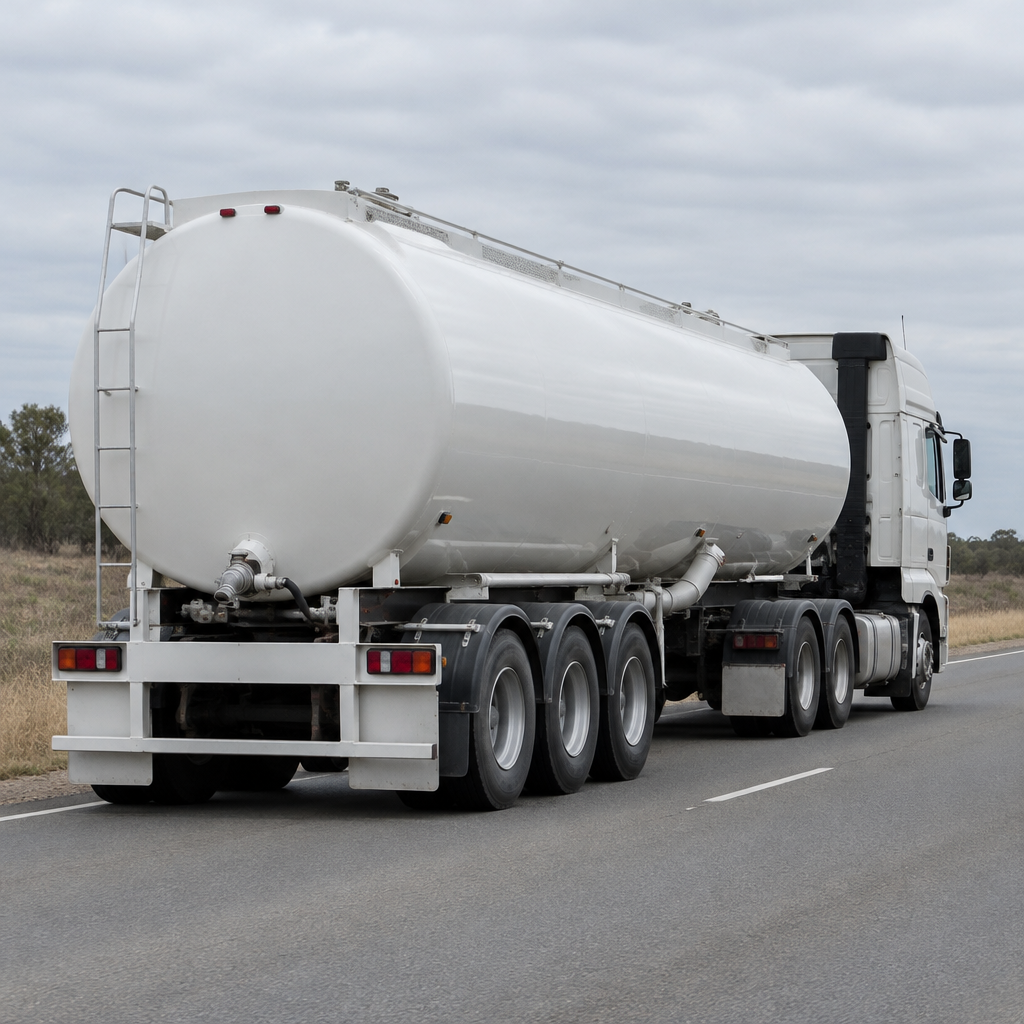
A road vehicle must be licensed to transport dangerous goods if it is carrying one or more receptacles containing any dangerous goods with a capacity of more than 500 litres or 500 kilograms.
This capacity threshold applies to bulk receptacles like tankers and demountable tanks. Receptacle capacity dictates licensing rules:
- Bulk Transport Trigger: Receptacles with individual capacity exceeding 500L or 500kg trigger the requirement for both a dangerous goods vehicle licence and a licensed driver.
- Packaged Goods Distinction: Packaged dangerous goods in smaller drums, boxes, or gas cylinders (below 500L/kg capacity) do not trigger vehicle or driver licensing—even if the total load exceeds placarding thresholds. Packaged loads above placard quantity require placards and safety gear, but no vehicle or driver licence.
- IBC Exemption: Transporting up to 3,000 litres in Intermediate Bulk Containers (IBCs) is exempt from vehicle licensing, provided the IBCs are not filled or emptied on the vehicle.
Transport operators checking what loads require a dangerous goods licence in NSW must evaluate receptacle capacity rather than gross payload weight.
Who Issues the Vehicle Licence and Which Vehicles Need It?
Dangerous goods vehicle licences in NSW are administered directly by the NSW EPA dangerous goods licences division (or an interstate Competent Authority).
Only vehicles actually carrying dangerous goods require licensing:
- Licensable Carrying Units: Rigid trucks, semi-trailers, B-double trailers, and road train trailers carrying bulk receptacles (>500L/kg) must be licensed.
- Exempt Pulling Units: Prime movers and pulling vehicles that carry no dangerous goods themselves do NOT require licensing. The licence attaches specifically to the load-carrying unit.
One licence is issued per transport organisation, listing all specified carrying vehicles in that fleet.
How Long Does a DG Vehicle Licence Last vs a Driver Licence?
A key operational contrast lies in the validity period of each credential:
- Dangerous Goods Vehicle Licence: Valid for ONE YEAR (1 year).
- Dangerous Goods Driver Licence: Valid for FIVE YEARS (5 years).
Because a vehicle licence expires every 12 months while a driver licence lasts 5 years, fleet managers must track annual vehicle renewals. Allowing a trailer licence to expire breaches dangerous goods law, even if the driver holds a valid 5-year licence.
When checking how long a dangerous goods licence is valid in NSW, operators must manage driver credentials and vehicle authorizations on separate schedules, checking the EPA website for current renewal fees.
What Transport Operators and Fleet Managers Must Do
Under NSW transport legislation and ADG Code Edition 7.9, transport operators hold primary responsibility for vehicle licensing:
- Apply for Fleet Authorisation: Submit a vehicle licence application to the NSW EPA via EPA eConnect, listing all carrying vehicles before dispatching bulk loads. Check the EPA website for current fees.
- Verify Driver Qualifications: Ensure drivers operating licensed vehicles hold a valid dangerous goods driver licence.
- Vehicle Marking and Maintenance: Ensure licensed carrying units display Emergency Information Panels (EIPs), class placards, and carry required emergency gear.
- Annual Renewal Management: Audit fleet licences annually, updating vehicle additions or disposals through eConnect.
Both operator vehicle licences and driver licences must be active before the first bulk consignment departs.
Insurance Requirements for Carrying Placard Loads
Transporting dangerous goods in bulk or placard quantities introduces statutory insurance obligations. Under NSW regulations, vehicles carrying a placard load require statutory insurance cover of not less than $5 million.
This policy must cover CTP, comprehensive vehicle damage, and public liability/environmental cleanup. Operating a placard load without $5 million insurance exposes businesses to severe penalties and financial liability.
How Driver Training Fits into Transport Compliance
While the transport organisation holds the vehicle licence, the driver must hold a dangerous goods driver licence. Obtaining a driver licence requires competency-based training delivered by an ASQA-accredited Registered Training Organisation (RTO).
To qualify in NSW, drivers must complete unit TLILIC0001 (Licence to transport dangerous goods by road). Kells Safety Centre (RTO 91528) delivers this ASQA-accredited course:
- Course Fee: $618 all-inclusive (includes EPA licence processing support).
- Duration & Delivery: Two (2) days, face-to-face only (no online component permitted).
- Locations: Wetherill Park AND Wollongong.
EPA Driver Licence Application Process
After completing TLILIC0001 training and medical assessment, the driver licence application must be lodged online through EPA eConnect within 6 months. Requirements include:
- Current Australian driver licence,
- Application fee (check the EPA website for current fees),
- Service NSW stamped driver history record (issued within last 6 months),
- Statement of Attainment for TLILIC0001 from an ASQA-accredited RTO,
- NSW Fitness to Drive medical assessment or EPA Medical Certificate (issued within last 6 months),
- One passport photo.
*Note:* Drivers disqualified, cancelled, or suspended in the last 5 years must contact the EPA before training.
Drivers researching how to get a dangerous goods licence in NSW or checking dangerous goods driver licence requirements in NSW can enrol directly with Kells Safety Centre.
- Dual Licensing Rule: Vehicle and driver licence requirements are tied together—either both are required, or neither, and both must be obtained at the same time.
- Bulk Capacity Trigger: Receptacles exceeding 500L capacity or 500kg net mass trigger vehicle licensing.
- Carrying Units Only: Trailers and rigid cargo bodies require licensing; prime movers pulling trailers do not.
- 1-Year vs 5-Year Validity: Vehicle licences are valid for 1 year; driver licences are valid for 5 years.
- Issuing Body: The NSW EPA administers both vehicle and driver licences via EPA eConnect.
- $5 Million Insurance: Vehicles carrying placard loads require at least $5 million statutory insurance cover.
- Driver Training: Drivers must complete TLILIC0001 with an ASQA-accredited RTO like Kells Safety Centre ($618, 2 days face-to-face in Wetherill Park or Wollongong) before lodging an eConnect application within 6 months.
Frequently Asked Questions
Does a prime mover need a dangerous goods vehicle licence in NSW?
No. Under NSW regulations, prime movers and pulling vehicles that do not carry dangerous goods themselves do not require a vehicle licence. The licence attaches to the load-carrying unit, such as a rigid truck bed, semi-trailer, B-double trailer, or road train trailer carrying bulk receptacles (>500L/kg).
What container capacity triggers a dangerous goods vehicle licence?
A vehicle licence is triggered when a road vehicle carries one or more receptacles containing dangerous goods with individual capacity exceeding 500 litres or 500 kilograms. Packaged goods in smaller containers do not trigger vehicle licensing regardless of aggregate load size.
How much does a dangerous goods vehicle licence cost in NSW?
Vehicle licence application fees and renewal charges are set by the NSW EPA. Because statutory fees are subject to indexation, transport operators should check the EPA website for current fees prior to lodging an eConnect application.
Can an individual driver apply for a dangerous goods vehicle licence?
A vehicle licence is issued to the transport organisation or vehicle owner. Independent owner-operators running their own rigids or trailers apply as vehicle owners, whereas company drivers employed by a transport firm require only an individual DG driver licence.
Is an IBC load exempt from dangerous goods vehicle licensing?
Yes. Transporting dangerous goods in Intermediate Bulk Containers (IBCs) is exempt from vehicle and driver licensing provided aggregate capacity across all IBCs does not exceed 3,000 litres and IBCs are not filled or emptied on the vehicle.
How long does it take to process a vehicle licence with the EPA?
Applications lodged online via EPA eConnect are processed once vehicle details, registration documentation, and fees are submitted. Operators should apply well before annual expiry to maintain fleet compliance.
What driver training is required before applying for a DG driver licence?
Drivers must complete unit TLILIC0001 (Licence to transport dangerous goods by road) through an ASQA-accredited RTO such as Kells Safety Centre. Training takes two days face-to-face in Wetherill Park or Wollongong for $618 all-inclusive.
What happens if a business transports bulk dangerous goods without a vehicle licence?
Transporting bulk dangerous goods without a valid EPA vehicle licence breaches the *Dangerous Goods (Road and Rail Transport) Act 2008*, risking heavy corporate fines, roadside vehicle groundings, and voided insurance coverage.