

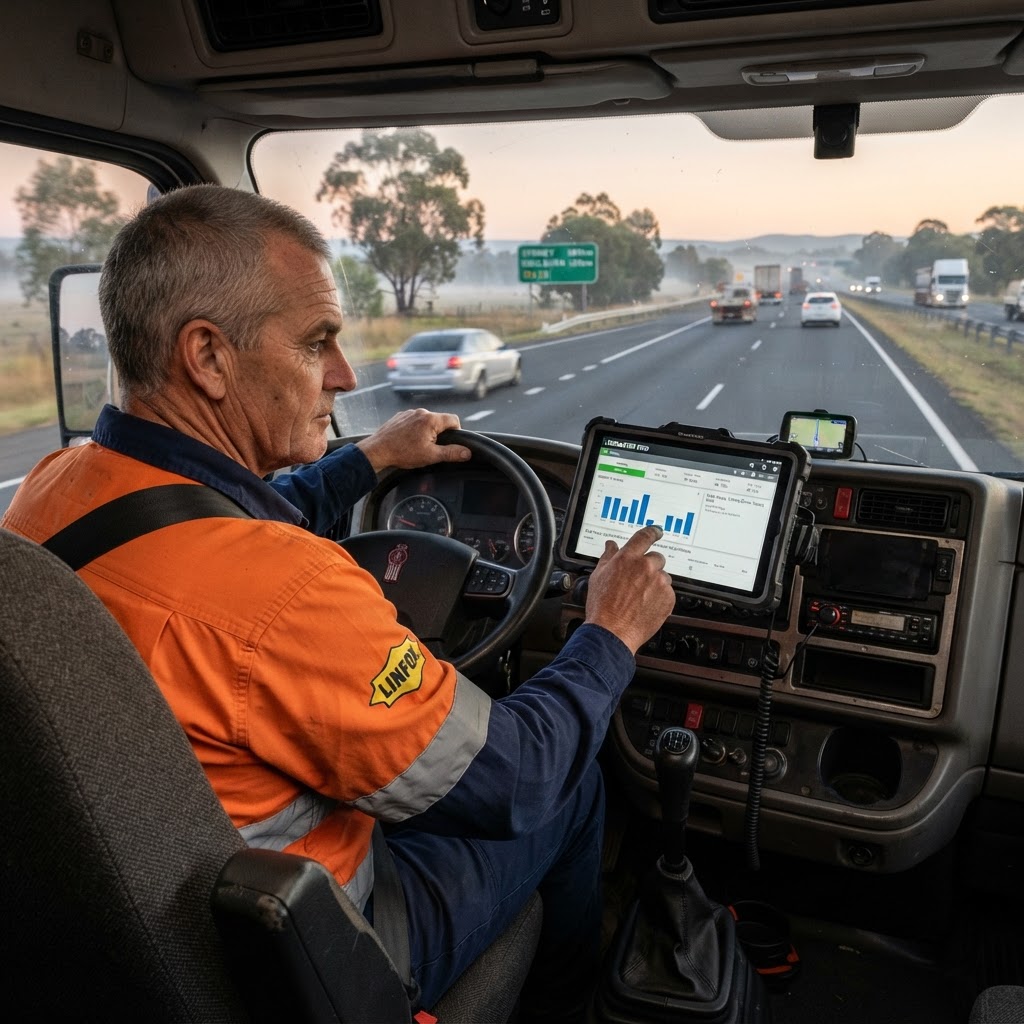
Fatigue monitoring technology helps NSW transport operators comply with Heavy Vehicle National Law (HVNL) fatigue management rules by electronically tracking driver work and rest hours, detecting fatigue signs in real time, and providing audit-ready records for NHVR inspections. For fleets operating under Standard Hours, Basic Fatigue Management (BFM), or Advanced Fatigue Management (AFM), these tools — including NHVR-approved Electronic Work Diaries (EWDs), telematics platforms, and driver-facing fatigue detection systems — replace or supplement paper work diaries and reduce the compliance burden on both drivers and schedulers. Kells Safety Centre (RTO 91528) trains drivers and schedulers in NHVR fatigue management frameworks at our Wetherill Park training centre, ensuring your team understands how to use these technologies within the law.
Whether you manage a 5-truck fleet or a 50-vehicle operation, understanding what fatigue monitoring technology is available, what NHVR requires, and how to choose the right tools is now essential for compliance and safety in NSW.
Quick Summary: What Fatigue Monitoring Technology Exists for NSW Fleets?
NSW operators have three main categories of fatigue monitoring technology available:
| Technology | What It Does | NHVR Requirement |
|---|---|---|
| Electronic Work Diary (EWD) | Digital replacement for paper work diary — records work/rest hours automatically | Must be NHVR-approved; driver must still carry and use it correctly |
| Telematics / Fleet Tracking | GPS tracking, vehicle movement data, driver behaviour monitoring | Not mandatory but supports compliance evidence and operator due diligence |
| Driver Fatigue Detection Systems | Camera-based drowsiness alerts, steering pattern analysis, real-time warnings | Not mandated by NHVR; supplementary safety tool |
The NHVR regulates EWDs strictly — only NHVR-approved EWDs can legally replace a paper work diary. Telematics and fatigue detection systems add layers of safety but do not replace the legal requirement for an accurate work diary record, whether paper or electronic.
Key Takeaways
- EWDs are NHVR-approved digital alternatives to paper work diaries — not all fatigue apps qualify
- Telematics supports compliance evidence but does not replace an EWD or paper diary
- Driver fatigue detection systems (camera-based) add real-time safety but are not mandated
- Operators remain legally responsible for fatigue management under Chain of Responsibility (CoR)
- Schedulers need fatigue management training (TLIIF0006) to use these tools effectively
- Drivers need BFM training (TLIIF0005) to understand work/rest limits these systems enforce
What Is an Electronic Work Diary (EWD)?
An Electronic Work Diary (EWD) is a NHVR-approved digital system that records a driver’s work and rest hours, replacing the traditional paper National Driver Work Diary. EWDs automatically log driving time, rest breaks, and location data, reducing the risk of manual entry errors and providing real-time alerts when a driver is approaching their work time limit under Standard Hours, BFM, or AFM.
Under the NHVR fatigue management framework, drivers who operate under BFM or AFM must keep a work diary. An EWD satisfies this requirement if it is NHVR-approved. The NHVR maintains a list of approved EWD providers, and operators must ensure their chosen EWD is on that list before deploying it to drivers.
How EWDs Work
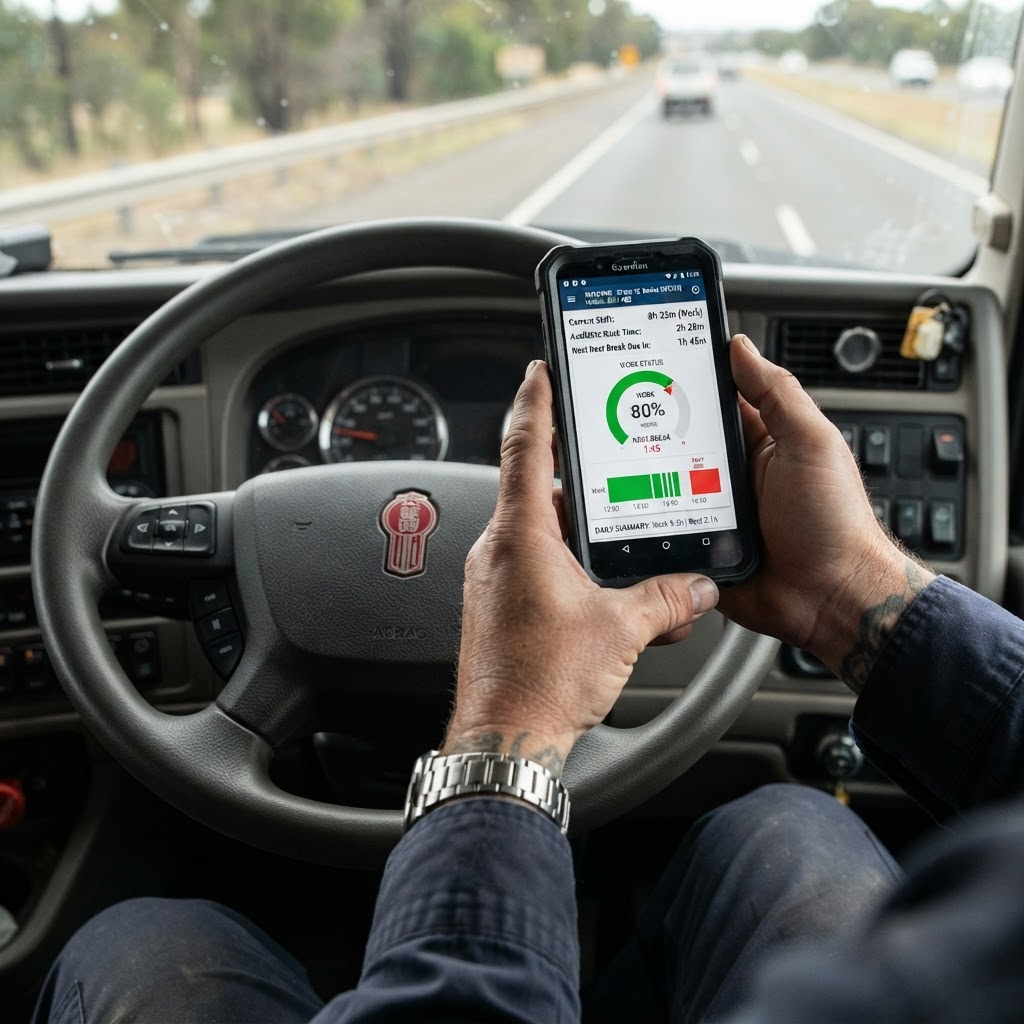
An EWD typically runs on a smartphone, tablet, or in-cab device connected to the vehicle. It uses GPS to detect when the vehicle is moving (work time) and when it is stationary (rest time). Drivers can manually record rest breaks, mode changes, and other work-related activities. The system sends data to a back-office platform where schedulers and fleet managers can monitor compliance in real time.
Key features of an NHVR-approved EWD include:
- Automatic start/stop recording based on vehicle movement
- Real-time alerts when approaching work time limits
- Automatic rest break detection and logging
- Back-office reporting for schedulers and fleet managers
- Audit-ready records for NHVR inspections
- Tamper detection and data integrity safeguards
Are EWDs Mandatory in NSW?
No. EWDs are voluntary — drivers can continue to use a paper work diary. However, many NSW operators are switching to EWDs because they reduce administrative burden, improve accuracy, and provide real-time compliance visibility. If a driver chooses to use an EWD, it must be NHVR-approved. Using a non-approved fatigue app as a work diary is not legally compliant.
Want your drivers and schedulers trained on NHVR fatigue management rules before deploying EWDs? Book our BFM Driver Course or Scheduler Fatigue Management Course.
Telematics and Fleet Tracking for Fatigue Compliance
Telematics systems go beyond EWDs by integrating vehicle tracking, driver behaviour monitoring, and fleet management data into a single platform. While EWDs focus on work/rest hour recording, telematics provides a broader operational picture: where vehicles are, how fast they are travelling, how drivers are braking and cornering, and whether vehicles are being used outside scheduled hours.
For fatigue management, telematics adds several compliance advantages:
- Cross-checking EWD data: Telematics GPS data can be compared against EWD records to verify accuracy
- Unscheduled movement alerts: If a vehicle moves during a scheduled rest break, telematics flags it immediately
- Driver behaviour analysis: Harsh braking, swerving, or speed variations can indicate fatigue-affected driving
- CoR evidence: Telematics records provide operators with documented evidence of their fatigue management efforts
Under Chain of Responsibility laws, operators must take all reasonable steps to prevent fatigue-related breaches. Telematics helps demonstrate that an operator has systems in place to monitor and manage driver fatigue, which is critical if an incident occurs. For more on CoR obligations, see our guide to work and rest hours for heavy vehicle drivers in NSW.

Driver Fatigue Detection Systems: Camera-Based Technology
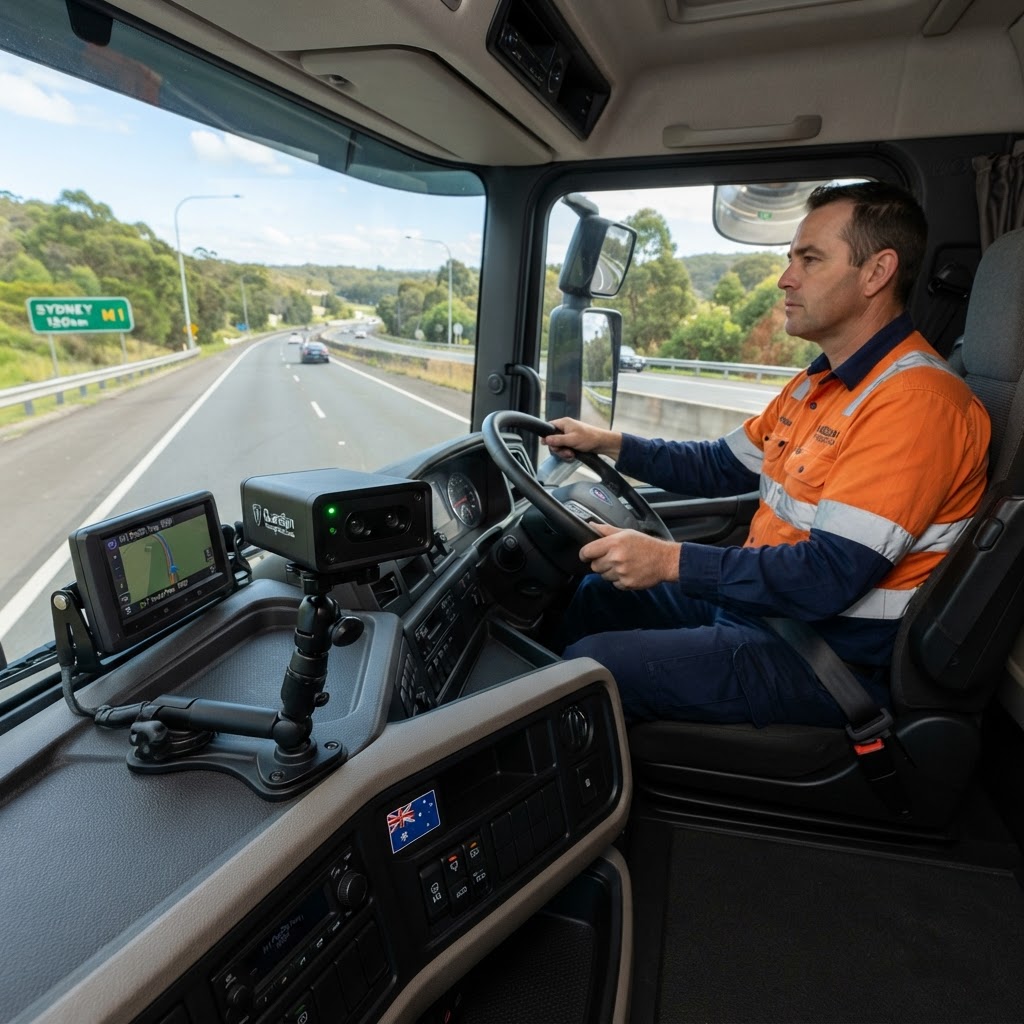
Driver fatigue detection systems use in-cab cameras and AI algorithms to monitor driver eye movement, head position, and steering patterns in real time. When the system detects drowsiness signs — prolonged eye closure, frequent blinking, head nodding, or lane deviation — it triggers an audible or visual alert in the cabin, prompting the driver to pull over and rest.
These systems are not mandated by NHVR, but they are increasingly adopted by NSW fleets as a supplementary safety layer. Major providers include Seeing Machines (Guardian), SmartCap, and Optalert. The technology falls into three categories:
| Type | How It Works | Best For |
|---|---|---|
| Camera-based drowsiness detection | In-cab camera monitors eye and face cues | Long-haul single-driver operations |
| Steering pattern analysis | Software analyses steering wheel micro-corrections | Integration with existing telematics |
| Wearable fatigue monitors | Headband or cap tracks brain activity or head movement | High-risk routes, mining sector |
While these systems can alert drivers in the moment, they do not replace proper fatigue management training or compliant scheduling. A driver who is alerted to drowsiness still needs to take a compliant rest break under their BFM or Standard Hours framework.
How to Choose the Right Fatigue Monitoring Technology
Step 1: Start with Training
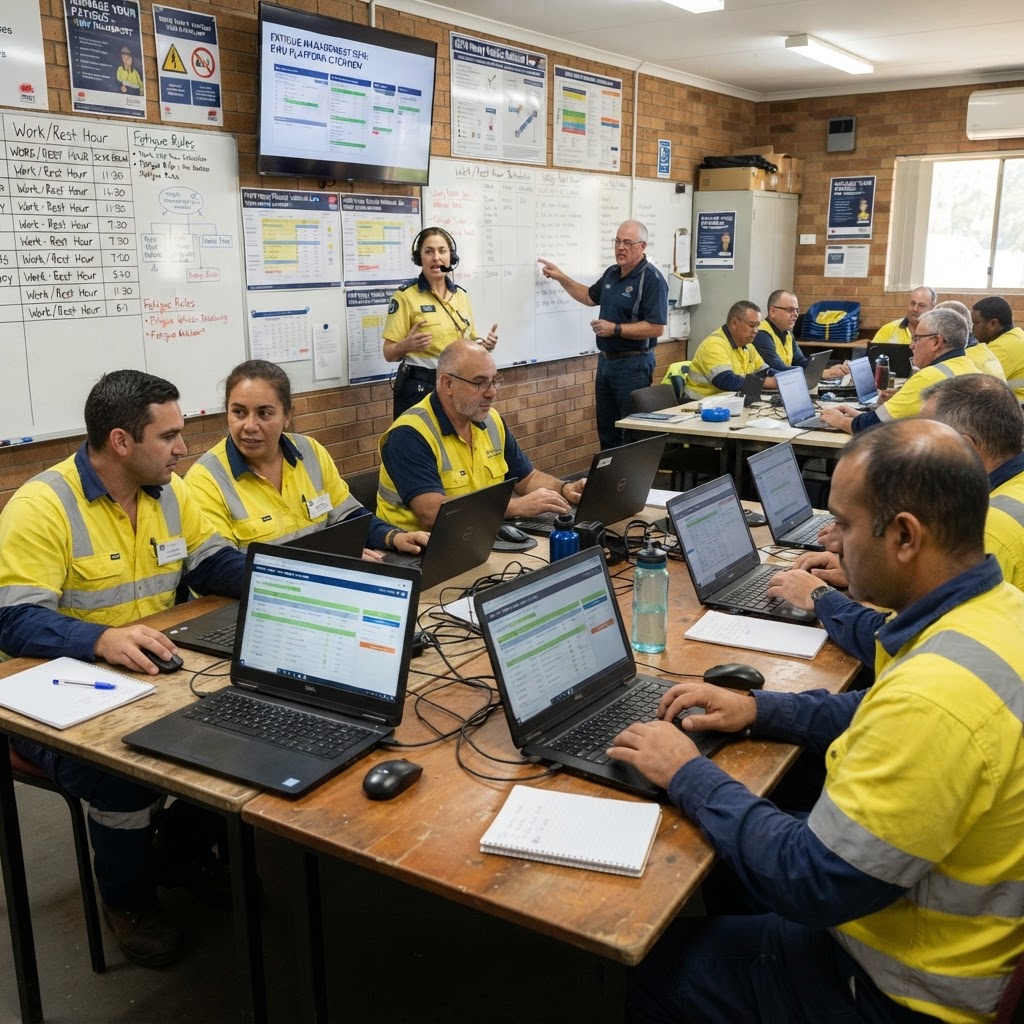
Before investing in technology, ensure your drivers and schedulers understand NHVR fatigue management rules. Technology is a tool, not a substitute for knowledge. Drivers need BFM driver training (TLIIF0005) and schedulers need scheduler fatigue management training (TLIIF0006) to use any system correctly.
Step 2: Choose an NHVR-Approved EWD
Check the NHVR website for the current list of approved EWD providers. Ensure the EWD you choose works on your drivers’ devices, integrates with your back-office systems, and provides the reporting you need for CoR compliance. For more on NHVR’s fatigue rules, see our guide on NHVR fatigue law for NSW truck drivers.
Step 3: Layer Telematics for Compliance Evidence
If you already have a telematics platform, check whether it integrates with your chosen EWD. Many major telematics providers (Teletrac Navman, Geotab, MTData) offer EWD modules or integrations. This gives you a single dashboard for vehicle tracking and fatigue compliance.
Step 4: Consider Fatigue Detection for High-Risk Routes
If your drivers operate long-haul routes, night shifts, or remote NSW highways where fatigue risk is elevated, camera-based detection systems provide an additional safety net. They are not a replacement for compliant scheduling but add real-time alerts that can prevent fatigue-related incidents.
What Does NHVR Require from Operators?
Under the HVNL, operators have a primary duty to manage fatigue risk. This means taking all reasonable steps to ensure drivers do not exceed work time limits and receive adequate rest. Technology supports this duty but does not transfer legal responsibility away from the operator. Key NHVR requirements include:
- Maintaining accurate work diary records (paper or EWD) for all drivers operating under BFM or AFM
- Ensuring schedulers are trained in fatigue management (TLIIF0006)
- Ensuring drivers are trained in their fatigue framework (BFM: TLIIF0005)
- Retaining work diary records for a minimum period for audit purposes
- Having a documented fatigue management system as part of operator accreditation
- Reporting fatigue-related incidents to NHVR where required
Operators who fail to manage fatigue risk face penalties under the HVNL, including fines, suspension of accreditation, and in serious cases, criminal charges for executives under Chain of Responsibility provisions. Safe Work NSW also has WHS obligations relating to workplace fatigue that apply alongside HVNL requirements.
Frequently Asked Questions
What is an electronic work diary (EWD)?
An Electronic Work Diary (EWD) is a NHVR-approved digital system that replaces the paper National Driver Work Diary. It automatically records a driver’s work and rest hours using GPS and vehicle data, sends real-time alerts when work time limits are approaching, and provides audit-ready records for NHVR compliance. Only NHVR-approved EWDs can legally replace a paper work diary in NSW.
Is an EWD mandatory for NSW truck drivers?
No. EWDs are voluntary in NSW. Drivers can continue to use a paper work diary. However, many operators are switching to EWDs because they reduce manual errors, provide real-time compliance monitoring, and simplify audit processes. If a driver uses an EWD, it must be NHVR-approved.
Can a fatigue app replace a work diary?
No. Only NHVR-approved EWDs can legally replace a paper work diary. Generic fatigue tracking apps from app stores are not compliant substitutes. Using a non-approved app as your work diary could result in a fatigue management breach and penalties under the HVNL.
What telematics providers offer EWD integration in NSW?
Major telematics providers operating in NSW that offer EWD modules or integrations include Teletrac Navman, Geotab, MTData, and Verizon Connect. Not all telematics platforms include NHVR-approved EWD functionality, so operators should verify that the EWD component is separately NHVR-approved before deployment.
Do driver fatigue detection systems satisfy NHVR requirements?
No. Driver fatigue detection systems (camera-based drowsiness monitors, wearable devices) are supplementary safety tools, not compliance substitutes. They do not replace the legal requirement for an accurate work diary (paper or EWD) or fatigue management training. They add a real-time alert layer but do not discharge an operator’s HVNL fatigue management obligations.
How much does fatigue monitoring technology cost for a fleet?
Costs vary widely. NHVR-approved EWDs typically charge a monthly per-driver subscription (ranging from approximately $20 to $50 per driver per month depending on the provider). Telematics platforms with EWD integration cost more, factoring in hardware installation and monthly service fees. Camera-based fatigue detection systems require hardware purchase plus ongoing subscription costs. Operators should weigh these costs against the compliance, safety, and administrative savings.
Do schedulers need training to use fatigue monitoring technology?
Yes. Schedulers and dispatchers who use EWD back-office platforms or telematics dashboards to plan compliant rosters need the scheduler fatigue management certificate (TLIIF0006). This training covers NHVR work and rest hour limits, BFM and AFM scheduling rules, and how to use technology to build compliant rosters. Without this training, schedulers may create rosters that breach fatigue laws even with the best technology.
What happens if a driver ignores an EWD fatigue alert?
If a driver continues working past a fatigue alert, the EWD records the breach. This creates evidence of a fatigue management violation that the NHVR can use in enforcement action. The driver and the operator may both face penalties under the HVNL. Operators should have clear policies for what drivers must do when they receive a fatigue alert, including mandatory rest breaks and communication with their scheduler.
How does fatigue monitoring technology help with Chain of Responsibility?
Under Chain of Responsibility laws, operators, schedulers, and executives must take all reasonable steps to prevent fatigue-related breaches. Fatigue monitoring technology provides documented evidence that an operator has systems in place to monitor work hours, detect breaches, and enforce rest breaks. This evidence is critical in demonstrating compliance if an incident occurs or the NHVR conducts an audit.
Where can I get fatigue management training for my fleet in NSW?
Kells Safety Centre (RTO 91528) delivers BFM driver training (TLIIF0005) and scheduler fatigue management training (TLIIF0006) at our Wetherill Park training centre. We also offer online BFM training for drivers who cannot attend in person. Contact us for group bookings and on-site fleet training.
Ready to train your fleet in NHVR fatigue management? Kells Safety Centre (RTO 91528) delivers BFM driver and scheduler training at Wetherill Park, with online options available. Book your training courses today and ensure your team is ready to use fatigue monitoring technology compliantly.