
Quick Summary
Fleet safety and compliance training is the coordinated set of accredited courses a NSW transport operator puts their drivers, schedulers and managers through so the business meets its义务 under the Chain of Responsibility, the Heavy Vehicle National Law (HVNL), Safe Work NSW and the NSW EPA where dangerous goods are carried. For Sydney operators it is delivered by Kells Safety Centre (RTO 91528) at Wetherill Park and Wollongong, with group and on-site depot options for fleets.
The core fleet training typically covers fatigue management (BFM) for drivers and schedulers, the Blue Card (TLIF0025) for site access, DG licence (TLILIC0001) where the fleet carries bulk dangerous goods (receptacles over 500L/500kg), and Chain of Responsibility courses (TLIF0080) for managers. Booked as a group, Kells Safety Centre can sequence these across a roster so no truck sits idle.
Key Takeaways
- Who needs it: Every NSW transport operator with employed or sub-contracted drivers, plus the executives and schedulers who control the work.
- What it covers: Fatigue management, Blue Card, DG licence, CoR training and WHS/awareness modules as relevant to the fleet.
- Where: Wetherill Park and Wollongong (RTO 91528), or on-site at your depot for group bookings.
- Why it matters: CoR places legal duties on executives personally — a single untrained driver can trigger executive liability.
- How to start: Identify your fleet’s load type and risk profile, then contact Kells Safety Centre for a tailored group booking.
What Is Fleet Safety and Compliance Training?
Fleet safety and compliance training is the structured, accredited training a transport business delivers to its drivers and management staff so the operation legally and safely meets its obligations. It is not a single course. It is a set of nationally recognised units that together close the compliance gaps a NSW fleet faces: driver fatigue, site access, dangerous goods handling, and executive Chain of Responsibility duties.
Under the Heavy Vehicle National Law, every party in the transport chain — the employer, the scheduler, the consignor, the loader and the driver — has a measurable duty to prevent breaches. Training is the documented evidence an operator uses to prove those duties were met. When the NHVR or Safe Work NSW audits, current statements of attainment are the first thing they ask for.
Why Sydney Transport Operators Need Structured Fleet Training
Sydney is the densest freight corridor in NSW. Operators running out of Port Botany, the Western Sydney freight precincts, Moorebank and the Inner West mix general freight, container transport and dangerous goods on the same roads. The CoR does not distinguish between a one-truck operator and a fifty-truck fleet when a breach occurs. Both must show that every driver and controller of the work was appropriately trained and that the business had reasonable steps in place to prevent the breach.
Structured fleet training gives an operator three things:
- Documented due diligence. Current statements of attainment, retained in a training register, are the evidence an executive needs to show they took reasonable steps.
- Fewer on-road incidents. Drivers trained in fatigue management and load safety breach the rules far less often — and the breaches that still occur are easier to defect.
- Uninterrupted site access. Depots, distribution centres and delivery platforms in greater Sydney require a current Blue Card before they let a driver through the gate. A fleet with lapsed Blue Cards is a fleet that cannot deliver.
What Courses Should Your Fleet Complete?
Every fleet is different, but the typical NSW transport operator should ensure the following units are current across drivers, schedulers and managers:
- Blue Card (TLIF0025) — every driver and yard worker. Required for site access at most NSW freight depots and delivery platforms. One-day course, $286 at Kells Safety Centre, valid five years.
- Basic Fatigue Management (BFM) — drivers on flexible work/rest hours. If your fleet operates under a BFM accreditation, every driver and every scheduler must hold the relevant fatigue management unit. Kells Safety Centre delivers the drivers fatigue management course and the related BFM units.
- DG Licence (TLILIC0001) — drivers carrying bulk dangerous goods (receptacles over 500 litres or 500 kilograms). If your fleet transports DG in bulk, every driver on those runs needs a current DG licence. Kells Safety Centre runs the TLILIC0001 dangerous goods licence course.
- Chain of Responsibility (TLIF0080) — managers, schedulers and executives. The CoR unit gives the people who set the schedules and deadlines the knowledge to meet their personal legal duties. See our guide comparing TLIF0009 vs TLIF0080 to choose the right level.
Where the fleet carries DG, drivers should also complete the relevant awareness and prepare-for-transport units so they understand documentation, placarding and emergency response before the load moves. PPE and emergency equipment for these vehicles is available from our safety equipment range, but training comes first — equipment only works if the driver knows how to use it.
Chain of Responsibility: The Executive’s Legal Exposure
The Chain of Responsibility is the part of the Heavy Vehicle National Law that reverses the old “driver takes the blame” culture. It makes every party who has control over the transport task legally responsible for preventing breaches of mass, dimension, loading, speed and fatigue laws. For a Sydney operator, the people in scope include the company directors, the safety manager, the scheduler and the dispatcher — not just the driver.
This is where fleet training matters most for executives. An NHVR investigation following a serious fatigue or load breach will ask what training the business provided. Current CoR qualifications for the people who set the work, plus a documented training register for drivers, are the primary evidence an executive uses to discharge their personal due-diligence duty. Without training records, the executive’s reasonable-steps defence is hard to sustain.
For a fuller treatment of how the CoR shifts legal risk up the chain, see our heavy vehicle fatigue management guide and the TLIF0009 vs TLIF0080 comparison.
How Much Does Fleet Training Cost in NSW?
Fleet training is priced per driver per unit, with group and on-site booking options available through Kells Safety Centre. The known individual course fees (all-inclusive) are:
- Blue Card (TLIF0025): $286 per driver
- DG Licence (TLILIC0001): $618 per driver (including EPA processing)
- Fatigue management (BFM drivers and schedulers) and CoR units (TLIF0080): quoted per group based on headcount and venue — contact us for a fleet quote.
For a 10-vehicle fleet, the realistic annual training spend depends on which units are due in any given year. Because Blue Card and DG licence run on multi-year cycles, most fleets find their annual training cost is concentrated in the year the largest number of qualifications lapse. Planning the cycle in advance with Kells Safety Centre is a practical way to spread the cost.
Group and On-Site Training Options at Kells Safety Centre
Kells Safety Centre (RTO 91528) delivers fleet training in three formats:
- At our venues (Wetherill Park and Wollongong). Drivers attend a scheduled course. Best for small fleets and individual qualifications like Blue Card or DG licence.
- Dedicated group classes. A closed session just for your drivers, run at one of our venues on a date that fits your roster. Best for medium fleets booking a single unit across the team.
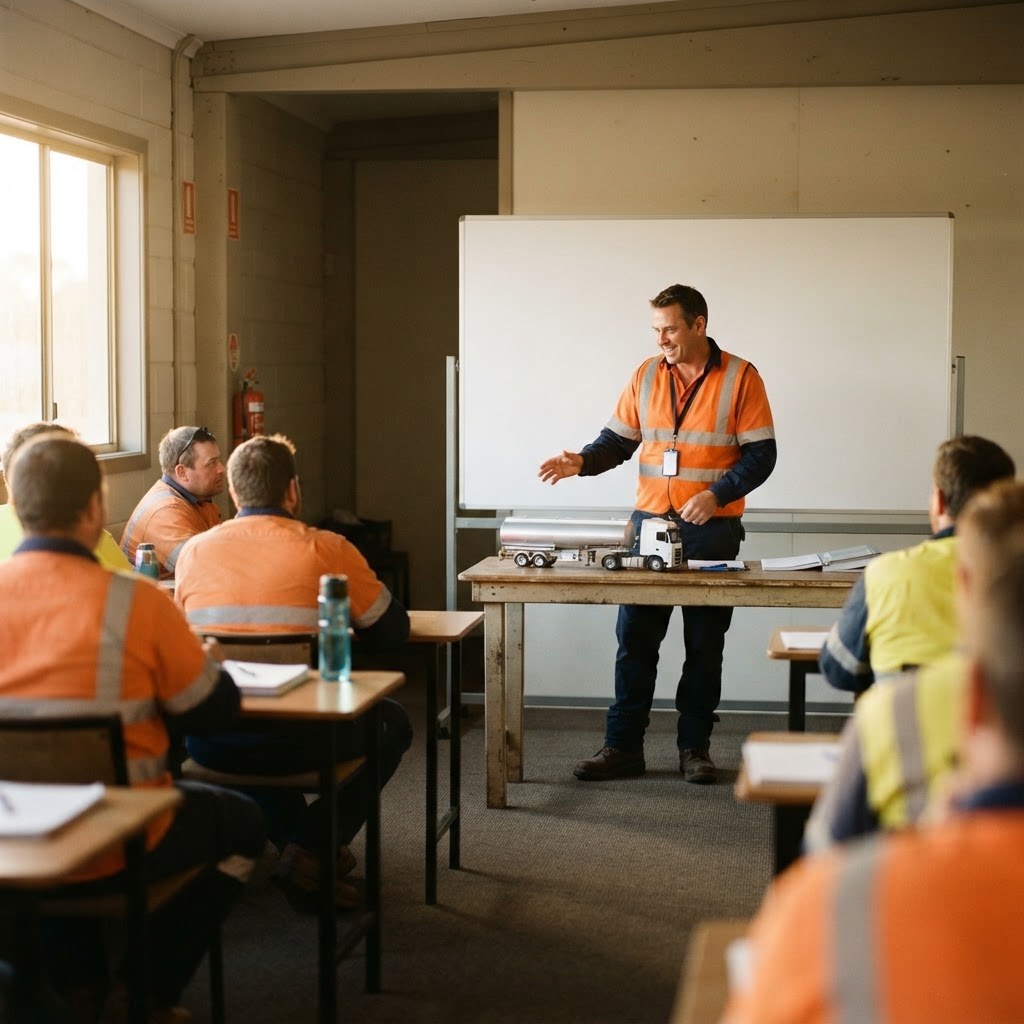
- On-site at your depot. Where you have a suitable training room and enough drivers, we bring the course to you. This minimises downtime — drivers train between shifts and are back on the road the same week. Best for larger fleets and for CoR training where managers and schedulers attend together with drivers.
On-site and group bookings are quoted individually because the cost depends on headcount, venue, travel and the units being delivered. The trade-off is simple: the more drivers you put through at once, the lower the per-driver cost in lost productivity.
How to Roll Out Fleet Training Without Disrupting Operations
- Audit current qualifications. Pull every statement of attainment for every driver, scheduler and manager. Record the unit, issue date and expiry. This is your training register.
- Map gaps. Flag anyone whose Blue Card, fatigue or DG qualification lapses in the next 6–12 months. Prioritise by expiry date, not by seniority.
- Sequence across the roster. Book group sessions that let drivers attend between runs. Kells Safety Centre can schedule around your peak dispatch days.
- Run CoR for managers first. Train the people who set the schedules before you train the drivers — the CoR unit changes how rosters are built, so managers need it in place before fatigue training starts.
- Keep the register live. Update it as each statement of attainment is issued. A current register is the first document an NHVR or Safe Work NSW auditor will request.
A fleet that sequences training this way keeps every truck productive, keeps every driver current, and hands its executives a clean paper trail — all in the same exercise.
Frequently Asked Questions
What is fleet safety and compliance training?
Fleet safety and compliance training is the set of accredited units a NSW transport operator delivers to drivers, schedulers and managers so the business meets its Chain of Responsibility, fatigue, dangerous goods and WHS obligations. It is delivered by a registered training organisation such as Kells Safety Centre (RTO 91528) and produces nationally recognised statements of attainment that serve as audit evidence.
Which courses does a NSW transport fleet need?
Most NSW fleets need the Blue Card (TLIF0025) for site access, Basic Fatigue Management for drivers and schedulers on flexible hours, the DG licence (TLILIC0001) for any driver carrying bulk dangerous goods (receptacles over 500L/500kg), and Chain of Responsibility training (TLIF0080) for managers and executives. The exact mix depends on the load type and the work schedules the fleet runs.
Who is responsible for fleet compliance under the Chain of Responsibility?
Under the Heavy Vehicle National Law, every party with control over the transport task is responsible — directors, schedulers, loaders, consignors and drivers. The CoR makes executive and managerial duty personal, so training the people who set the schedules is as important as training the people who drive the trucks.
How much does fleet training cost in Sydney?
Blue Card is $286 per driver and the DG licence is $618 per driver (including EPA processing) at Kells Safety Centre. Fatigue management and Chain of Responsibility courses are quoted per group based on headcount and venue. For a tailored fleet quote, contact Kells Safety Centre.
Can Kells Safety Centre deliver training on-site at our depot?
Yes. Where you have a suitable training room and enough drivers to fill a session, Kells Safety Centre can deliver accredited courses on-site at your depot. This minimises downtime because drivers train between shifts. On-site and group bookings are quoted individually based on headcount, units and travel.
How often should fleet drivers refresh their training?
Blue Card (TLIF0025) is valid for five years and the DG licence is renewed through the NSW EPA on its own cycle. Fatigue management and CoR qualifications should be reviewed when the law changes or the fleet’s operating patterns change. A training register with expiry dates is the simplest way to stay ahead of lapses.
Does fleet training cover dangerous goods as well as fatigue management?
Yes. Kells Safety Centre delivers the full TLILIC0001 dangerous goods licence course as well as the awareness, prepare-for-transport and store-and-handle units. Fleets carrying dangerous goods should layer these on top of fatigue and Blue Card training so every driver on a DG run is fully qualified.
What records do we need to keep for NHVR and Safe Work NSW audits?
Keep a current statement of attainment for every driver, scheduler and manager, with the unit code, issue date and expiry recorded in a training register. Add group booking confirmations and any on-site attendance sheets. These records are the evidence an auditor will request first to confirm the business took reasonable steps to prevent breaches.
How do we book group training for our fleet?
Contact Kells Safety Centre with your fleet size, the units you need and your preferred venue or depot. We will build a schedule that sequences training around your roster so trucks stay productive. Start by visiting our training courses page or calling us directly.