Choosing the wrong dangerous goods training provider in NSW can cost you more than money — it can cost you your licence application. Not all RTOs are equal, and not all courses satisfy the NSW EPA’s requirements for the TLILIC0001 Dangerous Goods Driver Licence.
This guide gives you 7 concrete things to check before you book — so you get a nationally recognised qualification that holds up at roadside, at the EPA, and on any job site in Australia.
Ready to book with a fully accredited NSW provider?
Why the Right RTO Matters for Your DG Licence
In NSW, obtaining a dangerous goods driver licence requires completing an approved training course with a Registered Training Organisation (RTO) that is recognised by the NSW EPA. If your RTO isn’t properly registered or doesn’t deliver the full accredited program, the EPA can reject your licence application — leaving you to repeat the course and pay again.
With multiple providers operating across NSW — including online-only platforms — it pays to know exactly what to look for before you commit your time and money.
The 7 Things to Check Before You Book
1. Is the RTO Nationally Registered with ASQA?
Every legitimate training provider delivering accredited courses in Australia must be registered with the Australian Skills Quality Authority (ASQA). You can verify any RTO on the ASQA national register. If a provider can’t give you their RTO number, walk away.
Kells Safety Centre is RTO 91528, fully registered with ASQA and delivering accredited transport safety training across NSW for over 30 years.
2. Is the Course EPA-Approved for the NSW Dangerous Goods Licence?
The NSW EPA administers the Dangerous Goods Driver Licence under the Dangerous Goods (Road and Rail Transport) Act 2008. The EPA has specific requirements for the training component. Not every “dangerous goods course” qualifies — some awareness or online-only products do not satisfy the EPA’s requirements for full licence applications.
Always confirm that the course delivers TLILIC0001 — Licence to Transport Dangerous Goods by Road and that the provider can confirm EPA acceptance of their graduates. You can cross-reference approved training requirements on the NSW EPA dangerous goods licensing page.
3. Is Training Delivered Face-to-Face?
This is a major differentiator. The TLILIC0001 unit requires hands-on, practical assessment — particularly around placarding, segregation, and emergency response procedures. Some providers attempt to deliver this entirely online, which does not meet the full competency requirements and will not satisfy the NSW EPA for a licence application.
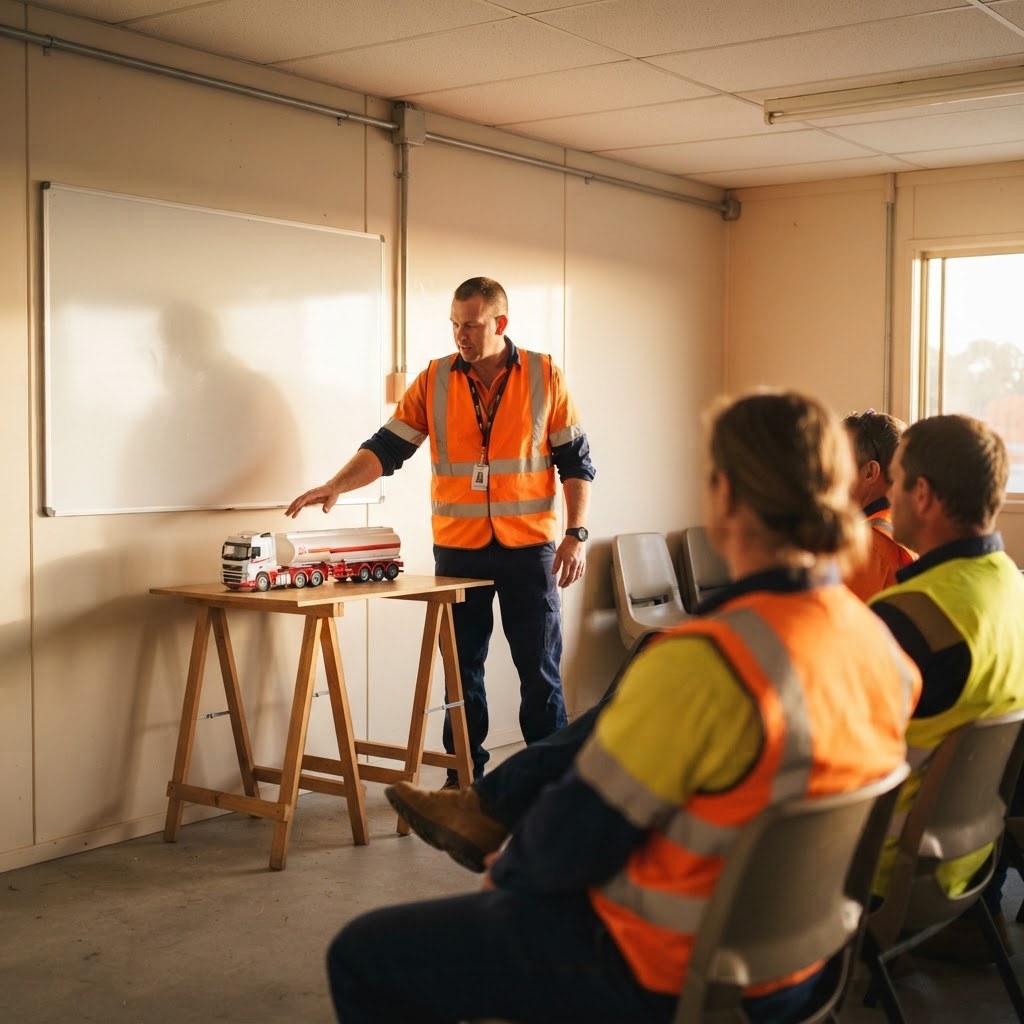
A quality provider delivers the course over two days with real trainers, physical materials, and face-to-face assessment. If a provider offers a “one-day online” DG licence course, it is almost certainly a DG Awareness course — not the full licence qualification. Understand the difference between a DG licence and DG awareness training before you book.
4. How Experienced Are the Trainers?
Trainer experience matters enormously in dangerous goods training. Look for providers whose trainers have:
- Industry background in transport, logistics, or dangerous goods handling
- Current knowledge of the Australian Dangerous Goods Code (ADG Code)
- Certificate IV in Training and Assessment (TAE40116 or TAE40122)
- Active industry experience — not just classroom delivery
Ask the provider directly: how long have your trainers been delivering dangerous goods training? A vague answer is a red flag.
5. What Is the Course Pass Rate and EPA Acceptance Record?
A reputable provider will have a clear track record of graduates successfully obtaining their NSW EPA dangerous goods licence. Ask what their pass rate is, and whether they have had any issues with EPA licence rejections. Providers with high rejection rates either deliver incomplete training or use outdated materials not aligned with current ADG Code requirements.
6. Are Group and Corporate Bookings Available?
If you’re a transport business, logistics operator, or safety manager looking to licence multiple drivers, check whether the provider offers group bookings, corporate rates, or on-site delivery options. This can significantly reduce your cost-per-driver and minimise operational disruption.
Kells Safety Centre offers group and corporate bookings for the TLILIC0001 Dangerous Goods Driver Licence course — contact the team to discuss fleet training options.
7. Where Are the Courses Delivered?
Location matters if you’re sending multiple drivers. Confirm that the provider delivers courses in a location that works for your team — whether that’s Western Sydney, Wollongong, or another regional centre. Some providers list “NSW” on their website but only deliver in a single location or require travel to another state.
Kells Safety Centre delivers training from two locations: Wetherill Park (Western Sydney) and Wollongong, servicing the Greater Sydney, Illawarra, and South Coast regions. Check the full course schedule for available dates.
Quick Checklist: What to Ask Every DG Training Provider
| Question | What to Look For |
|---|---|
| What is your RTO number? | Verifiable on ASQA register |
| Is this course EPA-approved for the NSW DG licence? | Yes — TLILIC0001 |
| Is training delivered face-to-face? | Yes — 2 days in person |
| How long have your trainers delivered DG training? | 5+ years industry experience |
| What is your EPA licence acceptance rate? | High — ask for specifics |
| Do you offer group/corporate bookings? | Yes — with flexible scheduling |
| Where do you deliver? | Your region — or on-site |
Key Takeaways
- Always verify a provider’s ASQA registration before booking — no RTO number, no deal
- Confirm the course unit is TLILIC0001 and that it satisfies NSW EPA licence requirements
- Face-to-face, two-day delivery is the standard — avoid online-only “licence” claims
- Experienced, industry-background trainers produce better-prepared graduates
- Group and corporate bookings save time and money for businesses licensing multiple drivers
- Check delivery locations — not all NSW providers service Western Sydney or the Illawarra
Frequently Asked Questions
How do I verify a dangerous goods training provider is legitimate?
Search for the provider’s RTO number on the ASQA national register. A legitimate RTO will have a current registration status and a visible scope of registration showing TLILIC0001. If they can’t provide an RTO number or the course isn’t in their scope, do not book.
Can I do the DG licence course online in NSW?
Not for the full TLILIC0001 licence. The NSW EPA requires hands-on, practical assessment as part of the dangerous goods driver licence qualification. Online-only platforms can deliver DG Awareness training, but they cannot deliver the full accredited licence course. If you see an online-only “DG licence” course, it is almost certainly an awareness product, not the licence itself.
How long does the dangerous goods licence course take?
The standard TLILIC0001 course is delivered over two days — typically 8am to 4pm each day. At the end of day two, candidates complete the assessment. Once you pass, you apply to the NSW EPA for your physical licence card, which is issued separately. See the full cost, duration and requirements breakdown for more detail.
What happens if I book with a non-accredited provider?
If you complete a course with an RTO that isn’t properly accredited or whose course doesn’t satisfy NSW EPA requirements, your licence application may be rejected. You would need to repeat the course with an accredited provider — paying again and losing the time already spent. Always verify before you book.
Does Kells Safety Centre offer group bookings for dangerous goods training?
Yes. Kells Safety Centre (RTO 91528) offers group and corporate bookings for the TLILIC0001 Dangerous Goods Driver Licence course. Contact the team to discuss scheduling and pricing for fleet bookings across Western Sydney and Wollongong.
Is the DG licence valid in all Australian states?
Yes. Under mutual recognition legislation, a NSW dangerous goods driver licence is generally recognised in other states and territories. However, state-specific EPA regulations may vary, and you should carry your current licence at all times when transporting dangerous goods interstate. Read the full guide on DG licence interstate recognition for more detail.
What is the difference between a DG licence and DG awareness training?
A dangerous goods driver licence (TLILIC0001) is a legal requirement to drive a vehicle transporting regulated dangerous goods by road in NSW. DG awareness training is a lower-level qualification for workers who handle or work near dangerous goods but are not the driver. They are not interchangeable. See the detailed comparison: DG licence vs DG awareness training.
Ready to Book Your DG Licence Course?
Kells Safety Centre (RTO 91528) has been delivering accredited dangerous goods training in NSW for over 30 years. Two locations — Western Sydney and Wollongong. Face-to-face, EPA-recognised, TLILIC0001 accredited.