
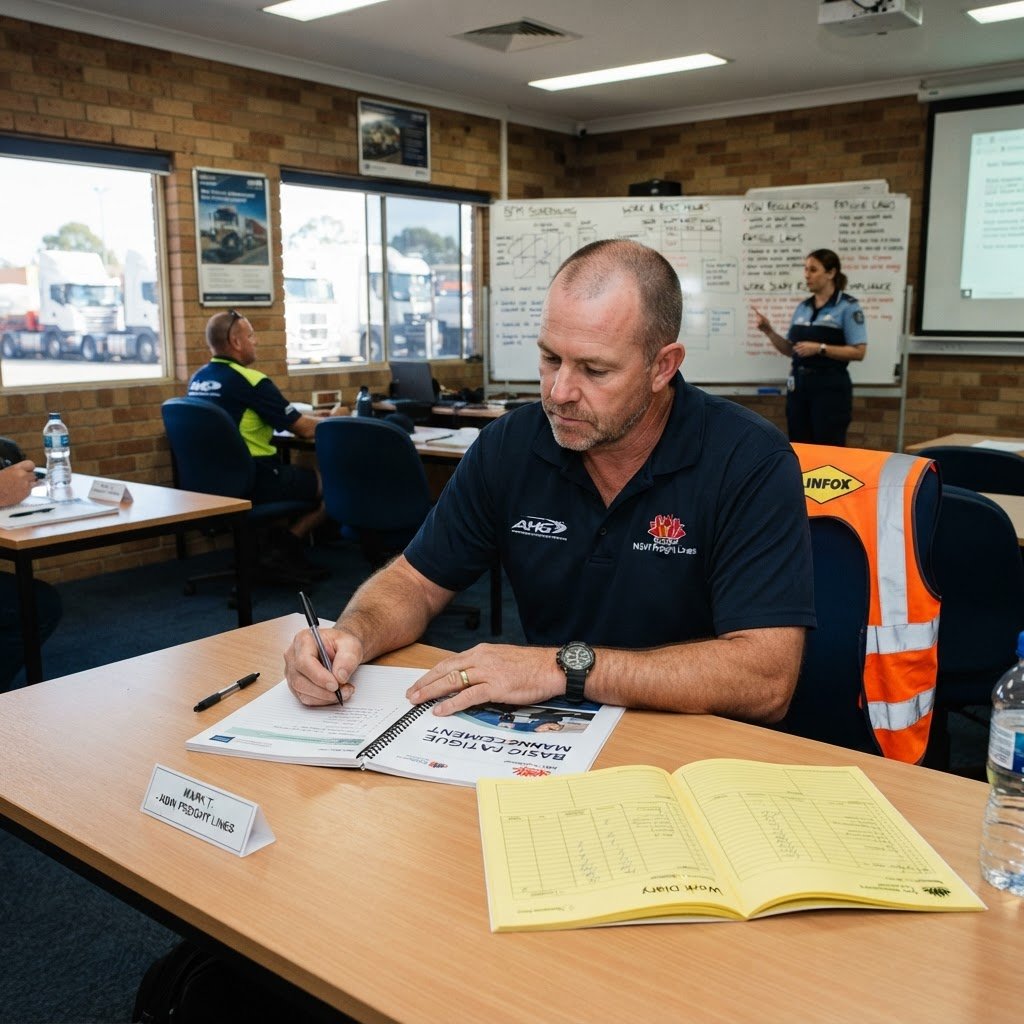
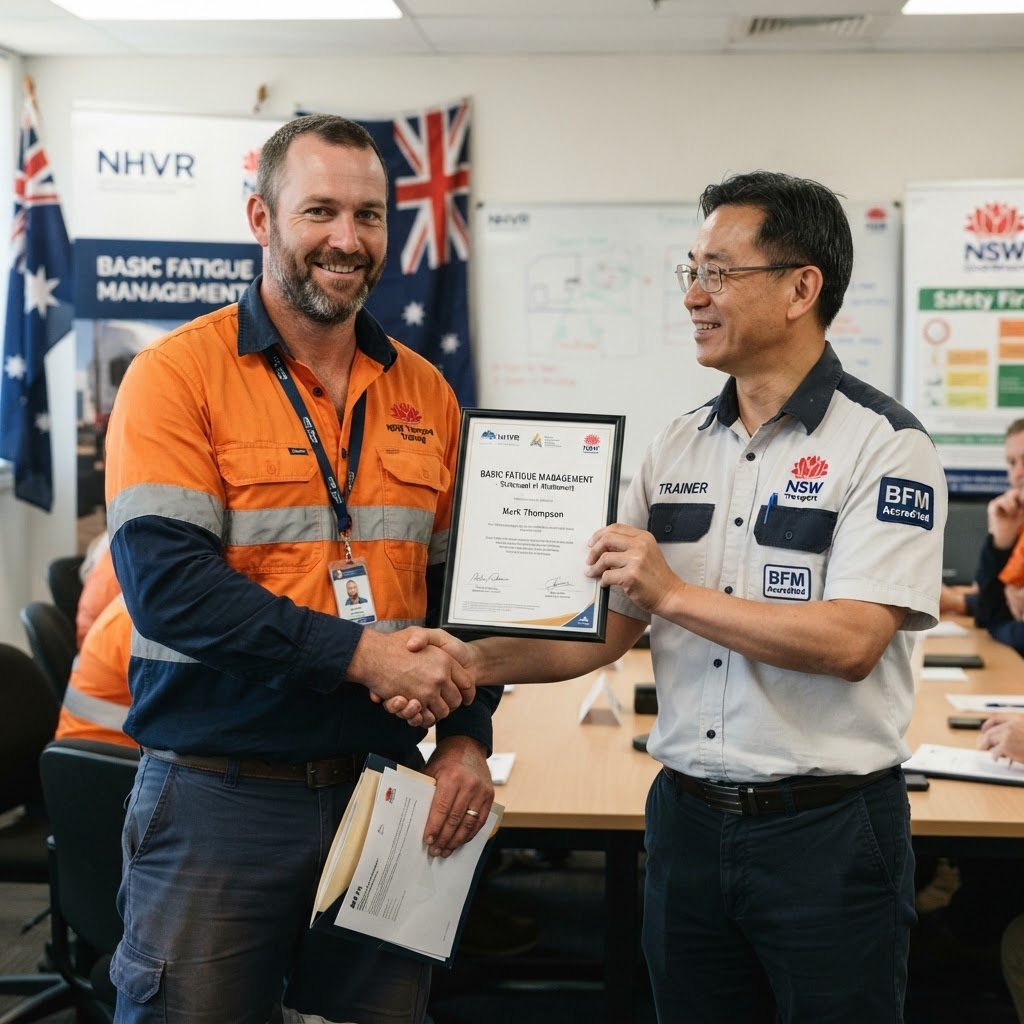
A Basic Fatigue Management (BFM) course takes approximately 4–6 hours of face-to-face training at Kells Safety Centre in NSW. The course covers the TLIIF0005 unit, costs $250, and is delivered in a single session at our Wetherill Park or Wollongong training centres. Upon successful completion, you receive a Statement of Attainment and can apply for BFM accreditation through the NHVR, which allows you to work up to 14-hour shifts under the BFM work and rest hour rules.
For NSW truck drivers and transport operators, BFM accreditation is one of the most practical fatigue management options available under the Heavy Vehicle National Law (HVNL). It gives drivers more flexibility than standard hours while keeping them compliant with NHVR fatigue regulations. This guide breaks down exactly how long the course takes, what it costs, what’s included, and how to enrol.
Quick Summary: BFM Course at a Glance
| Detail | Information |
|---|---|
| Course name | Basic Fatigue Management (TLIIF0005) |
| Duration | 4–6 hours (single session) |
| Cost | $250 (includes all materials) |
| Delivery mode | Face-to-face at Wetherill Park or Wollongong |
| Statement of Attainment | Yes — nationally recognised |
| BFM accreditation | Apply via NHVR after course completion |
| Max shift under BFM | 14 hours work time in a 24-hour period |
| RTO | Kells Safety Centre — RTO 91528 |
What Is Basic Fatigue Management (BFM)?
Basic Fatigue Management is a fatigue management option under the HVNL that allows NSW heavy vehicle drivers to work longer shifts than standard hours permit. Instead of the standard 12-hour maximum work period, BFM-accredited drivers can work up to 14 hours in a 24-hour period, with specific rest requirements built in. The system is regulated by the NHVR and requires drivers to complete accredited training before applying for BFM accreditation.
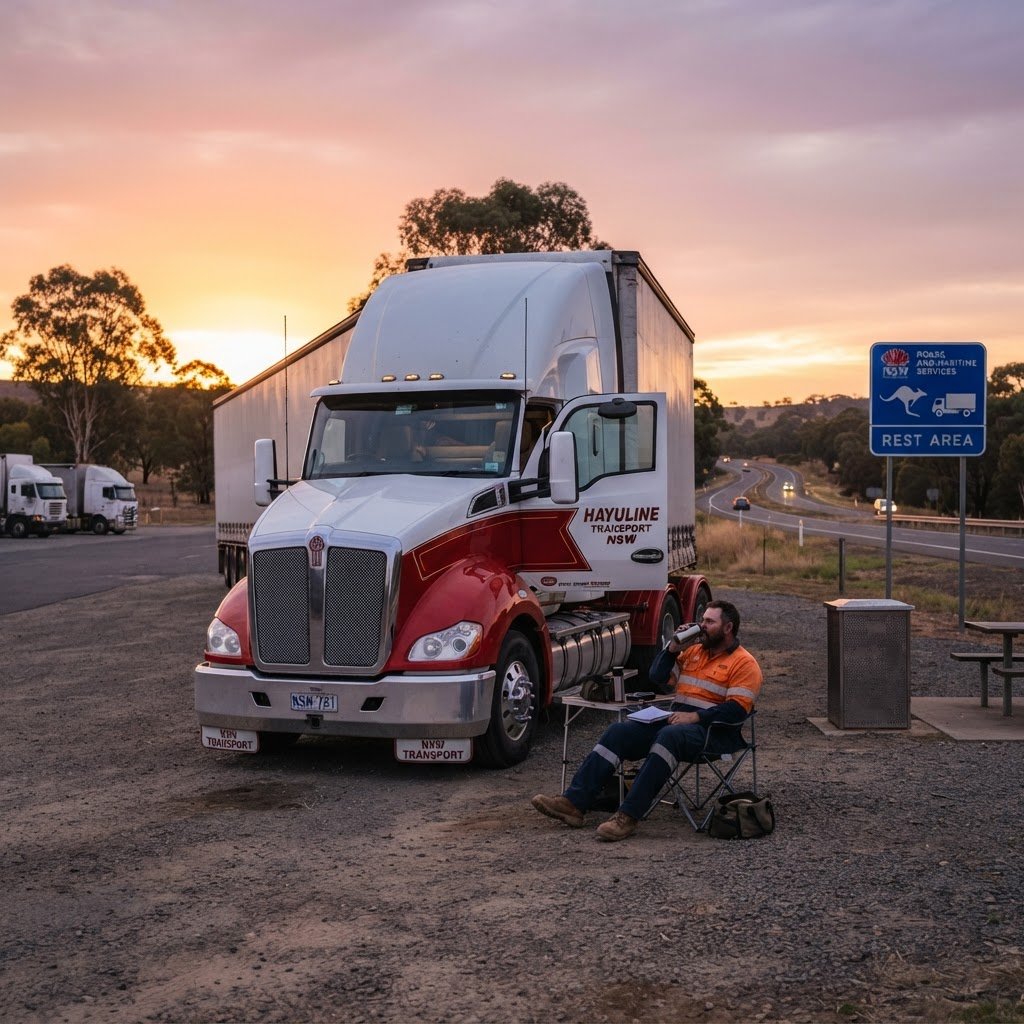
BFM is designed for operators and drivers who need more flexibility in their scheduling — particularly for regional routes, long-haul freight, and just-in-time deliveries across NSW and interstate. The training ensures drivers understand how to manage their fatigue within the expanded hours, recognise warning signs, and keep accurate records using a work diary or electronic work diary (EWD).
How Long Does the BFM Course Take?
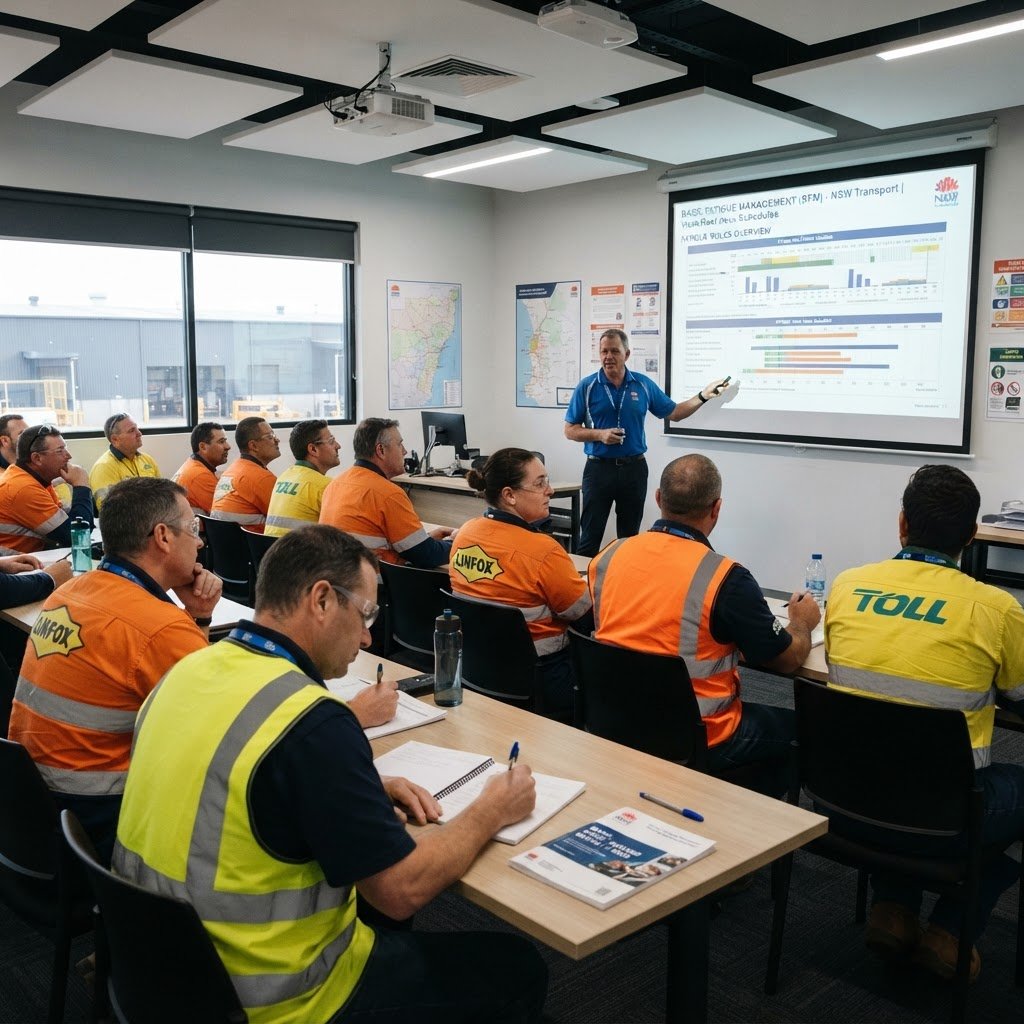
The BFM course at Kells Safety Centre takes 4–6 hours to complete, delivered in a single face-to-face session. There is no multi-day commitment required — you arrive in the morning and leave the same day with your Statement of Attainment (assuming you pass the assessment). The exact duration depends on class size and how long the assessment component takes for each group.
The course is structured to cover all TLIIF0005 unit requirements within that timeframe, including:
- Fatigue causes, signs, and effects on driving performance
- BFM work and rest hour limits (14-hour work, 7-hour continuous rest, 24-hour and 7-day limits)
- How to plan trips using BFM schedules
- Work diary completion and record-keeping requirements
- Identifying and managing fatigue risk factors
- NHVR compliance and audit obligations
The assessment includes a written component and scenario-based questions to confirm you can apply BFM rules in real-world driving situations. Kells Safety Centre trainers provide support throughout — if you need clarification on any topic, the small class sizes mean you get direct attention.
How Much Does the BFM Course Cost?
The BFM course at Kells Safety Centre costs $250. This is an all-inclusive fee that covers:
- Face-to-face training delivery by qualified trainers
- All course materials and handouts
- Assessment and Statement of Attainment issuance
- Training room facilities at Wetherill Park or Wollongong
There are no hidden fees. The $250 is paid at enrolment, and once you pass, you receive your Statement of Attainment for TLIIF0005. You then submit this to the NHVR as part of your BFM accreditation application — the NHVR charges a separate accreditation fee that is not included in the course cost.
What’s Included in the BFM Course?
The Kells Safety Centre BFM course is built around the TLIIF0005 unit of competency — Apply fatigue management strategies. Here’s what the training covers in detail:
Fatigue Science and Risk Management
You learn the biological factors that cause fatigue, how sleep deprivation affects reaction time and decision-making, and how to identify early warning signs. The course covers circadian rhythms, sleep debt, and the specific risks for night shift and long-haul drivers.
BFM Work and Rest Hour Limits
The core of the course is understanding the BFM schedule. Under BFM, drivers can work up to 14 hours in a 24-hour period, with a minimum 7-hour continuous rest break. The course covers the full set of limits:
- Work time: Max 14 hours in 24 hours, max 84 hours in 7 days
- Rest time: Min 7 hours continuous rest in 24 hours, min 24 hours rest in 7 days
- Short breaks: Min 15-minute breaks for every 5 hours of work
- Long breaks: How to split rest periods correctly
Work Diary and Record-Keeping
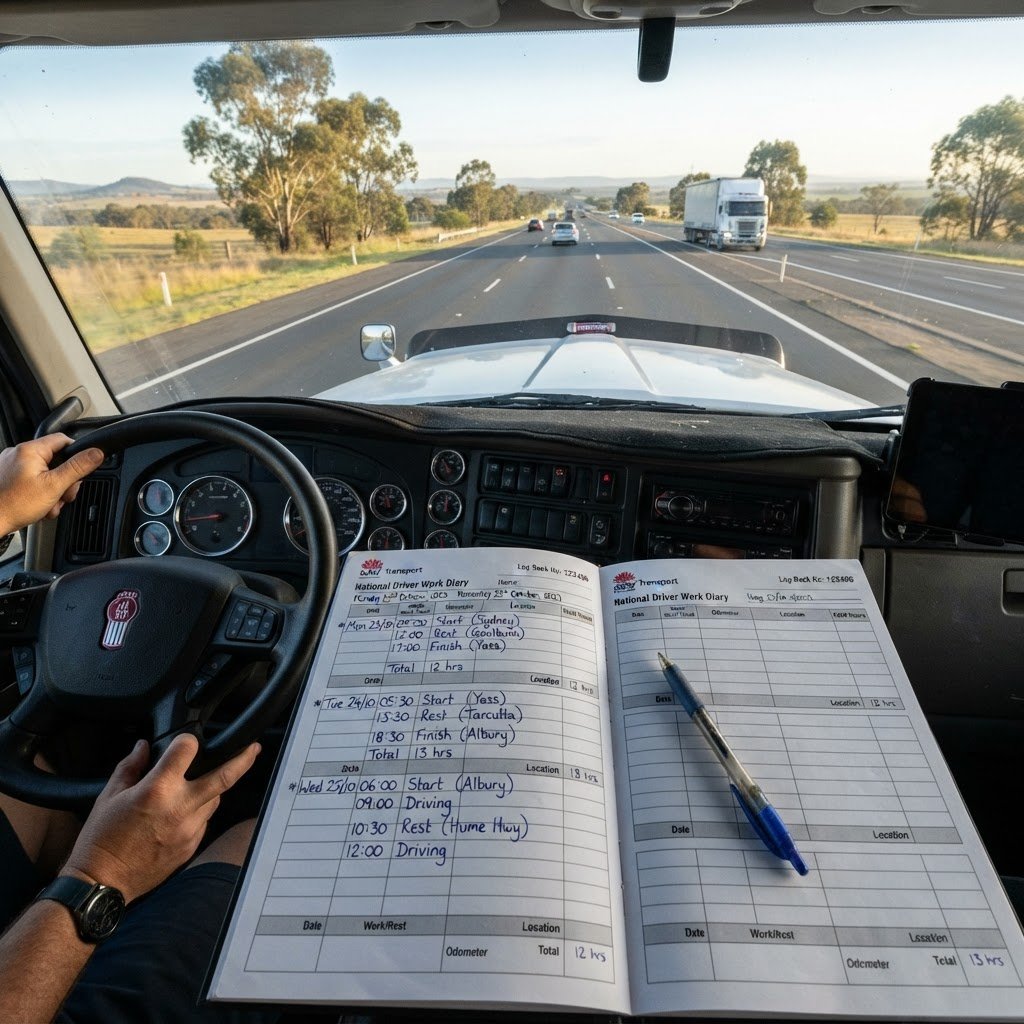
Accurate record-keeping is non-negotiable for BFM drivers. The course teaches you how to fill in a National Driver Work Diary correctly, including pre-fill, start-of-day, and end-of-day entries. You also learn about Electronic Work Diaries (EWDs) and how they integrate with NHVR compliance monitoring. If you need a new work diary or safety equipment for your vehicle, these are available separately.
Trip Planning Under BFM
You work through real-world trip planning scenarios — mapping out a Sydney to Melbourne run using BFM hours, scheduling rest breaks, and adjusting for delays. This practical component ensures you can apply the rules the moment you leave the training room.
BFM vs Standard Hours: What Changes?
| Rule | Standard Hours | BFM |
|---|---|---|
| Max work in 24 hours | 12 hours | 14 hours |
| Min rest in 24 hours | 7 hours | 7 hours (continuous) |
| Max work in 7 days | 72 hours | 84 hours |
| Min rest in 7 days | 24 hours | 24 hours (continuous) |
| Requires accreditation? | No | Yes — NHVR BFM accreditation |
| Requires training? | No | Yes — TLIIF0005 or equivalent |
The extra 2 hours per shift and 12 hours per week may not sound like much, but for freight operators running tight schedules, BFM can be the difference between making a delivery window and missing it. For more on how BFM fits into the broader fatigue management framework, see our complete BFM driver guide and our breakdown of heavy vehicle fatigue management rules in NSW.
How to Enrol in the BFM Course
Enrolling in the BFM course at Kells Safety Centre is straightforward:
- Book online — visit our BFM course page to select a date and location
- Choose your location — Wetherill Park or Wollongong
- Pay the $250 course fee — all materials included
- Attend the 4–6 hour training session — bring photo ID
- Complete the assessment — written and scenario-based
- Receive your Statement of Attainment — issued same day on successful completion
- Apply for NHVR BFM accreditation — submit your Statement of Attainment with the NHVR application
You can also complete the BFM course online if you prefer self-paced delivery, though the face-to-face option at Kells gives you direct trainer support and same-day assessment.
Who Needs BFM Training?
BFM training is required for any NSW heavy vehicle driver who wants to operate under BFM work and rest hour schedules rather than standard hours. This includes:
- Long-haul truck drivers running regional or interstate routes
- Drivers working for operators with BFM accreditation
- Owner-drivers who want the flexibility of 14-hour shifts
- Schedulers and dispatchers who plan BFM rosters (TLIIF0006 scheduler fatigue course)
- Transport company managers responsible for fatigue compliance
If your employer holds BFM accreditation, you cannot drive under BFM hours without completing the training yourself. The Safe Work NSW and NHVR both treat unaccredited BFM driving as a serious fatigue management breach.
Key Takeaways
- BFM course duration: 4–6 hours, single session, same-day completion
- Cost: $250 all-inclusive at Kells Safety Centre (RTO 91528)
- Unit: TLIIF0005 — Apply fatigue management strategies
- BFM benefit: Work up to 14 hours per 24-hour period (vs 12 standard)
- After course: Apply for NHVR BFM accreditation using your Statement of Attainment
- Locations: Wetherill Park and Wollongong, NSW
Ready to get BFM accredited? The BFM course at Kells Safety Centre takes just one day and costs $250. Book your spot at Wetherill Park or Wollongong today.
View All Training CoursesFrequently Asked Questions
How long does the BFM course take to complete?
The BFM course at Kells Safety Centre takes 4–6 hours, delivered in a single face-to-face session. You attend in the morning and leave the same day with your Statement of Attainment for TLIIF0005, provided you pass the written and scenario-based assessment. There is no multi-day commitment required.
How much does the BFM course cost in NSW?
The BFM course costs $250 at Kells Safety Centre. This is an all-inclusive fee covering training delivery, all course materials, assessment, and your Statement of Attainment. The NHVR charges a separate fee for BFM accreditation, which is not included in the course price.
Can I do the BFM course online?
Yes, Kells Safety Centre offers an online BFM course option for drivers who prefer self-paced learning. The online course covers the same TLIIF0005 unit content and issues the same Statement of Attainment. However, the face-to-face option gives you direct trainer support and same-day assessment completion.
What is the difference between BFM and standard hours?
Standard hours allow a maximum of 12 hours work in 24 hours and 72 hours in 7 days. BFM extends this to 14 hours in 24 hours and 84 hours in 7 days, with a minimum 7 hours continuous rest. BFM requires accredited training (TLIIF0005) and NHVR accreditation, while standard hours do not.
Do I need BFM training if my employer has BFM accreditation?
Yes. Even if your employer holds BFM accreditation, each individual driver must complete BFM training (TLIIF0005) and hold their own NHVR BFM accreditation to drive under BFM hours. Driving under BFM schedules without personal accreditation is a fatigue management breach under the HVNL.
What unit of competency is the BFM course?
The BFM course covers TLIIF0005 — Apply fatigue management strategies. This is the nationally recognised unit for Basic Fatigue Management training. Upon successful completion at Kells Safety Centre, you receive a Statement of Attainment for this unit.
How do I get BFM accreditation after the course?
After completing the BFM course and receiving your Statement of Attainment for TLIIF0005, you apply for BFM accreditation through the NHVR. The application requires your Statement of Attainment, a completed NHVR form, and payment of the NHVR accreditation fee. The NHVR processes the application and issues your BFM accreditation.
Where can I do the BFM course in NSW?
Kells Safety Centre offers the BFM course at two NSW locations: Wetherill Park in Sydney’s west and Wollongong in the Illawarra region. Both locations deliver the same TLIIF0005 training and assessment. You can also complete the course online if you prefer self-paced delivery.
Is the BFM Statement of Attainment nationally recognised?
Yes. Kells Safety Centre is a registered training organisation (RTO 91528), and the TLIIF0005 Statement of Attainment is nationally recognised under the Australian Qualifications Framework. It is accepted by the NHVR for BFM accreditation applications in all states and territories.
What happens if I fail the BFM assessment?
If you do not pass the BFM assessment on your first attempt, Kells Safety Centre trainers will work with you to identify the areas you need to revisit. You can re-sit the assessment. The course is designed to prepare you thoroughly — most participants pass on their first attempt with the training and support provided.