Quick Summary: Class 6 covers two very different hazards: Division 6.1 toxic substances — goods liable to cause death or serious injury if swallowed, inhaled or absorbed through skin — and Division 6.2 infectious substances, split into Category A (any quantity is a placard load) and Category B (placard load at 10 kg/L aggregate or more). Most other Class 6 loads placard above 1,000 kg/L aggregate (250 kg/L for Packing Group I). A dangerous goods driver licence in NSW is only required for bulk transport — a receptacle over 500 litres or 500kg — while packaged Class 6 loads above the placard quantity need placards and safety equipment but no licence.
On NSW roads, Class 6 is the class most drivers hope they never meet up close. Unlike flammables, the danger is invisible: a toxic gas or an infectious substance can injure without fire, without noise and without warning. NSW drivers who handle pesticides, industrial chemicals or clinical and laboratory consignments need to know where Class 6 sits in the nine dangerous goods classes, when a load placards, and when a licence is legally required.
Division 6.1: Toxic Substances
Toxic substances are liable either to cause death or serious injury, or to harm human health, if swallowed or inhaled or by skin contact. Classification is based on measured toxicity under the ADG Code — the LD50 (median lethal dose) for oral and dermal toxicity and the LC50 (median lethal concentration) for inhalation toxicity. Common 6.1 consignments include many pesticides and industrial chemicals.
Division 6.1 goods are assigned packing groups I, II or III according to how toxic they are, and the packing group drives the placard threshold.
Division 6.2: Infectious Substances
Infectious substances are known or reasonably expected to contain pathogens — micro-organisms including bacteria, viruses, rickettsia, parasites and fungi, and other agents such as prions that can cause disease in humans or animals. The division has two categories:
- Category A — an infectious substance transported in a form that, when exposure occurs, is capable of causing permanent disability, life-threatening or fatal disease in otherwise healthy humans or animals.
- Category B — anything that does not meet Category A criteria. Category B infectious substances must be assigned to UN 3373, except for medical or clinical wastes containing Category B infectious substances.
When Does a Class 6 Load Placard?
Placard thresholds for Class 6 (aggregate quantity per transport, per the manual’s threshold table):
- Division 6.2 Category A — all quantities
- Division 6.2 other than Category A — 10 kg/L or more
- Division 6.1, Packing Group I — more than 250 kg/L
- Division 6.1, Packing Groups II and III — more than 1,000 kg/L
- Any receptacle over 500L capacity or 500kg net — always a placard load
A Category A infectious consignment placards at any quantity — a single specimen box. A 6.1 Packing Group III pesticide load, by contrast, placards only above 1,000 kg/L aggregate. Note the difference from Class 3 flammable liquids: the threshold moves with the packing group and division, not the class label alone.
Do You Need a DG Licence for Class 6?
The dangerous goods driver licence test is about how the goods are carried, not which class they are:
- Bulk Class 6 (a receptacle with capacity over 500 litres, or containing over 500kg) — the driver must hold a dangerous goods driver licence, and the vehicle must display Emergency Information Panels.
- Packaged Class 6 — no dangerous goods driver licence is required, even when the aggregate load exceeds the placard quantity. Above the placard quantity, the vehicle must still be marked with class placards and carry the required safety equipment.
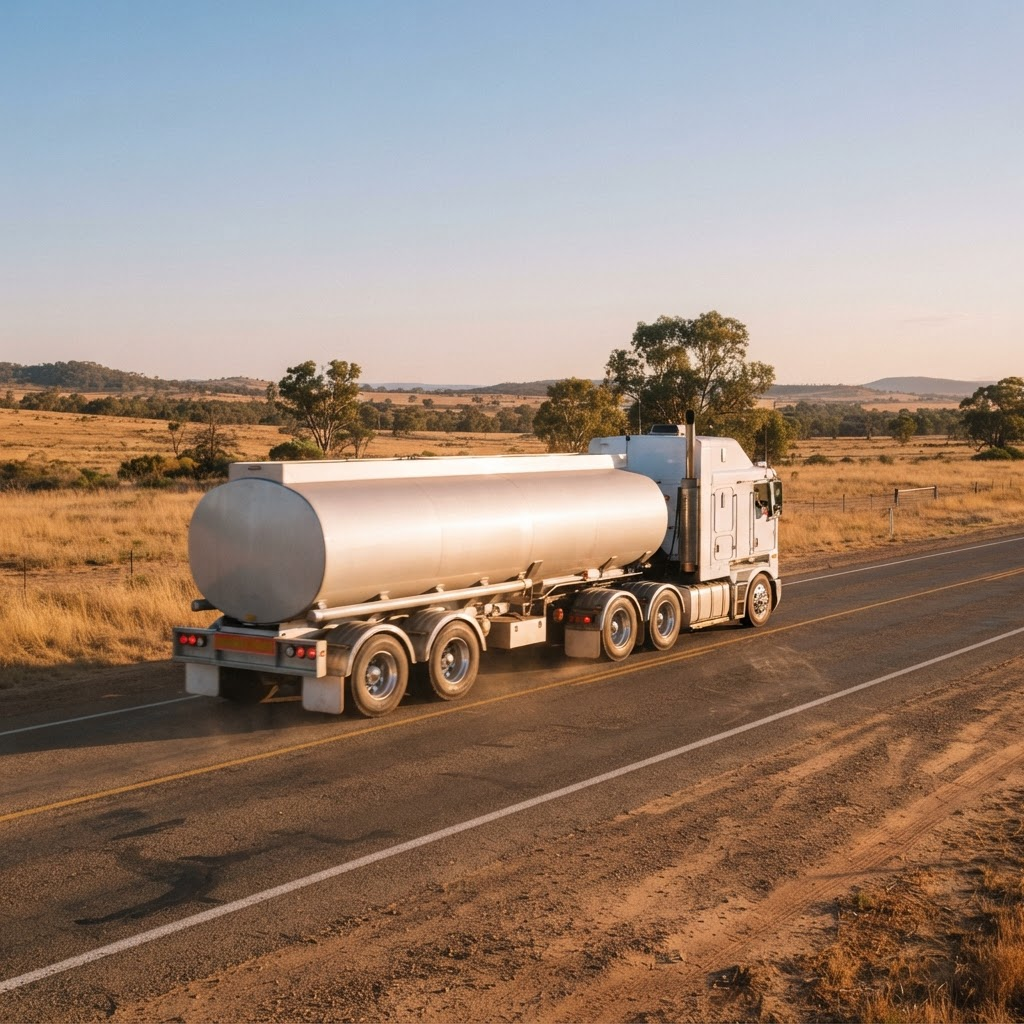
This mirrors the rule for what loads require a dangerous goods licence in every class: bulk triggers the licence; packaged goods trigger marking and equipment duties instead. Most Class 6 freight on NSW roads is packaged — drums, IBCs, cartons of diagnostic specimens — while bulk Class 6 transport (such as tankers of certain toxic chemicals) requires the licence.
Handling and Segregation Rules for Class 6
Beyond placarding, Class 6 loads carry handling obligations drivers and loaders must respect:
- Segregation — toxic substances must be kept away from food, food packaging and animal feed; incompatible classes must not be stowed together.
- Marking and labelling — packages display the Class 6 diamond; placard loads display class placards at least 250mm x 250mm on the front and rear of the vehicle.
- Emergency information — the EPG for the goods travels with the transport document, so first responders can identify the hazard; Category A and B consignments carry specific packaging and marking requirements.
- Documentation — the transport document must identify the proper shipping name, UN number, class and packing group for every Class 6 item on board.
Anyone who stores, handles or prepares Class 6 goods — not just drivers — needs training matched to the task: dangerous goods awareness training for packaged goods handling, or the full DG licence course at Kells Safety Centre (RTO 91528) for bulk transport drivers.
Key Takeaways:
- Class 6 = Division 6.1 toxic substances and Division 6.2 infectious substances.
- Category A infectious substances placard at all quantities; other 6.2 at 10 kg/L; 6.1 at 250 kg/L (PG I) or 1,000 kg/L (PG II/III).
- The DG driver licence is required only for bulk — receptacles over 500L/500kg.
- Packaged Class 6 above placard quantity: placards + safety equipment, no licence.
- Keep Class 6 away from food, food packaging and animal feed.
Frequently Asked Questions
What is Class 6 dangerous goods?
Class 6 has two divisions: Division 6.1 toxic substances, which can cause death, serious injury or harm to health if swallowed, inhaled or absorbed through the skin; and Division 6.2 infectious substances, which contain or may contain pathogens such as bacteria, viruses, parasites, fungi and prions.
What is the difference between Category A and Category B infectious substances?
Category A substances, when exposure occurs, are capable of causing permanent disability, life-threatening or fatal disease in otherwise healthy humans or animals. Category B substances do not meet Category A criteria and must be assigned to UN 3373, except medical or clinical wastes containing Category B infectious substances.
Do you need a dangerous goods licence for Class 6 in NSW?
Only for bulk transport — carrying Class 6 goods in a receptacle with capacity over 500 litres or containing over 500kg. Packaged Class 6 loads do not require the driver licence, though above the placard quantity the vehicle must be placarded and carry required safety equipment.
When does a Class 6 load become a placard load?
Division 6.2 Category A at any quantity; other Division 6.2 at 10 kg/L aggregate or more; Division 6.1 Packing Group I above 250 kg/L; and Packing Groups II and III above 1,000 kg/L. Any receptacle over 500L capacity or 500kg net is always a placard load.
What are examples of Class 6 substances on NSW roads?
Many pesticides are Division 6.1, along with a range of industrial toxic chemicals. Division 6.2 covers infectious substances and medical or clinical waste consignments — laboratory specimens, diagnostic materials and similar freight.
How should Class 6 goods be segregated?
Toxic substances must be kept away from food, food packaging and animal feed, and separated from incompatible classes of dangerous goods in line with the ADG Code segregation rules.
Which course covers Class 6 dangerous goods in NSW?
The two-day Dangerous Goods Licence Course (TLILIC0001) at Kells Safety Centre covers classification, placarding and equipment for bulk drivers, while the online Dangerous Goods Awareness course suits packaged-goods handlers.