
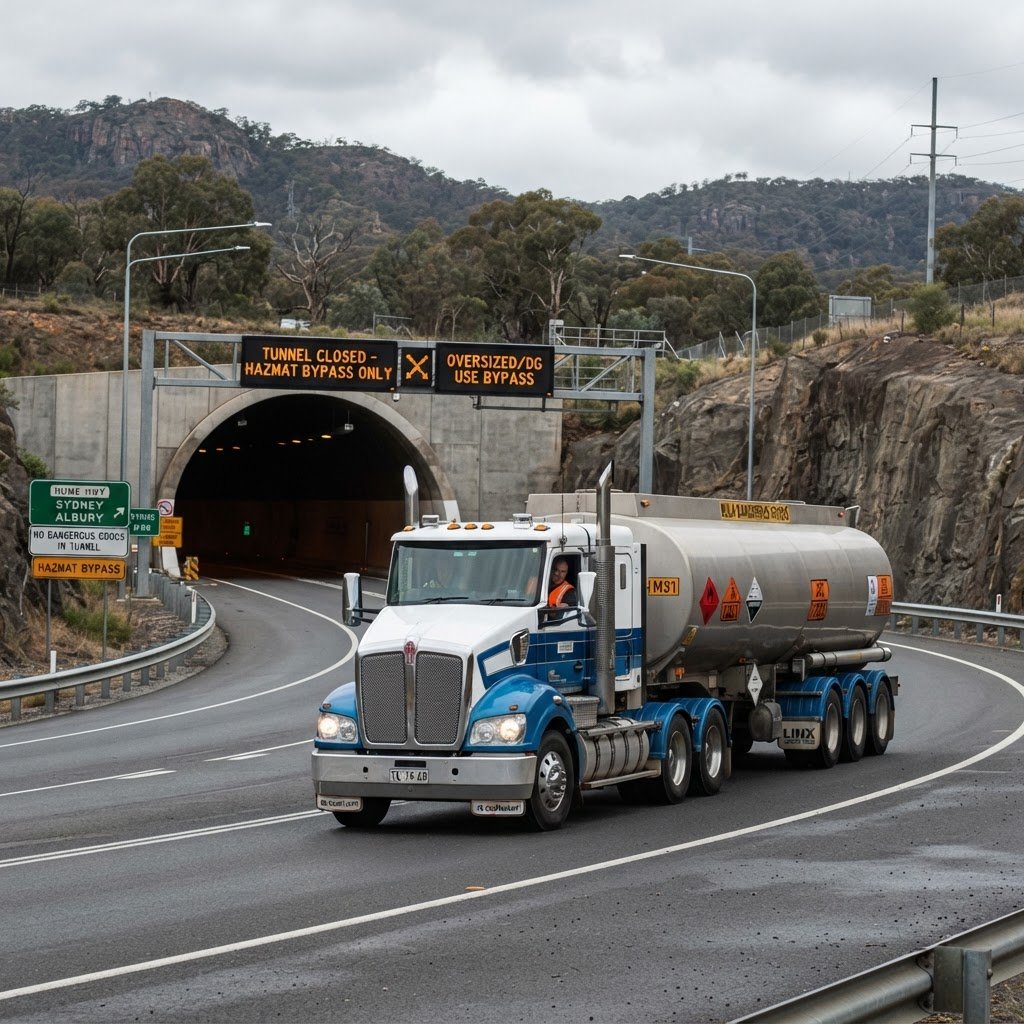
Quick Summary: If you carry placard loads of dangerous goods in NSW, route planning is not optional — it is a legal requirement under the Australian Dangerous Goods (ADG) Code. All placard loads are banned from every motorway tunnel in the Sydney metropolitan area, and additional route restrictions apply during peak periods. Drivers must plan their route before departure, carry the correct documentation, and know which tunnels, bridges, and roads are off-limits for their load class.
Transporting dangerous goods by road in NSW requires more than a valid dangerous goods driver licence. Every trip carrying a placard load demands a planned route that avoids prohibited roads, tunnels, and restricted zones. Get it wrong and you face fines, licence suspension, and serious safety risk.
Kells Safety Centre (RTO 91528) trains NSW drivers in the Dangerous Goods Licence Course (TLILIC0001), where route planning is a core component of the curriculum. This guide covers what the ADG Code requires, which Sydney tunnels are off-limits, and how to plan a compliant route for your next DG load.
What Is Dangerous Goods Route Planning?
Dangerous goods route planning is the process of mapping a travel path for a vehicle carrying placard loads that avoids restricted roads, tunnels, and zones where those goods are prohibited. Under the Australian Dangerous Goods Code (ADG Code, current edition 7.9), drivers and operators must ensure that the planned route complies with state and territory road restrictions for the specific class of dangerous goods being carried.
In NSW, the NSW EPA publishes and enforces prohibited route information. Local councils and toll road operators may also impose additional restrictions. Route planning means checking all of these sources before you drive.
Why Route Planning Matters for DG Drivers
A placard load of dangerous goods entering a Sydney tunnel is a serious incident. Tunnels are confined spaces where a fire, spill, or gas leak can escalate rapidly with limited evacuation routes and restricted emergency access. That is why NSW takes a zero-tolerance approach to placard loads in motorway tunnels.
Beyond the safety risk, driving a placard load on a prohibited route is an offence under NSW dangerous goods legislation. Penalties include substantial fines, potential suspension of your dangerous goods driver licence, and liability under Chain of Responsibility laws for operators and schedulers who directed the driver onto that route.
NSW Prohibited Routes for Dangerous Goods
The NSW EPA publishes prohibited route information for dangerous goods transport. The core rules are:
- All placard loads of dangerous goods are prohibited from all motorway tunnels in the Sydney metropolitan area
- During peak periods, all placard loads face additional route restrictions beyond the tunnel ban
- Certain roads and bridges have class-specific restrictions based on the type of dangerous goods being carried
- Some routes allow specific classes but prohibit others — the restriction depends on your load, not just whether you are placarded
Sydney Motorway Tunnels — Complete Ban for Placard Loads
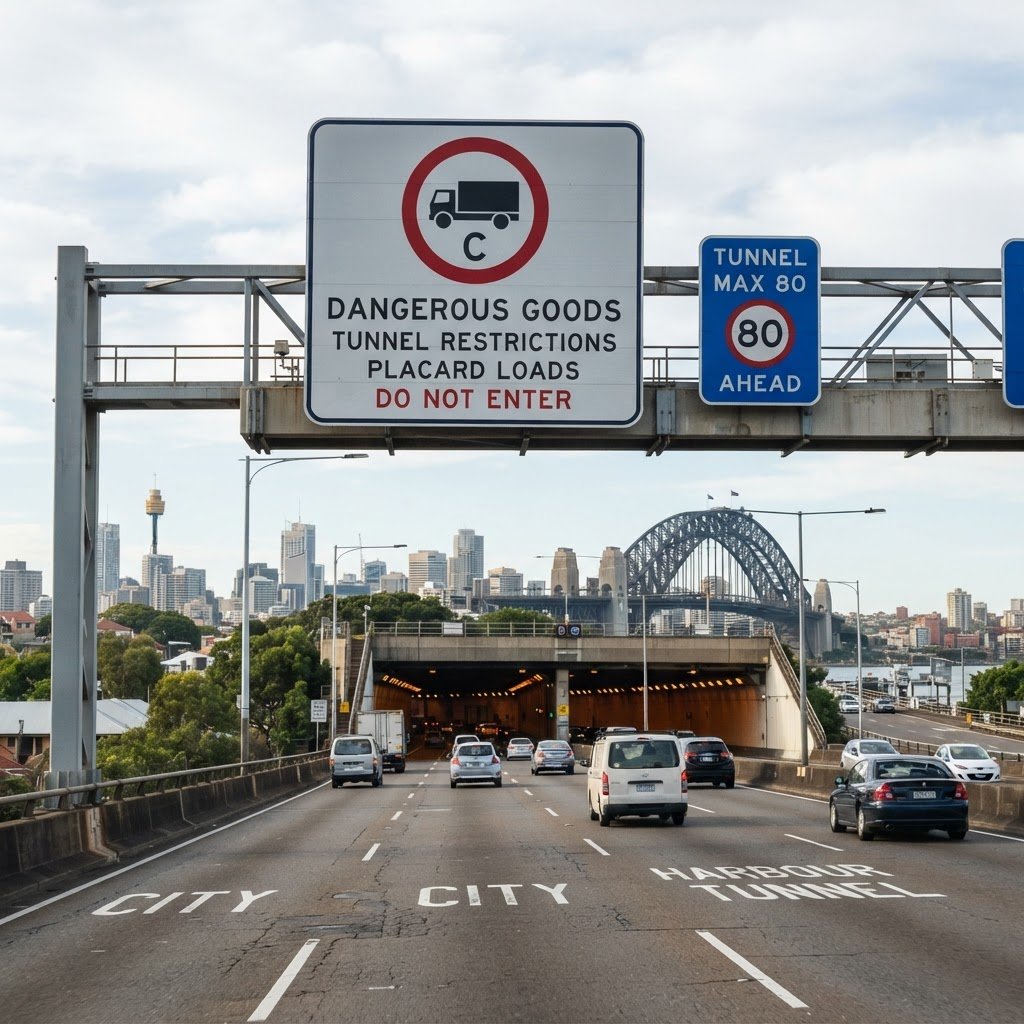
Every motorway tunnel in the Sydney metropolitan area is off-limits to placard loads. This includes:
- Lane Cove Tunnel
- Sydney Harbour Tunnel
- Eastern Distributor (tunnel section)
- M5 East Tunnel (now part of WestConnex)
- NorthConnex Tunnel
- WestConnex tunnels (M4-M5 Link, M4 East, New M5)
Toll road operators like Transurban actively monitor these tunnels 24/7 and can detect placarded vehicles. If a placard load enters a tunnel, the operator can alert authorities and the driver may be stopped and fined. You can read more about tunnel-specific restrictions in our Dangerous Goods Tunnel Restrictions NSW guide.
Tunnel Restriction Categories in the ADG Code
The ADG Code assigns a tunnel restriction category to each UN number (dangerous goods substance). These categories determine whether a particular substance can pass through a tunnel that allows some restricted traffic. The categories range from B through E:
| Category | Restriction Level | What It Means |
|---|---|---|
| B | Least restrictive | Goods may pass through most tunnels with limited restrictions |
| C | Moderate | Goods prohibited from some tunnels depending on local rules |
| D | High | Goods prohibited from most tunnels |
| E | Most restrictive | Goods prohibited from virtually all tunnels |
In practice, NSW applies a blanket ban on all placard loads in Sydney motorway tunnels regardless of tunnel category. The category system matters more for regional roads and tunnels outside the Sydney metropolitan area, where local restrictions may vary.
How to Plan a DG Route in NSW — Step by Step
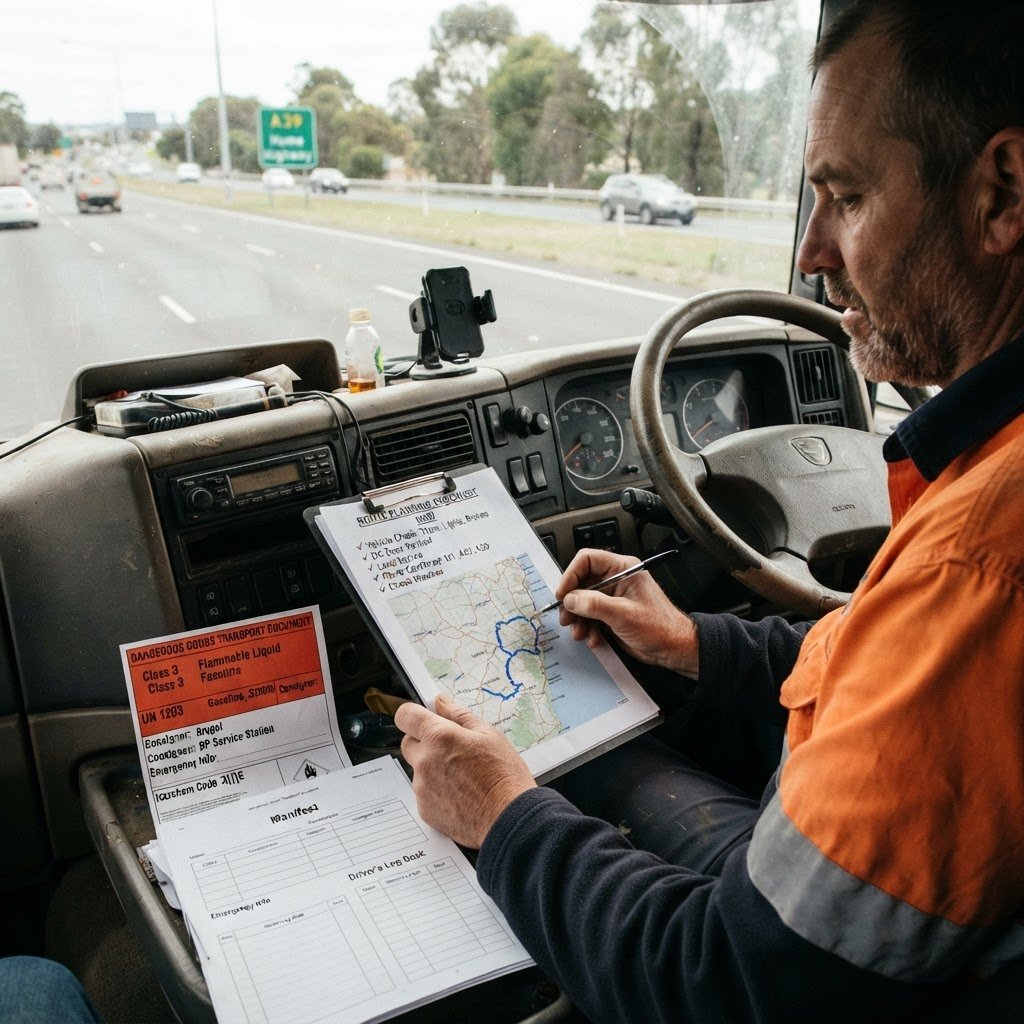
- Identify your load class and UN number. Check the ADG Code classification for your goods. This determines your placard requirements and any class-specific route restrictions.
- Check if your load is a placard load. Use our Placard Load Calculator to determine whether your load triggers placard requirements under the ADG Code.
- Check the NSW EPA prohibited routes list. Review the current prohibited route information published by the NSW EPA before you plan your path.
- Identify all tunnels on your proposed route. Map your route and flag any motorway tunnels in the Sydney metropolitan area. Plan an alternative route that avoids them entirely.
- Check for class-specific restrictions. Some roads and bridges restrict specific DG classes even if they are not tunnels. Verify your load class against any local road restrictions.
- Plan for peak period restrictions. If you are travelling during peak periods, additional route restrictions may apply. Plan your departure time to avoid peak restrictions where possible.
- Document your route. Record your planned route, including any deviations to avoid prohibited roads. Carry this documentation with your transport documents.
- Carry emergency information. Ensure your vehicle carries the correct vehicle markings, placards, and emergency information panels (EIPs) for your load class.
Common DG Route Planning Mistakes
Even experienced drivers make route planning errors. The most common mistakes include:
- Relying on GPS without DG restrictions. Standard navigation apps do not account for dangerous goods route restrictions. They will route you through tunnels because they are the fastest path.
- Assuming a small load is exempt. Even if your load seems small, if it meets the placard threshold quantity, the full prohibited route restrictions apply.
- Forgetting peak period restrictions. A route that is legal off-peak may be prohibited during peak hours. Always check the time of travel.
- Not checking for temporary restrictions. Road works, special events, and emergency incidents can create temporary prohibited routes that are not on the permanent EPA list.
- Ignoring class-specific road restrictions. Some roads restrict specific DG classes (for example, flammable gases on certain bridges) even when they allow other placard loads.
If you are carrying Class 2 gases or Class 3 flammable liquids, pay extra attention to class-specific restrictions on your route.
What Happens If You Are Caught on a Prohibited Route?
Driving a placard load on a prohibited route in NSW is an offence. Consequences can include:
- On-the-spot fines issued by NSW Police or NSW EPA officers
- Dangerous goods driver licence suspension or revocation in serious cases
- Chain of Responsibility liability for operators, schedulers, and consignors who directed or influenced the route
- Vehicle impoundment in some circumstances
- Insurance complications — an incident on a prohibited route may void insurance coverage for the load
Under Chain of Responsibility laws, it is not just the driver who is responsible. Operators, schedulers, and consignors all share liability if they contributed to the driver taking a prohibited route. This is why route planning must be documented and communicated to all parties in the transport chain.
Carrying dangerous goods in NSW? Route planning is just one part of the compliance picture. The Dangerous Goods Licence Course at Kells Safety Centre covers route planning, tunnel restrictions, placarding, and emergency procedures. Enrol today at our Wetherill Park or Wollongong training centre.
DG Emergency Equipment for Route Planning
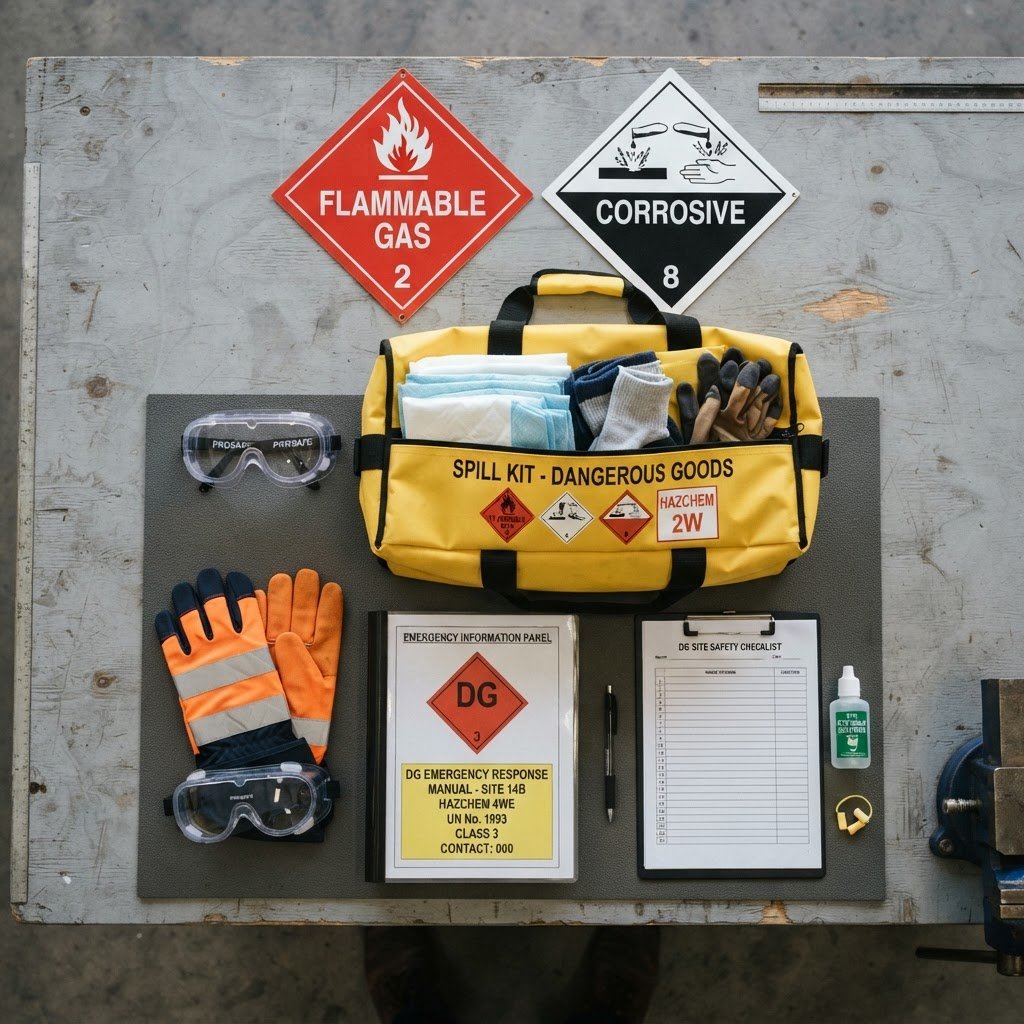
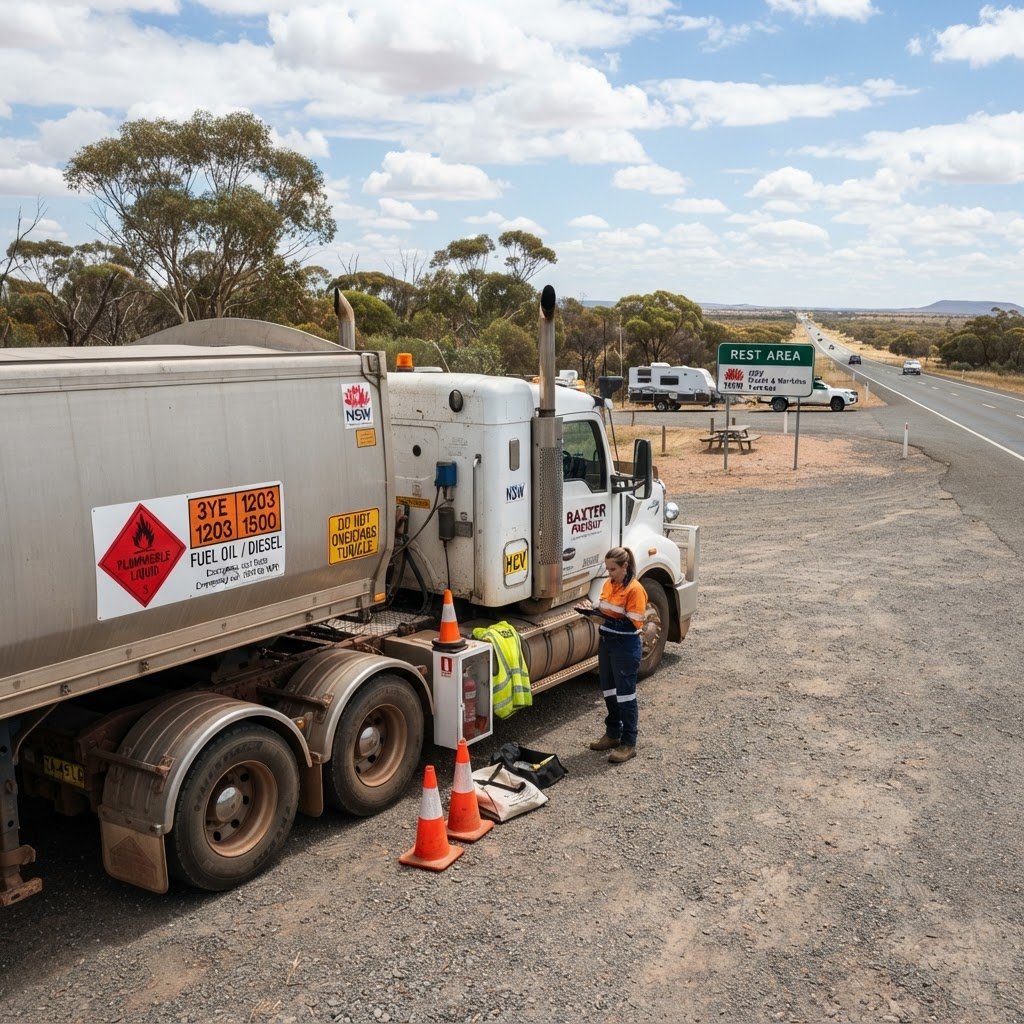
Route planning and emergency preparedness go hand in hand. The ADG Code requires vehicles carrying placard loads to carry specific emergency equipment. Before you depart on any planned route, verify your vehicle carries:
- Appropriate fire extinguisher(s) rated for your DG class
- Spill kit suitable for your load type
- Personal protective equipment (PPE) for the driver
- Emergency information panel (EIP) with correct UN number and Hazchem code
- Correct DG placards and class labels
- Transport documentation including the dangerous goods declaration
You can find DG-compliant safety equipment including spill kits, placards, and fire extinguishers through our safety equipment range.
Key Takeaways
- All placard loads are banned from every motorway tunnel in the Sydney metropolitan area — no exceptions
- Additional route restrictions apply during peak periods
- Standard GPS navigation does not account for DG route restrictions — plan manually using the EPA prohibited routes list
- Route planning is a Chain of Responsibility obligation — drivers, operators, and schedulers all share liability
- The ADG Code assigns tunnel restriction categories (B–E) to each UN number, but NSW applies a blanket tunnel ban for all placard loads
- Always carry the correct emergency equipment, placards, and documentation for your load
Frequently Asked Questions
Can I drive a placard load through a Sydney tunnel if I use a different class of dangerous goods?
No. NSW applies a blanket ban on all placard loads of dangerous goods in all motorway tunnels in the Sydney metropolitan area. The restriction applies regardless of the dangerous goods class, UN number, or quantity. There is no exemption for specific classes or smaller placard loads. If your vehicle is placarded, you cannot use any Sydney motorway tunnel.
Does my GPS or navigation app account for dangerous goods route restrictions?
No. Standard GPS navigation apps like Google Maps, Apple Maps, and most truck-specific GPS systems do not account for dangerous goods prohibited routes. They will often route you through tunnels because they are the fastest path. You must plan your DG route manually using the NSW EPA prohibited routes list and verify that your planned path does not include any restricted roads or tunnels before departure.
What are the peak period restrictions for dangerous goods in NSW?
The NSW EPA applies additional route restrictions for placard loads during peak traffic periods. These restrictions extend beyond the tunnel ban and may prohibit placard loads from certain motorways and major roads during specified hours. Peak periods typically fall during morning and afternoon commuter rush hours on weekdays. Always check the current EPA prohibited routes information for the specific times and roads affected before planning your departure time.
Who is responsible for route planning under Chain of Responsibility?
Under Chain of Responsibility (CoR) laws, route planning responsibility is shared. The driver must follow the planned route and avoid prohibited roads. But operators, schedulers, consignors, and loading managers also share liability if they influenced or directed the driver onto a prohibited route. All parties in the transport chain must take reasonable steps to ensure compliance with DG route restrictions. This is covered in our Chain of Responsibility training.
What is the fine for driving a placard load on a prohibited route in NSW?
Driving a placard load on a prohibited route is an offence under NSW dangerous goods legislation. Penalties vary depending on the severity and circumstances, but can include substantial on-the-spot fines, dangerous goods driver licence suspension or revocation, and potential vehicle impoundment. In cases where an incident occurs on a prohibited route, penalties can be significantly higher and may include criminal charges. The exact penalty depends on the nature of the offence and whether it is a first or repeat violation.
Do I need a dangerous goods licence to plan a DG route?
If you are the driver of a vehicle carrying a placard load of dangerous goods on a public road, you must hold a current NSW dangerous goods driver licence (TLILIC0001). Route planning is a core component of the TLILIC0001 course curriculum. If you do not yet hold a DG licence, you must complete the two-day Dangerous Goods Licence Course at a registered training organisation like Kells Safety Centre before you can legally transport placard loads.
Are there dangerous goods route restrictions outside Sydney?
Yes. While the Sydney motorway tunnel ban is the most well-known restriction, other NSW roads, bridges, and tunnels may have class-specific or placard load restrictions. Regional tunnels, bridges with weight or height restrictions, and roads near sensitive areas (such as water catchments or tunnels) may all impose DG restrictions. Always check the NSW EPA prohibited routes list and any local council restrictions for areas outside Sydney before planning your route.
What tunnel restriction category does my dangerous goods load fall under?
The ADG Code assigns a tunnel restriction category (B, C, D, or E) to each UN number. You can find your load’s tunnel restriction category in the ADG Code Dangerous Goods List, which lists every UN number with its classification, packing group, and tunnel restriction code. In NSW, the blanket tunnel ban for all placard loads means the specific category is less relevant for Sydney motorway tunnels, but it matters for regional roads and tunnels where local restrictions may vary by category.
Ready to transport dangerous goods legally in NSW? Route planning is just one part of staying compliant. Kells Safety Centre (RTO 91528) delivers the full TLILIC0001 Dangerous Goods Licence Course at our Wetherill Park and Wollongong training centres. View all training courses and enrol today.