
Kells Safety Centre (RTO 91528) delivers dangerous goods and transport safety training for NSW drivers and operators.
nEmergency Information Panels (EIP) NSW: What Dangerous Goods Drivers Need to Know
An Emergency Information Panel is a legal requirement on dangerous goods vehicles in New South Wales, and NHVR roadside inspectors check for it. Yet many DG drivers — and even some operators — are unclear about exactly what an EIP is, when it is required, and what information must appear on it. Non-compliance is a defect notice waiting to happen. Here is the definitive guide.
Get your DG Licence and understand every legal requirement.
Enrol in the TLILIC0001 Course →What Is an Emergency Information Panel (EIP)?
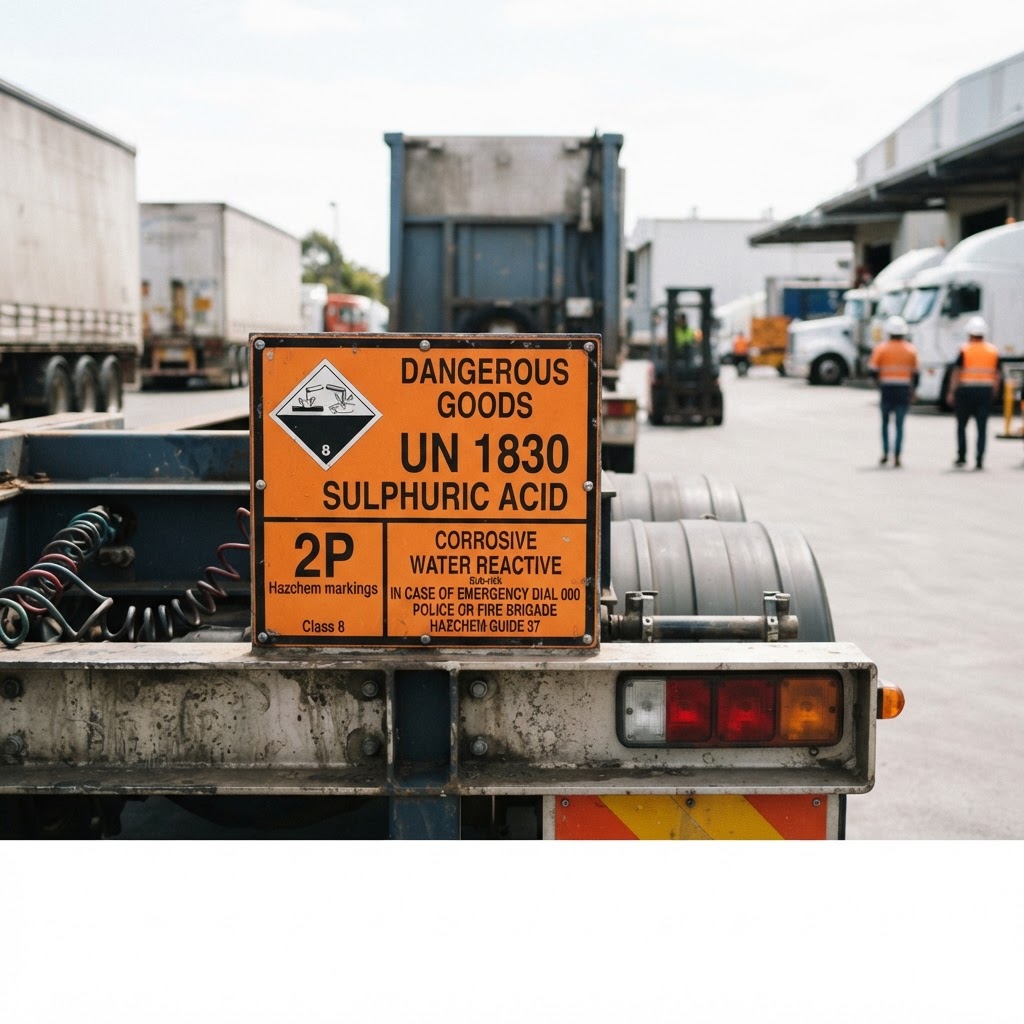
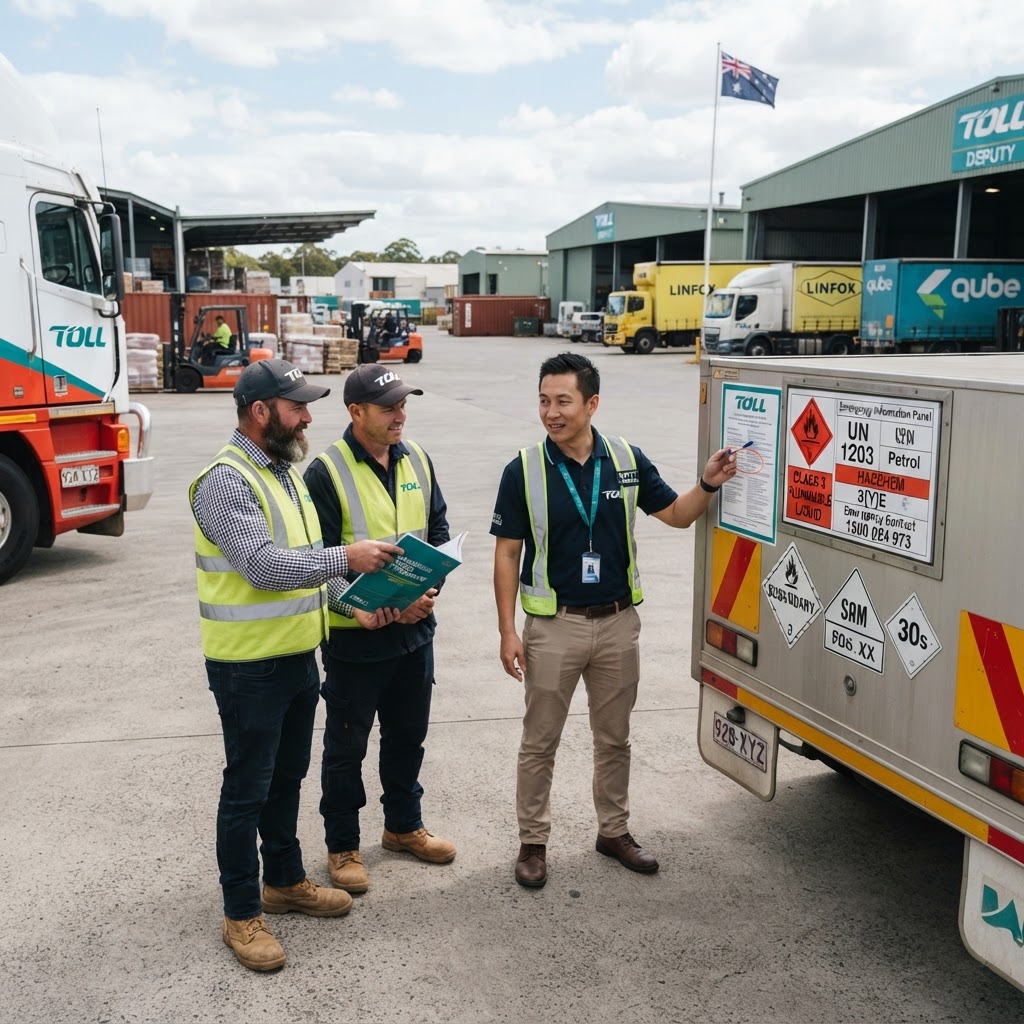
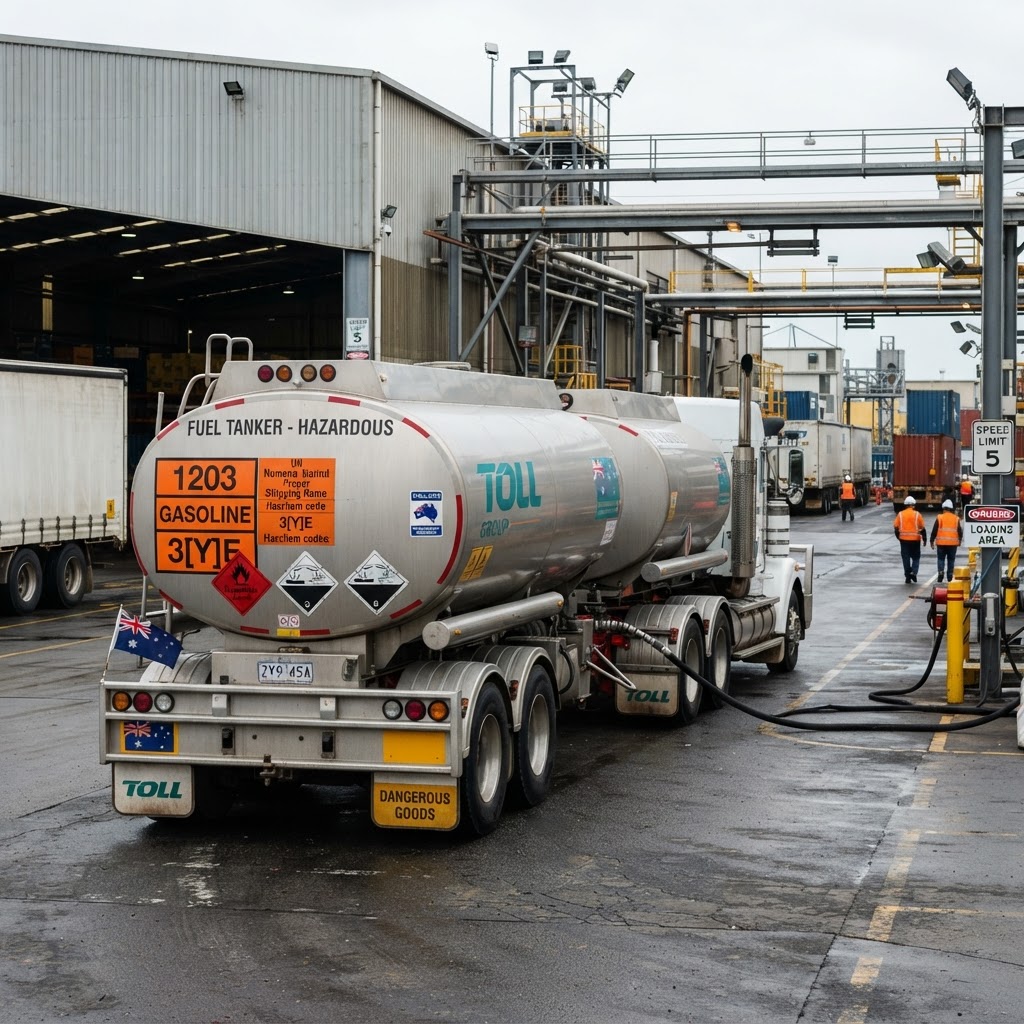
An Emergency Information Panel is a rigid, weatherproof placard mounted on the exterior of a vehicle transporting dangerous goods. It is larger and more detailed than a standard class label or transport placard — it is specifically designed to provide emergency services (fire, ambulance, police) with the critical information they need to respond safely to a dangerous goods incident on a NSW road or at a depot.
The EIP displays four pieces of information:
- Hazchem code — a 2–4 character alphanumeric code telling emergency responders the immediate emergency response action required (e.g., “3YE” = spray water, dilute and disperse)
- UN number — the 4-digit identifier for the specific dangerous substance (e.g., UN1203 for Petrol/Gasoline)
- CHEMCALL number — the Australian 24-hour emergency chemical hotline: 1800 039 008
- Class label / Hazard diamond — the ADG Code class label (e.g., Class 3 for flammable liquids, shown as an orange diamond with a flame)
The EIP is not the same as a package label or a vehicle placard. It is a distinct compliance requirement under the ADG Code.
When Is an EIP Required?
Under the ADG Code, an EIP is required when a vehicle is transporting dangerous goods at or above the placard load threshold specified for that substance. The threshold varies by class and packing group — but once you exceed it, an EIP becomes mandatory.
Common scenarios requiring an EIP:
- Bulk tanker carrying Class 3 flammable liquids — EIP required at all quantities (no threshold)
- Packaged Class 8 corrosives exceeding 500kg in one load — EIP required
- Mixed packaged DG loads that collectively exceed the aggregate placard load threshold — EIP required
- Vehicle carrying multiple small DG loads that separately fall below threshold but collectively exceed it — EIP required
If you are unsure whether your specific load requires an EIP, consult the ADG Code Dangerous Goods List for your UN number or contact the NSW EPA for guidance.
The Hazchem Code Explained
The hazchem code is perhaps the most critical element of an EIP because it tells an emergency responder — in just 2–4 characters — what to do if the vehicle is involved in an incident. The code format is:
[Number][Letter][Letter (optional)]
- Number (1–4): Hazard type — 1 = fire hazard, 2 = spillage, 3 = spillage or fire, 4 = asphyxiant
- First letter (Y/E/S/R/W): Equipment required — Y = spray water, E = evacuate area, S = shelter in place, R = dispersal (keep upwind), W = water-based
- Second letter (E/X): Environmental warning — E = poison, X = corrosive (do not use water if X)
Examples:
- 3YE: Spillage or fire hazard | spray with water | poison hazard — typical for Class 3 flammable liquids
- 4WE: Asphyxiant | use water-based response | poison hazard — typical for some toxic gases
The correct hazchem code for your specific UN number is found in the ADG Code Dangerous Goods List — it is not optional and cannot be guessed. Using the wrong code is a compliance breach.
EIP Size and Mounting Requirements
The ADG Code specifies two standard EIP sizes:
Large EIP (600mm × 800mm)
Required for bulk tankers and prime movers transporting placard-load dangerous goods. The larger size ensures visibility from a distance — critical when responding to a tanker incident on a highway. The large EIP is mounted on the rear and both sides of the vehicle at a height of 1.2–1.5 metres from the ground.
Small EIP (300mm × 400mm)
Permitted for some smaller vehicles and packaged goods transport operations. Smaller vehicles (rigid trucks, vans) may meet compliance requirements with a small EIP. It is still mounted on the rear and sides at an accessible height, but the smaller footprint reduces visibility distance — which is acceptable for urban or slower-speed operations.
The EIP must be:
- Rigid (not flexible or painted on) — typically plastic, metal, or composite
- Weatherproof and legible in all conditions
- Visible from outside the vehicle (no obscuring by load or debris)
- Replaced if faded, damaged, or illegible — there is no service life, just a legibility requirement
Customised vs Interchangeable EIP Panels
There are two common EIP approaches for operators:
Customised EIP Panels
Pre-printed with a specific UN number, hazchem code, and class label — ideal for operators who consistently carry the same product. Customised EIPs eliminate field error and are the most straightforward compliance solution. They are mounted permanently or swapped between vehicles as needed.
Interchangeable Panel Systems
A metal or canvas frame permanently mounted on the vehicle, with removable insert cards for different UN numbers. Ideal for operators who run multiple products or variable loads. The frame stays on the vehicle; you change the insert card to match the day’s load. This approach requires discipline — the insert must be changed every time the load changes, and the correct information must be loaded into the frame. Get this wrong and you have an instant compliance breach.
For maximum compliance certainty, customised EIPs are safer if you stick to one product. Interchangeable systems require operational discipline and are better suited to operators with systems to manage the inserts.
Common EIP Compliance Errors (and How to Avoid Them)
NHVR roadside inspections regularly flag these EIP issues:
- Wrong size EIP for vehicle type: A small EIP on a bulk tanker is non-compliant — use the size specified for your vehicle class
- Faded, damaged, or illegible panel: If emergency services cannot read the hazchem code or UN number, the EIP fails its purpose — replace immediately
- Interchangeable panel not updated for load change: If you changed loads but forgot to update the insert card, the EIP shows the wrong information — instant defect
- EIP mounted in wrong position: Must be visible from outside, rear and sides, at accessible height — not hidden behind a tarp or load
- Missing sub-risk label: Some dangerous goods have both a primary class and a secondary hazard (sub-risk) — both must be labelled on the EIP
- CHEMCALL number missing or wrong: The number must be present and correct (1800 039 008) — a typo generates a defect notice
Where to Buy Compliant EIPs in NSW
Kells Safety Centre stocks the full range of ADG Code-compliant EIP panels for NSW dangerous goods operators:
- Self-adhesive panels — large (600×800mm) and small (300×400mm) in plain or customised format
- Metal holders and panels — for permanent vehicle mounting
- Interchangeable canvas systems — frame + removable insert cards for multi-product operators
Browse the range at EIP and truck signage safety equipment or contact Kells directly at the Wetherill Park store.
Key Takeaways
- An EIP is a legal requirement under the ADG Code for vehicles carrying placard-load dangerous goods
- EIPs must display: hazchem code, UN number, CHEMCALL (1800 039 008), and class label
- Two standard sizes: 600×800mm (large, for bulk/prime movers) and 300×400mm (small, for smaller vehicles)
- Hazchem codes are specific to each UN number — found in the ADG Code, not optional
- Customised panels suit fixed-product operators; interchangeable systems suit multi-product operators
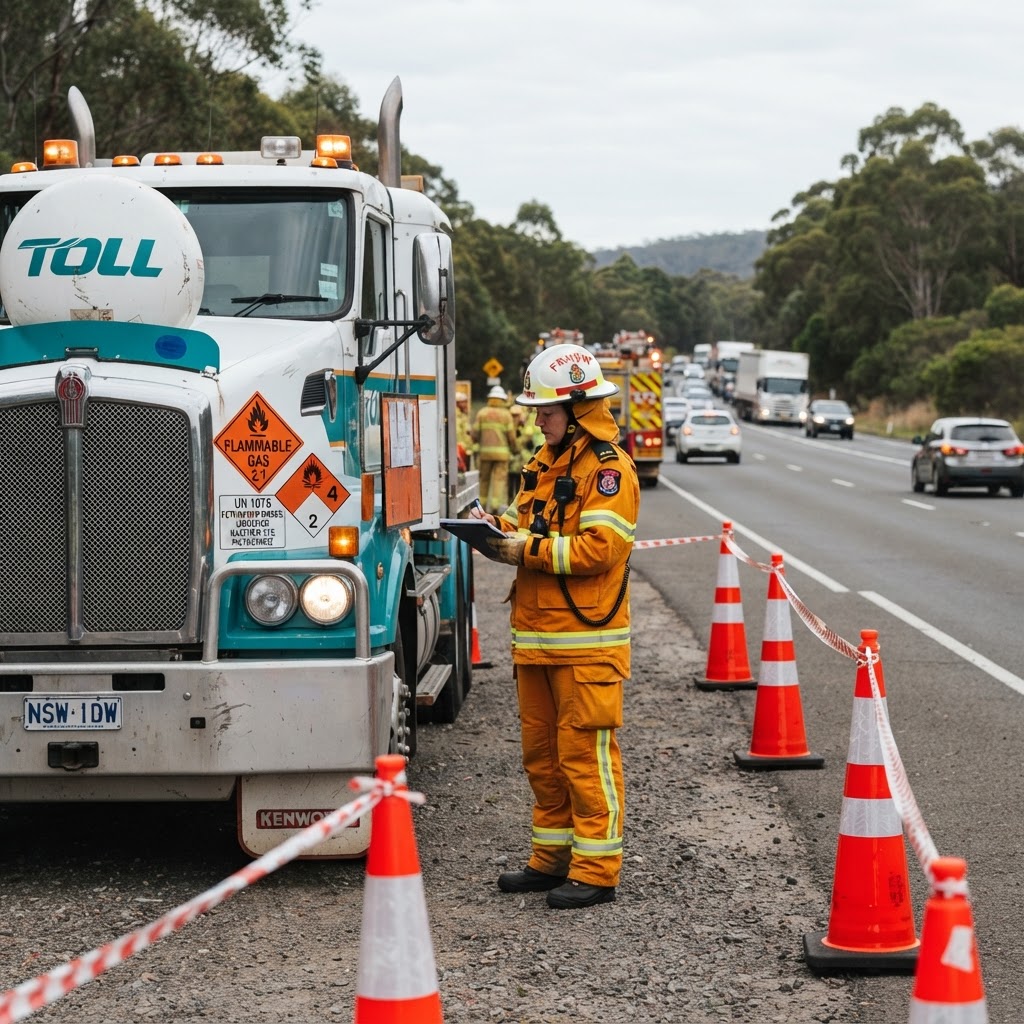
- NHVR checks EIPs at roadside inspections — faded, damaged, or missing panels generate defect notices
Frequently Asked Questions
Is an EIP required on all dangerous goods vehicles?
Not on all vehicles — only when carrying dangerous goods at or above the placard load threshold specified in the ADG Code for that substance. Below-threshold loads do not require an EIP. Check the ADG Code Dangerous Goods List for your specific UN number to confirm the threshold.
What is the difference between an EIP and a placard?
A placard is the class label (hazard diamond) displayed on the vehicle to identify the class of dangerous goods on board. An EIP is a larger panel that includes the class label plus additional emergency response information (hazchem code, UN number, CHEMCALL). Both may be required depending on the load type and quantity.
Can I write the hazchem code on the EIP by hand?
No. The ADG Code requires that EIP information be pre-printed or otherwise permanently applied — not hand-written. Hand-written entries do not meet compliance requirements and will be flagged at a roadside inspection. Use a pre-printed customised EIP or a compliant interchangeable panel system.
What does CHEMCALL do?
CHEMCALL is Australia’s 24-hour emergency chemical response service, reachable on 1800 039 008. Emergency services call this number at the scene of a dangerous goods incident to receive expert advice on the specific substance involved — what to do, what PPE is needed, evacuation distances, etc. This number must always be displayed on your EIP.
How often should I replace my EIP?
Replace your EIP when it becomes faded, damaged, or illegible — there is no fixed service interval. UV exposure and weather cause self-adhesive panels to fade over time, particularly in the Australian sun. Inspect your EIP as part of your pre-trip check and replace before it becomes non-compliant.
What happens if I’m caught driving with a non-compliant or missing EIP?
A missing or non-compliant EIP is a defect notice at a roadside inspection — your vehicle will be prohibited from proceeding until rectified. In addition, there is potential for prosecution under the Dangerous Goods Act, with penalties reaching thousands of dollars. The cost of a compliant replacement EIP is minor compared to the operational and financial impact of a roadside prohibition.
For regulatory guidance on EIP requirements, refer to the NSW EPA, the National Heavy Vehicle Regulator (NHVR), and Safe Work NSW.
Shop EIP Panels and Truck Signage at Kells Safety Centre
Kells Safety Centre supplies ADG Code-compliant EIP panels — self-adhesive, metal, plain, and customised — direct to dangerous goods operators across NSW. Wetherill Park in-store or order online.
View All Training Courses →