
Quick Summary
A spill kit for a dangerous goods vehicle in NSW must match the class of dangerous goods being transported. The ADG Code does not prescribe a specific spill kit size, but NSW EPA and Safe Work NSW require every DG vehicle to carry appropriate emergency equipment — including spill response materials — for the hazards on board. A general-purpose spill kit (often 30L or 50L) covers Class 3 flammable liquids and Class 8 corrosives, but if you carry specific classes like Class 4 flammable solids or Class 6 toxic substances, your kit must include absorbents rated for those hazards. Kells Safety Centre (RTO 91528) supplies DG-compliant spill kits and safety equipment for NSW transport operators.
Key Takeaways
- Match the kit to the class: Different DG classes need different absorbent types and PPE
- Minimum 20L for light vehicles: Larger placard loads require 30L–50L+ spill kits
- Class 3 (flammable liquids): Most common — hydrophobic oil-only absorbents plus chemical-grade pads
- Class 8 (corrosives): Requires chemical-resistant absorbents and acid/alkali neutralisers
- Class 6 (toxic): Needs additional PPE including respirator and chemical suit
- EPA enforcement: Failure to carry appropriate spill response equipment can result in vehicle grounding and fines
- Training requirement: Drivers must know how to use the kit — covered in DG awareness training
Why Your DG Vehicle Needs a Spill Kit
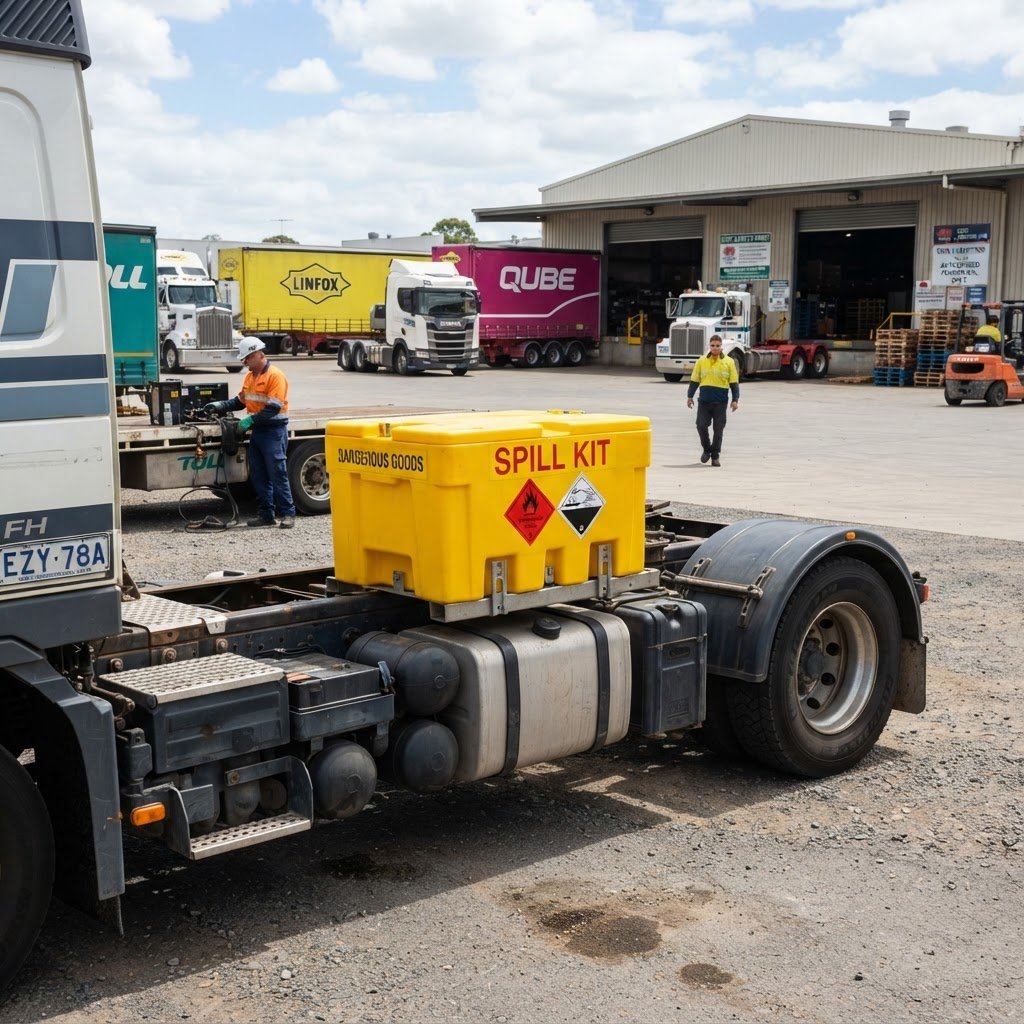
Every vehicle transporting dangerous goods in NSW must carry emergency equipment that allows the driver to respond to a spill or leak. The Australian Dangerous Goods (ADG) Code requires vehicles to carry emergency response equipment appropriate to the goods being transported. A spill kit is the core component of that response capability.
NSW Transport and the NSW EPA enforce these requirements. If a vehicle is stopped at a roadside inspection and does not carry the correct spill response equipment for the class of goods on board, the vehicle can be grounded until the equipment is supplied. For drivers, knowing what kit to carry — and how to use it — is part of the competency covered in dangerous goods awareness training.
The key principle is simple: the spill kit must match the hazard. A generic oil-only spill kit will not safely contain a corrosive acid spill. A kit designed for flammable liquids may not include the chemical-resistant gloves needed for a Class 8 corrosive. Getting it wrong means the driver cannot safely respond at the scene — and that puts the driver, the public, and the environment at risk.
Need the right spill kit for your dangerous goods vehicle? Browse DG spill kits at Kells Safety Centre
Spill Kits by Dangerous Goods Class
The 9 dangerous goods classes defined in the ADG Code each carry different hazards. The spill kit for each class must address the specific chemical properties of the goods. Here is a breakdown of what each class needs.
Class 2 — Gases
Gas spills are typically leaks from cylinders or tanks rather than liquid spills. The primary response is containment and ventilation. A Class 2 spill kit should include gas detection capability, cylinder leak repair clamps, and respiratory protection. Absorbents are less relevant for gases, but the kit should include PPE appropriate for the specific gas — for example, self-contained breathing apparatus for toxic gases.
Class 3 — Flammable Liquids
Class 3 is the most common DG class transported by road in NSW — petrol, diesel, solvents, paints, and alcohol. A Class 3 spill kit needs:
- Hydrophobic (oil-only) absorbent pads and booms — they absorb the liquid fuel without absorbing water
- Chemical-resistant gloves (nitrile minimum)
- Antistatic earthing equipment if transferring flammable liquids
- Vapour barrier bags for disposing of saturated absorbents
- Safety goggles and face shield
A 30L or 50L kit is typical for a single placard-load vehicle carrying Class 3 goods.
Class 4 — Flammable Solids
Class 4 includes substances that are spontaneously combustible or emit flammable gas on contact with water. Spill response for Class 4 requires dry sand or dry chemical absorbents — never water. The spill kit must include a Class D-rated dry powder extinguisher and dry sand in sealed containers.
Class 5 — Oxidising Substances
Class 5 substances (like ammonium nitrate) can intensify fires and react violently with organic materials. Spill kits for Class 5 must include non-combustible absorbents (vermiculite or perlite), chemical-resistant PPE, and a dry chemical fire extinguisher rated for oxidiser fires. Never use combustible absorbents like sawdust near Class 5 goods.
Class 6 — Toxic and Infectious Substances
Class 6 spills are the most hazardous from a human exposure standpoint. The spill kit must include:
- Full-face respirator with organic vapour cartridges (or SCBA for high-toxicity loads)
- Chemical-resistant coverall suit (Tyvek or equivalent)
- Acid/alkali neutralising agents where applicable
- Sealable disposal containers for contaminated absorbents
- Decontamination solution
Drivers carrying Class 6 goods should receive additional training on toxic substance spill response beyond standard DG awareness training.
Class 8 — Corrosives
Class 8 includes acids (hydrochloric, sulfuric, nitric) and alkalis (caustic soda, ammonia). A Class 8 spill kit must include chemical-resistant absorbents rated for corrosive substances, acid and alkali neutralisers, and heavy-duty chemical gloves (PVC or butyl rubber). The absorbent pads must be non-reactive — standard polypropylene pads can degrade when exposed to strong acids. A 50L kit is recommended for vehicles carrying bulk corrosive loads.
Class 9 — Miscellaneous Dangerous Goods
Class 9 includes a wide range of substances — environmentally hazardous substances, lithium batteries, dry ice. The spill kit should be matched to the specific substance. For environmentally hazardous substances, a general-purpose chemical absorbent kit with sealable disposal bags is typically sufficient. Lithium battery transport requires a specific lithium battery fire containment kit.
For multi-class loads, consult the vehicle marking requirements to confirm which class labels apply, then select the spill kit for the highest-risk class on the vehicle.
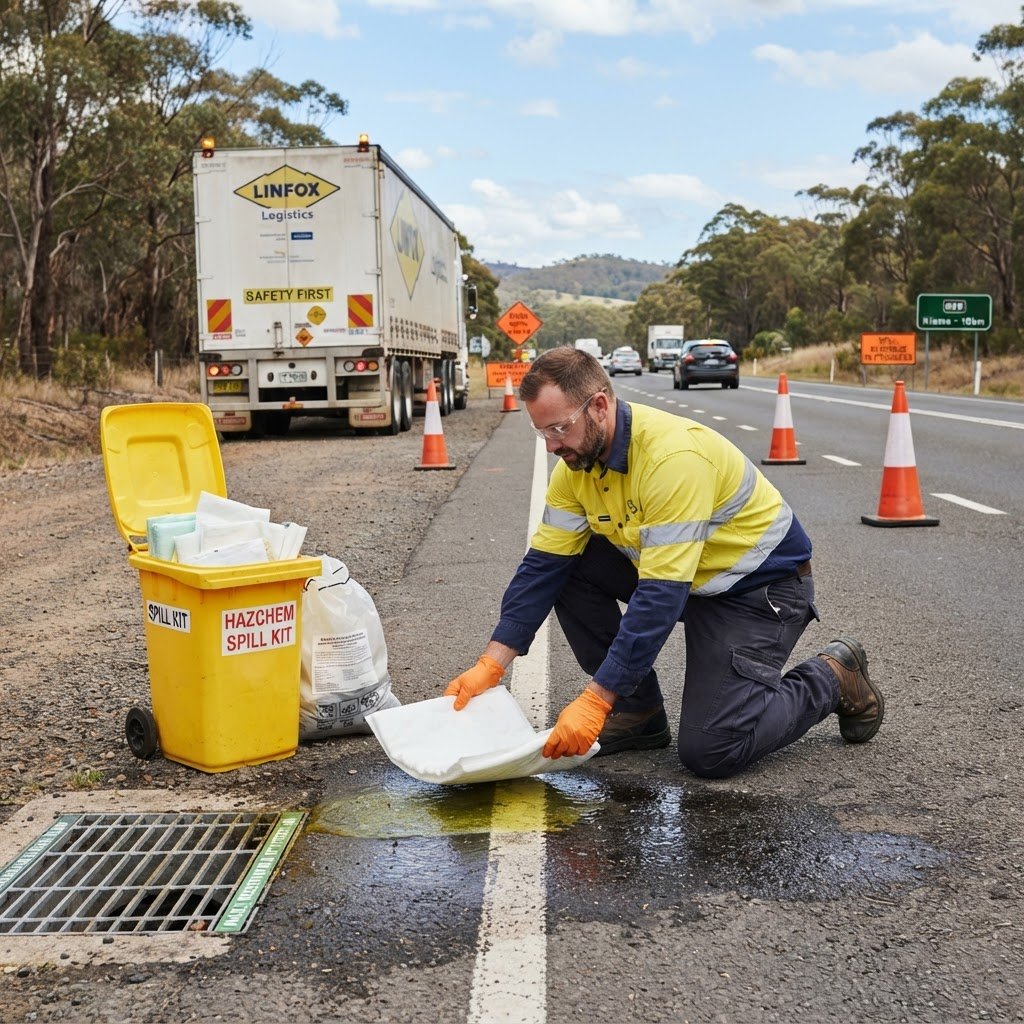
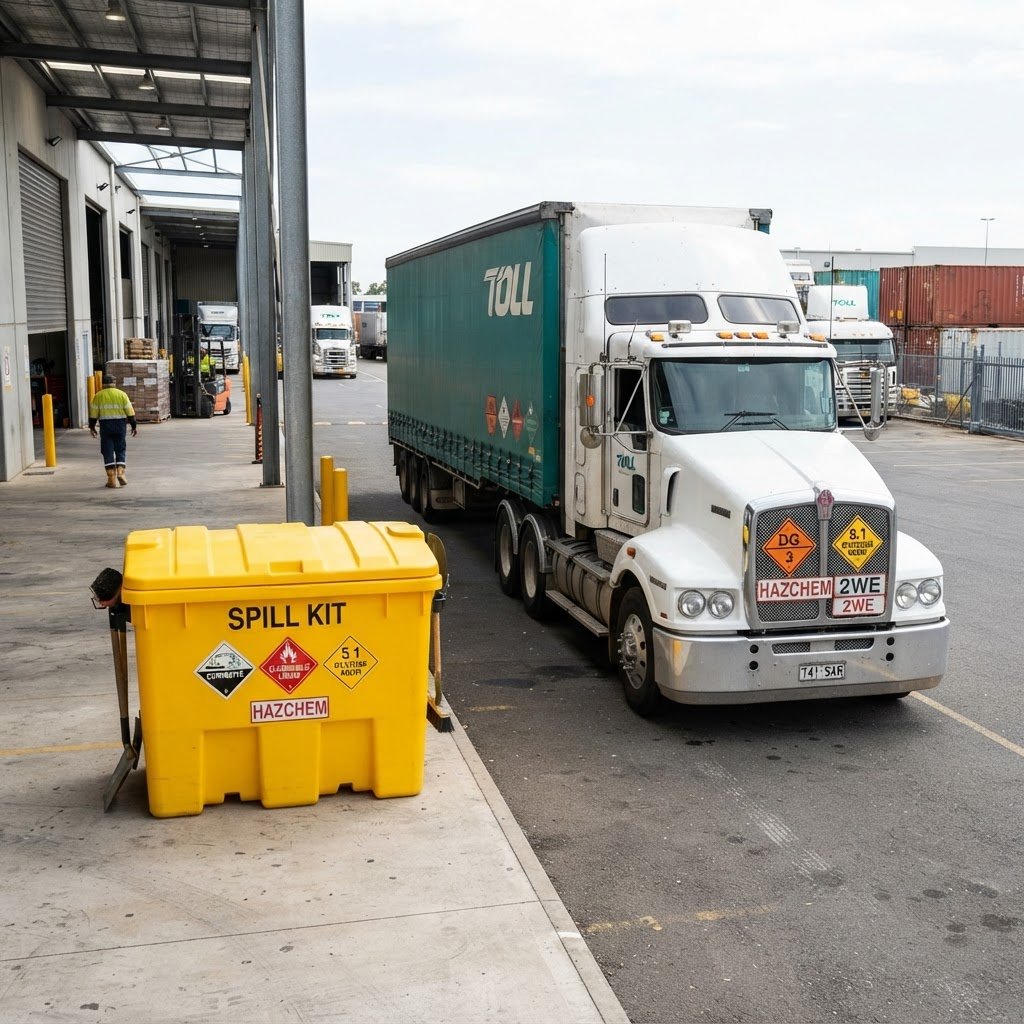
Spill Kit Size Guide for NSW DG Vehicles
Spill kit size depends on the volume of dangerous goods being carried and the size of the vehicle. As a general guide:
| Vehicle Type | Typical DG Load | Recommended Kit Size |
|---|---|---|
| Light utility / van | Small-packaged DGs (< 250L aggregate) | 20L portable spill kit |
| Truck (single placard load) | Intermediate bulk containers (IBCs) | 30L–50L spill kit |
| Semi-trailer / tanker | Bulk DG load (> placard quantity) | 50L–120L spill kit + drum plug repair kit |
| B-double / road train | Multi-compartment bulk | 120L+ heavy-duty spill kit |
The kit should contain enough absorbent material to contain a foreseeable spill from the largest single container on the vehicle. If you carry 1,000L IBCs, a 20L kit will not contain a full IBC breach — you need at least a 50L kit.
What Should a DG Spill Kit Contain?
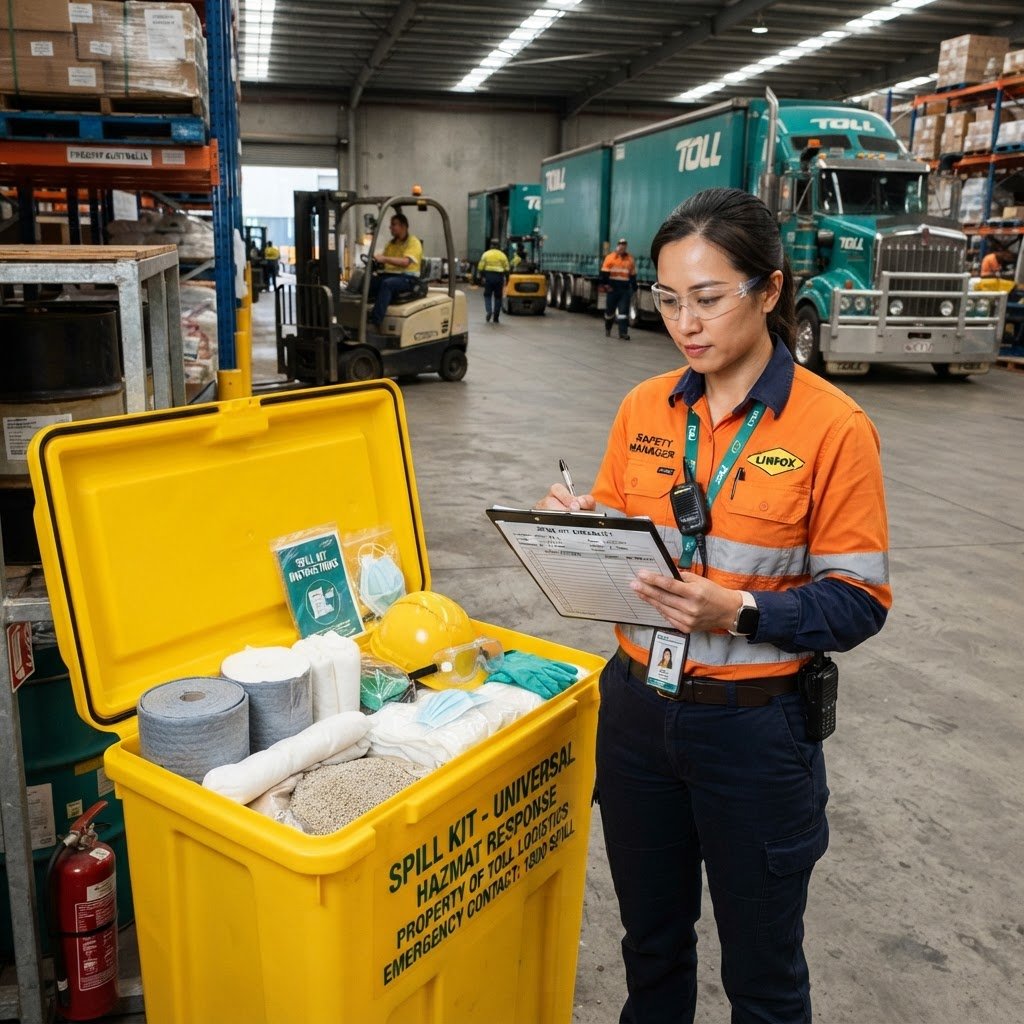
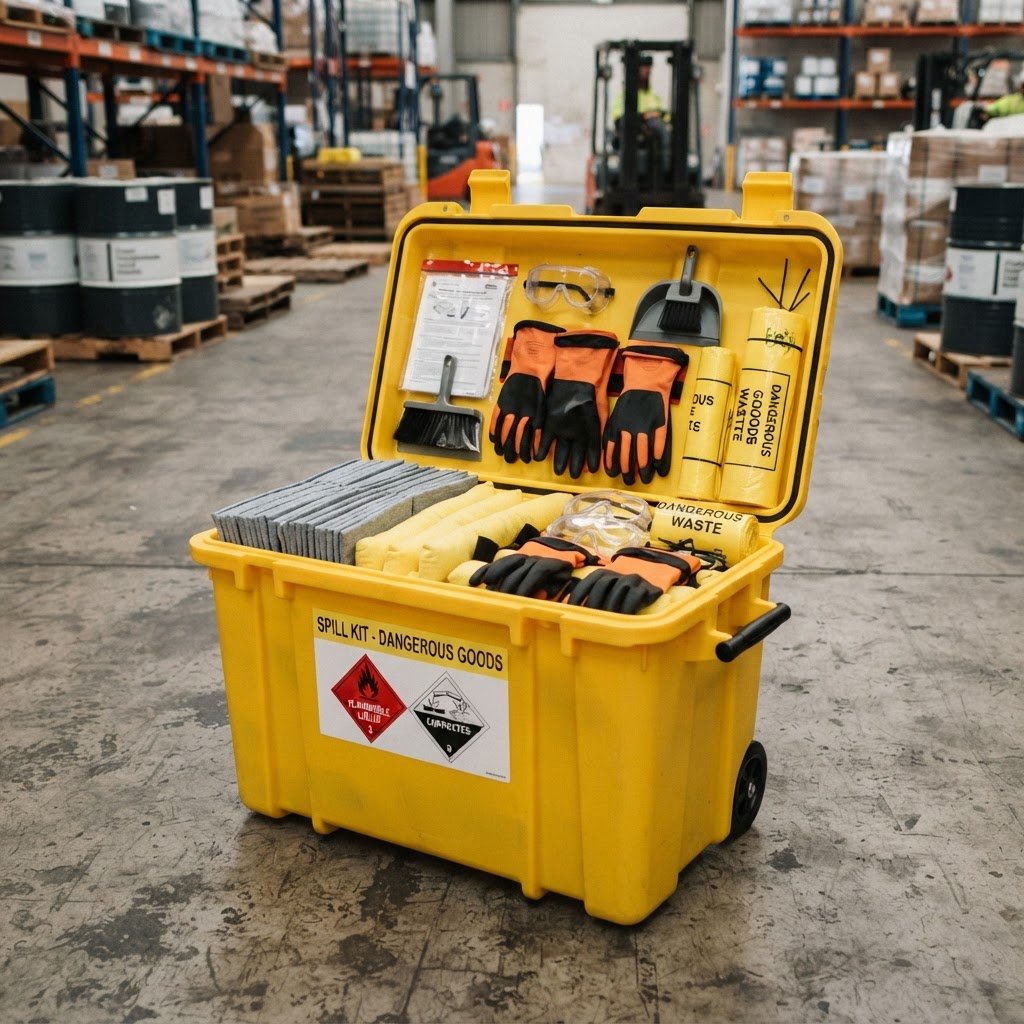
Regardless of class, every dangerous goods spill kit should contain these core components:
- Absorbent pads and booms — rated for the DG class being carried
- Chemical-resistant gloves — nitrile minimum, PVC or butyl for corrosives
- Safety goggles and face shield — splash protection
- Disposal bags with ties — heavy-duty, vapour-rated where needed
- Spill response instructions — laminated, class-specific
- Neutralising agent — for corrosives and reactive substances
- Duct tape and repair putty — for temporary container repair
- High-visibility hazard tape — to cordon off the spill area
Check the kit monthly. Replace used absorbents immediately — an incomplete spill kit is not a spill kit, it is a liability.
Carry the right gear for your DG load. Browse spill kits and safety equipment at Kells Safety Centre — or enrol in a dangerous goods training course to make sure your drivers know how to use them.
Audit and Compliance: Spill Kit Requirements in NSW
Under NSW dangerous goods transport regulations, the operator is responsible for ensuring the vehicle carries the correct emergency equipment. This includes spill kits appropriate to the class and quantity of dangerous goods. The NSW EPA can inspect DG vehicles at any time and may require the operator to demonstrate the spill kit is present, complete, and appropriate for the load.
Safe Work NSW also requires workplaces that store or handle dangerous goods — including transport depots and loading bays — to maintain appropriate spill response equipment. The spill kit requirements for transport vehicles complement the workplace spill kit requirements under WHS legislation.
For operators running a fleet, document the spill kit check as part of the pre-departure inspection checklist. This creates a compliance trail and ensures drivers are not caught without the equipment at a roadside check.
Frequently Asked Questions
What size spill kit do I need for a DG vehicle in NSW?
The spill kit size depends on your load volume. For a light van carrying small-packaged dangerous goods, a 20L portable kit is sufficient. For a truck carrying IBCs, use a 30L to 50L kit. Tankers and bulk haulage vehicles need 50L to 120L kits. The kit must contain enough absorbent to contain a foreseeable spill from the largest single container on the vehicle.
Are spill kits mandatory for dangerous goods transport in NSW?
Yes. Under the ADG Code and NSW DG transport regulations, every vehicle carrying dangerous goods must carry emergency response equipment appropriate to the goods being transported. A spill kit is a core part of that equipment. Failure to carry one can result in the vehicle being grounded and fines from the NSW EPA.
Can I use an oil-only spill kit for all dangerous goods classes?
No. Oil-only (hydrophobic) absorbents are designed for Class 3 flammable liquids and oils. They are not suitable for Class 8 corrosives, which require chemical-resistant absorbents that will not degrade on contact with the substance. Using the wrong absorbent can cause a chemical reaction and make the spill worse.
Where should the spill kit be stored on a DG vehicle?
The spill kit should be stored in an accessible location on the vehicle — typically the driver’s side cab storage or a clearly marked locker on the trailer. It must be easily reachable without entering the load area. The storage location should be marked with a spill kit label so emergency responders can locate it quickly.
How often should I check a spill kit?
Check the spill kit at every pre-departure inspection and at least monthly. Verify all absorbents are present, gloves are intact, disposal bags are sealed, and instruction sheets are readable. Replace any used or degraded components immediately. Keep a log of spill kit checks as part of your compliance records.
Do drivers need training to use a spill kit?
Yes. Drivers must know how to use the spill kit, what PPE to wear, and how to contain the spill safely. This competency is covered in dangerous goods awareness training (DG awareness course). For drivers carrying a DG licence (TLILIC0001), spill response is part of the assessment.
What spill kit do I need for Class 3 flammable liquids?
For Class 3 flammable liquids (petrol, diesel, solvents), use a kit with hydrophobic (oil-only) absorbent pads and booms, chemical-resistant nitrile gloves, safety goggles, vapour-rated disposal bags, and antistatic earthing equipment. A 30L or 50L kit is typical for a single placard-load vehicle.
What is the difference between a general-purpose and a chemical spill kit?
A general-purpose spill kit uses absorbents that work with most non-aggressive liquids (coolants, mild chemicals, oils). A chemical spill kit uses acid- and alkali-resistant absorbents rated for corrosives (Class 8), oxidisers (Class 5), and toxic substances (Class 6). For dangerous goods transport, always use a chemical-rated spill kit matched to the DG class on your vehicle.
Where can I buy DG spill kits in NSW?
You can purchase DG-compliant spill kits from Kells Safety Centre’s safety equipment range. Kits are available by DG class and size, with delivery across NSW. Kells is an RTO 91528 registered training provider based in Wetherill Park and Wollongong, supplying both training and safety equipment for the NSW transport industry.