Quick Summary
Class 2 dangerous goods are gases — compressed, liquefied, or dissolved under pressure. In NSW, transporting Class 2 gases in bulk — a receptacle with a capacity over 500 litres, or containing over 500 kilograms — requires a dangerous goods licence (TLILIC0001); loads above the placard quantity still require correct vehicle marking with class labels and Emergency Information Panels, properly secured cylinders or tanks, and a valid dangerous goods transport document. The ADG Code divides Class 2 into three subdivisions: 2.1 flammable gases (LPG, acetylene, hydrogen), 2.2 non-flammable non-toxic gases (nitrogen, CO2, argon), and 2.3 toxic gases (chlorine, ammonia). Kells Safety Centre (RTO 91528) provides the dangerous goods licence course and DG awareness training that cover Class 2 gas transport requirements for NSW drivers.
Key Takeaways
- Three subdivisions: Class 2.1 (flammable), 2.2 (non-flammable, non-toxic), 2.3 (toxic) — each with different hazard levels and transport requirements
- Placard quantity: Most bulk Class 2 gases exceed the placard threshold, triggering full vehicle marking requirements (plus a DG licence if the vehicle transports receptacles over 500 litres or 500 kilograms)
- DG licence required: Drivers transporting Class 2 gases in bulk — a receptacle with a capacity over 500 litres, or containing over 500 kilograms — must hold a current TLILIC0001 dangerous goods licence
- Cylinder securing: All gas cylinders must be individually restrained to prevent movement during transport, with valves protected
- Emergency equipment: Vehicles must carry gas-specific emergency response equipment including gas detectors and appropriate PPE
- Tunnel restrictions: Certain Class 2 gases are restricted from tunnels and specific routes in NSW
- Training: DG awareness training covers Class 2 gas hazards even for drivers carrying below-threshold quantities
What Are Class 2 Dangerous Goods?
Class 2 dangerous goods are gases transported under pressure. The Australian Dangerous Goods (ADG) Code defines Class 2 as gases that are compressed, liquefied, or dissolved under pressure, and includes gases in solution and gases absorbed by other materials. Gases are the only dangerous goods class that is always transported in a pressurised state, which creates unique hazards: pressurised release, rapid expansion, and in many cases flammability or toxicity.
Class 2 is divided into three subdivisions based on the primary hazard:
| Subdivision | Hazard | Examples | Diamond Colour |
|---|---|---|---|
| 2.1 Flammable gases | Can ignite and burn in air | LPG, acetylene, hydrogen, propane, butane | Red |
| 2.2 Non-flammable, non-toxic gases | Asphyxiant risk (oxygen displacement), some oxidising | Nitrogen, carbon dioxide, argon, helium, compressed air | Green |
| 2.3 Toxic gases | Toxic or corrosive on inhalation | Chlorine, ammonia, hydrogen sulfide | White (skull and crossbones) |
Some gases carry a secondary hazard and are assigned a subsidiary risk label. For example, oxygen (Class 2.2) carries an oxidiser subsidiary label because it intensifies fires. Ammonia (Class 2.3) may carry a flammable subsidiary label depending on concentration. The primary classification determines the transport requirements, but subsidiary risks must also be marked on the vehicle.
Who Needs a DG Licence to Transport Class 2 Gases in NSW?
In NSW, a driver transporting Class 2 gases in bulk — a receptacle with a capacity of more than 500 litres, or containing more than 500 kilograms — must hold a current dangerous goods licence issued under TLILIC0001. Packaged cylinders in smaller receptacles do not require the licence, but loads above the placard quantity must still display placards and carry safety equipment. The placard quantity threshold for Class 2 gases depends on the division: Division 2.1 flammable gases and Division 2.3 toxic gases (aerosols excepted) trigger placarding above an aggregate quantity of 250 kg or 250 litres, while Division 2.2 non-flammable gases trigger above a total receptacle capacity of 1,000 litres.
Most commercial bulk gas deliveries involve receptacles over 500 litres or 500 kilograms. A tanker carrying LPG or a vehicle transporting bulk CO2 for industrial use requires a licensed driver; a truckload of packaged welding cylinders above the placard quantity requires placards and safety equipment, but not a driver licence. Even below the placard threshold, drivers carrying any quantity of Class 2 dangerous goods should complete dangerous goods awareness training to understand cylinder securing, leak response, and documentation requirements.
Kells Safety Centre (RTO 91528) delivers both the TLILIC0001 dangerous goods licence course and the DG awareness course at training facilities in Wetherill Park and Wollongong. The DG licence course covers all nine dangerous goods classes, including Class 2 gas-specific transport requirements, emergency response, and regulatory compliance.
Transporting gas cylinders as part of your work? Enrol in the DG Licence Course at Kells Safety Centre
Vehicle Marking Requirements for Class 2 Gas Transport
Any vehicle carrying a placard quantity of Class 2 dangerous goods must display the full set of DG vehicle markings required by the ADG Code. These include:
- PACKAGED – Class labels: The correct diamond-shaped class label for the gas being carried — red diamond for Class 2.1 flammable gases, green for Class 2.2 non-flammable, white with skull symbol for Class 2.3 toxic. Labels must be at least 250mm x 250mm for standard heavy vehicles and positioned on both sides and at the rear.
- BULK –Emergency Information Panel (EIP): Displays the proper shipping name, UN number, and hazchem code. The EIP must be mounted on both sides and at the rear of the vehicle. For mixed gas loads, a separate EIP is required for each gas type. See our vehicle marking requirements guide for full positioning details
All markings must be kept clean and legible — faded or damaged markings can result in the vehicle being grounded at a roadside inspection.
Cylinder and Tank Securing Requirements
Securing Class 2 gas cylinders and tanks during transport is a critical safety requirement. The ADG Code and NSW transport regulations require that all gas cylinders must be individually restrained to prevent any movement that could damage the cylinder, valve, or fitting during normal driving conditions, emergency braking, or a collision.
For packaged gas cylinders, the requirements include:
- Each cylinder must be individually secured using chains, straps, or purpose-built cylinder racks
- Cylinders must not be able to roll, slide, or tip in any direction
- Valve protection caps or guards must be in place where the cylinder design requires them
- Cylinders must not be stacked above the height of the vehicle sides unless specifically designed for vertical transport
- Oxygen and flammable gas cylinders must be segregated to prevent interaction in case of a leak
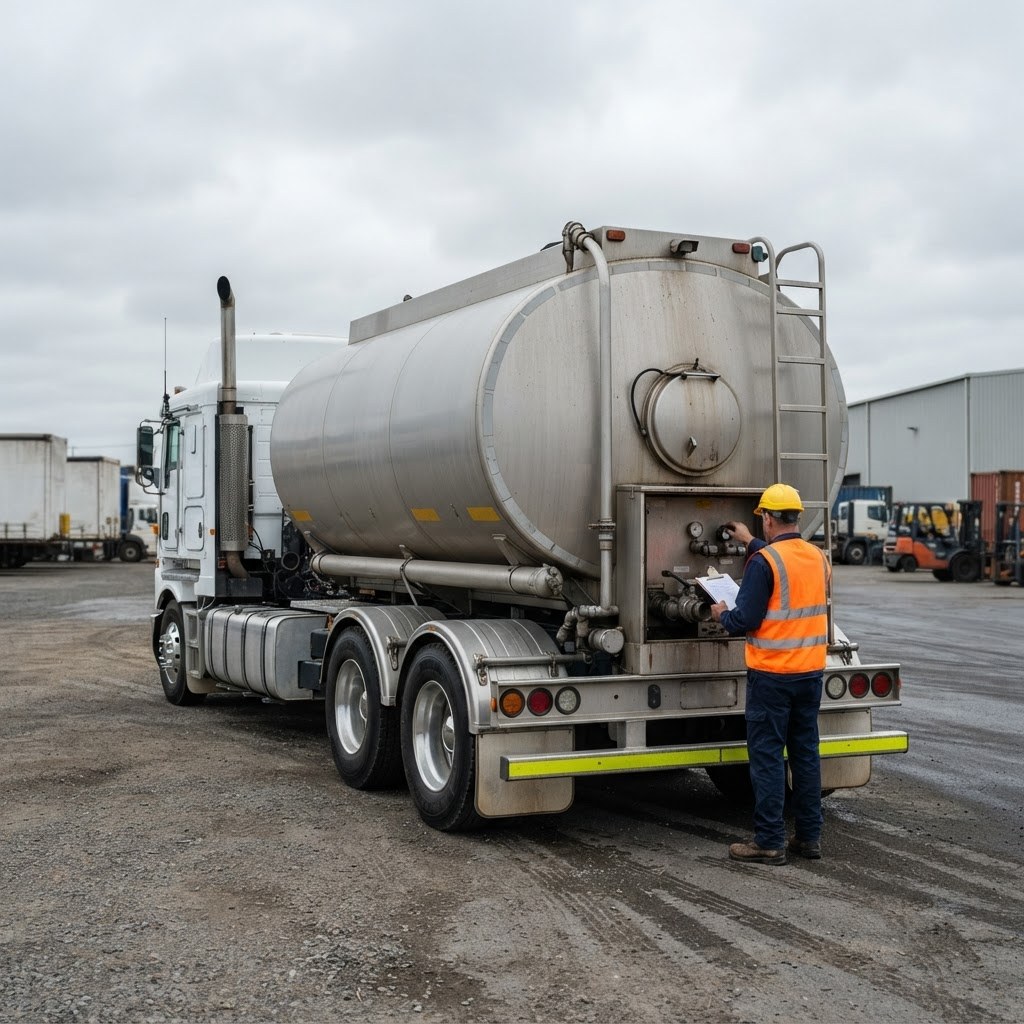
For bulk gas tankers, the tank must meet the design and construction standards specified in the ADG Code for the specific gas type. Tankers must have emergency shut-off valves, pressure relief devices, and bottom-loading connections where required. The tank must be securely mounted to the vehicle chassis with regular inspection of mountings, valves, and fittings.
Pre-departure checks for gas transport should always include verifying cylinder restraints, valve protection, and that all emergency equipment is present and functional. These checks are covered in the Prepare for Transport of Dangerous Goods course at Kells Safety Centre.
Emergency Response for Class 2 Gas Incidents
Gas transport incidents differ from other dangerous goods incidents because gases are pressurised and can rapidly expand or disperse. A gas leak can produce a fire, explosion, toxic exposure, or oxygen-deficient atmosphere depending on the gas type. Drivers must know the emergency response specific to their gas load.
The hazchem code on the Emergency Information Panel is the primary guide for emergency response. It tells the driver and emergency services:
- Firefighting medium: Whether to use water spray, foam, or dry agent
- Personal protection: Whether breathing apparatus or chemical suits are required
- Spill/leak response: Whether to dilute, contain, or evacuate
For Class 2.1 flammable gases, the primary risk is fire and explosion. If a leak occurs, eliminate ignition sources, evacuate the area, and call emergency services. Do not attempt to extinguish a gas fire unless the leak can be stopped — a burning gas leak is safer than an unburned gas cloud that could accumulate and explode.
For Class 2.2 non-flammable gases, the primary risk is asphyxiation in confined spaces. Nitrogen, argon, and CO2 can displace oxygen in the cab, a tunnel, or a loading dock without any visible sign. Drivers must be aware of ventilation requirements and avoid entering enclosed spaces where a gas leak may have occurred.
For Class 2.3 toxic gases, the primary risk is toxic exposure even in small quantities. Chlorine, ammonia, and hydrogen sulfide can cause serious injury or death at low concentrations. Drivers carrying toxic gases must carry appropriate respiratory protection and know the evacuation distance for their specific gas.
Route Restrictions for Gas Transport in NSW
Certain Class 2 dangerous goods are restricted from tunnels and specific routes in NSW. The restrictions are based on the hazard level of the gas and the tunnel’s ventilation and emergency response capabilities. Drivers must check route restrictions before departure and plan alternative routes where required.
Sydney tunnels, including the Sydney Harbour Tunnel, Lane Cove Tunnel, and M5 East tunnel, have specific restrictions on dangerous goods transport. Some tunnels prohibit all placard loads, while others allow certain classes with restrictions on quantity or travel times. The Transport for NSW website publishes the current tunnel restrictions for dangerous goods vehicles.
Drivers must also be aware of local council restrictions on dangerous goods vehicles on certain roads and bridges. When planning a route for Class 2 gas transport, always verify that the route is approved for the specific gas and quantity being carried.
Documentation Required for Class 2 Gas Transport
Every vehicle transporting a placard quantity of Class 2 dangerous goods must carry a dangerous goods transport document. This document must include:
- The proper shipping name and UN number of each gas
- The dangerous goods class and subsidiary risks
- The packing group (where assigned)
- The quantity and form of the gas (bulk or packaged)
- The Emergency Action Code (hazchem code)
The transport document must be carried in the cab of the vehicle, readily accessible to the driver and emergency services. For mixed loads, each gas type must be listed separately. The driver must also carry their dangerous goods licence and the vehicle must display current registration and any required permits.
In addition to the transport document, drivers should carry the Safety Data Sheet (SDS) for each gas on the vehicle. The SDS provides detailed information on hazards, first aid, and emergency response, complementing the hazchem code on the EIP.
Common Class 2 Gas Transport Scenarios in NSW
LPG Delivery
LPG (liquefied petroleum gas) is the most commonly transported Class 2 gas in NSW. Bulk LPG tankers carry it to service stations and industrial sites, while smaller trucks deliver filled cylinders to homes and businesses. LPG is Class 2.1 (flammable), UN 1075. Drivers must hold a DG licence for bulk deliveries and must carry fire extinguishers rated for flammable gas fires.
Welding Gas Delivery
Welding gas loads typically include a mix of oxygen (Class 2.2, UN 1072) and acetylene (Class 2.1, UN 1001) cylinders. These must be segregated during transport — oxygen cylinders and flammable gas cylinders must not be stored together. A bulk load (receptacle over 500 litres or 500 kilograms) requires a DG licence. Any load above the placard quantity requires vehicle marking, and the vehicle must display both the green (2.2) and red (2.1) class labels.
Refrigerant Gas Transport
Refrigerant gases such as R134a and R410A are Class 2.2 (non-flammable, non-toxic). While the immediate hazard is lower than flammable or toxic gases, the asphyxiation risk in enclosed spaces remains. Transport of large quantities still requires a DG licence and correct vehicle marking.
Transporting Class 2 gases in NSW? Make sure you are properly licensed and trained. Enrol in the Dangerous Goods Licence Course or view all training courses at Kells Safety Centre (RTO 91528) — Wetherill Park and Wollongong.
Frequently Asked Questions
Do I need a dangerous goods licence to transport gas cylinders in NSW?
You need a dangerous goods licence (TLILIC0001) if you are transporting Class 2 gases in bulk, meaning a receptacle over 500 litres or 500 kilograms. Placarding is a separate test from the licence: Division 2.1 flammable gases and Division 2.3 toxic gases (aerosols excepted) trigger placarding above an aggregate of 250 kg or 250 litres, while Division 2.2 gases trigger above 1,000 litres of total receptacle capacity. Packaged gases do not need a DG licence either — below those thresholds you should still complete DG awareness training to understand cylinder securing, leak response, and documentation requirements. Most commercial bulk gas deliveries in NSW involve receptacles over 500 litres or 500 kilograms and require a licensed driver; packaged loads above the placard quantity need placards and safety equipment, not a licence.
What is the difference between Class 2.1, 2.2, and 2.3 gases?
Class 2.1 gases are flammable and can ignite in air, such as LPG, acetylene, and hydrogen. Class 2.2 gases are non-flammable and non-toxic but can cause asphyxiation by displacing oxygen, such as nitrogen, carbon dioxide, and argon. Class 2.3 gases are toxic on inhalation, such as chlorine, ammonia, and hydrogen sulfide. Each subdivision has a different diamond colour: red for 2.1, green for 2.2, and white with a skull symbol for 2.3.
How should gas cylinders be secured during transport?
Gas cylinders must be individually restrained using chains, straps, or purpose-built cylinder racks to prevent any movement during transport, braking, or collision. Valve protection caps must be in place where required. Oxygen and flammable gas cylinders must be segregated. Cylinders must not be stacked above vehicle side height unless specifically designed for vertical transport. Pre-departure checks must verify all restraints are secure.
Are there tunnel restrictions for vehicles carrying Class 2 gases in NSW?
Yes. Several Sydney tunnels, including the Sydney Harbour Tunnel and Lane Cove Tunnel, restrict or prohibit dangerous goods vehicles. The restrictions depend on the gas type, quantity, and tunnel specifications. Drivers must check current route restrictions on the Transport for NSW website before departure and plan alternative routes. Some tunnels allow certain classes during off-peak hours, while others prohibit all placard loads.
What emergency equipment must a vehicle carrying Class 2 gases have?
The emergency equipment depends on the specific gas being carried. All DG vehicles must carry a spill kit appropriate to the gas class. For Class 2 gases, this typically includes gas detection equipment, cylinder leak repair clamps, respiratory protection appropriate to the gas type, fire extinguishers rated for the gas hazard, and PPE including chemical-resistant gloves and eye protection. The exact requirements are determined by the hazchem code on the Emergency Information Panel.
Can I transport different Class 2 gases on the same vehicle?
Yes, but mixed gas loads must comply with segregation requirements. Flammable gases (2.1) and oxidising gases must be separated to prevent interaction. Oxygen cylinders must not be stored adjacent to flammable gas cylinders. Each gas type on the vehicle requires its own class label and Emergency Information Panel. The transport document must list each gas separately with its UN number, class, and hazchem code.
What training does Kells Safety Centre provide for Class 2 gas transport?
Kells Safety Centre (RTO 91528) provides the TLILIC0001 dangerous goods licence course, which covers all nine DG classes including Class 2 gas transport requirements. The course covers gas classification, vehicle marking, cylinder securing, emergency response, and documentation. The DG awareness course is also available for drivers who carry below-threshold quantities. Both courses are delivered at training facilities in Wetherill Park and Wollongong, NSW.
What is the HAZCHEM code for LPG transport?
The hazchem code for your load is assigned in the ADG Code HAZCHEM list and displayed on the vehicle’s Emergency Information Panel. The first character indicates the firefighting medium (2 = fine water spray), the second indicates what protective equipment to wear and whether to dilute or contain a spill, and E indicates a public safety hazard requiring consideration of evacuation. Always use the code shown on your EIP. The hazchem code is displayed on the Emergency Information Panel and tells emergency services the correct response action.