


Heavy vehicle drivers in NSW must follow strict work and rest hour limits set by the National Heavy Vehicle Regulator (NHVR) under the Heavy Vehicle National Law (HVNL). There are three operating options: Standard Hours, Basic Fatigue Management (BFM), and Advanced Fatigue Management (AFM). Each gives drivers different levels of flexibility, but all are designed to prevent fatigue-related crashes on NSW roads. Understanding these limits is essential for every truck driver, scheduler, and transport operator.
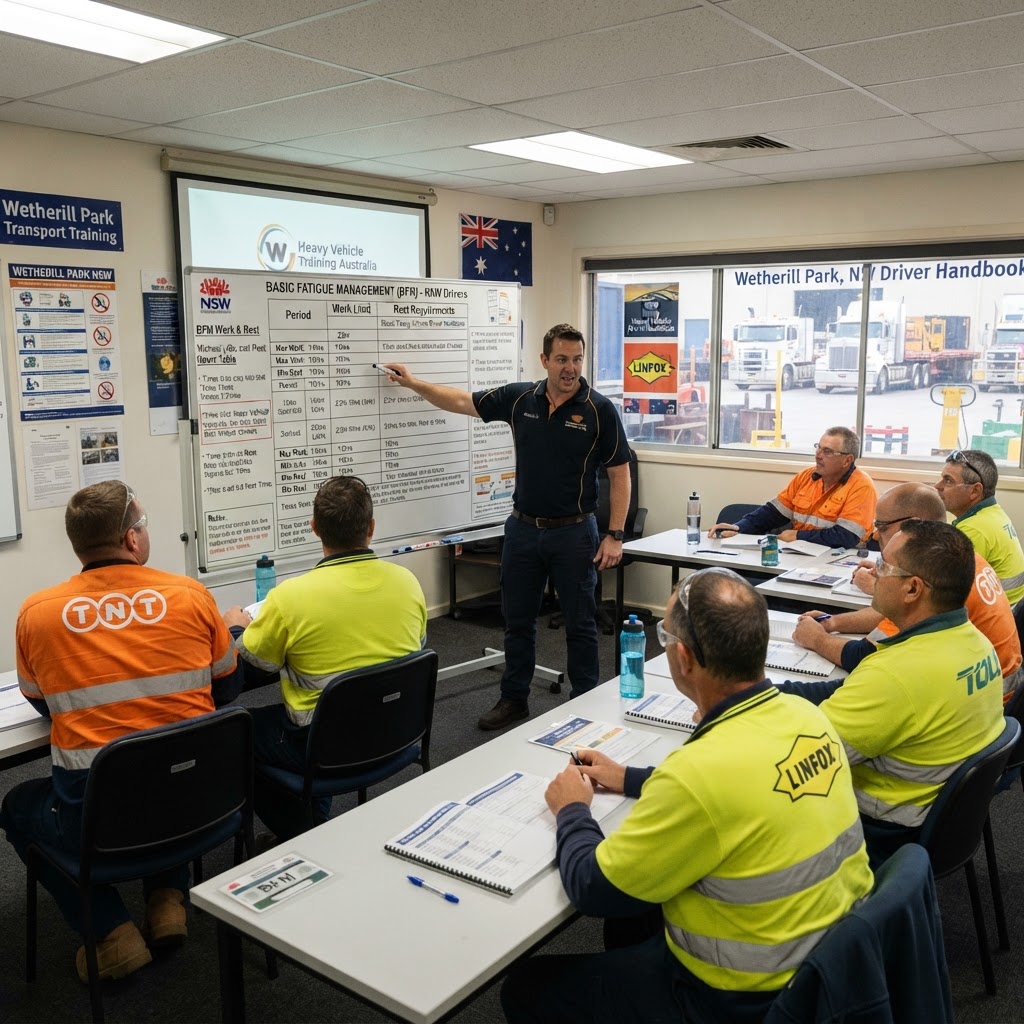
Kells Safety Centre (RTO 91528) delivers fatigue management training at our Wetherill Park training centre, helping NSW drivers and schedulers stay compliant with NHVR work and rest requirements. This guide breaks down every limit, rest requirement, and compliance step so you can plan your driving hours with confidence.
Quick Summary: Work and Rest Hours at a Glance
WHO: Every heavy vehicle driver in NSW operating a vehicle with a GVM over 12 tonnes, plus their schedulers and operators.
WHAT: Three fatigue management options — Standard Hours, BFM, and AFM — each with different maximum work and minimum rest limits.
WHEN: These limits apply every time you drive a fatigue-regulated heavy vehicle, 24 hours a day, 7 days a week.
WHERE: NSW and all states and territories operating under the HVNL.
WHY: Fatigue is a leading cause of heavy vehicle crashes. The NHVR enforces these limits to keep drivers and the public safe.
HOW: Track your hours in a work diary or Electronic Work Diary (EWD), take required rest breaks, and complete the right training for your operating option.
If you operate under Standard Hours, you can work a maximum of 12 hours in any 24-hour period and 72 hours in any 7-day period. Under Basic Fatigue Management (BFM), those limits increase to 14 hours in 24 hours and 84 hours in 7 days. Advanced Fatigue Management (AFM) offers even more flexibility but requires a NHVR-approved fatigue management system. Both BFM and AFM require accreditation and additional training.
Key Takeaways
- Standard Hours cap drivers at 12 hours work per 24 hours and 72 hours per 7 days.
- BFM allows up to 14 hours work per 24 hours and 84 hours per 7 days, but requires NHVR accreditation.
- AFM is the most flexible option, based on a risk-assessed fatigue management plan approved by the NHVR.
- Every driver operating more than 100km from their base must keep a work diary or EWD.
- Standard Hours require at least 7 continuous hours stationary rest in any 24-hour period.
- Drivers need TLIF0005 training for BFM; schedulers need TLIF0006.
What Are Standard Hours for Heavy Vehicle Drivers?
Standard Hours are the default work and rest limits under the HVNL. If you do not hold BFM or AFM accreditation, these are the rules you must follow. They are designed to give drivers adequate rest while maintaining reasonable productivity.
Under Standard Hours, the key limits are:
- Maximum work in 24 hours: 12 hours
- Maximum work in 7 days (168 hours): 72 hours
- Maximum work in 14 days (336 hours): 144 hours
- Minimum stationary rest in 24 hours: 7 continuous hours
- Minimum continuous stationary rest in 7 days: 24 hours
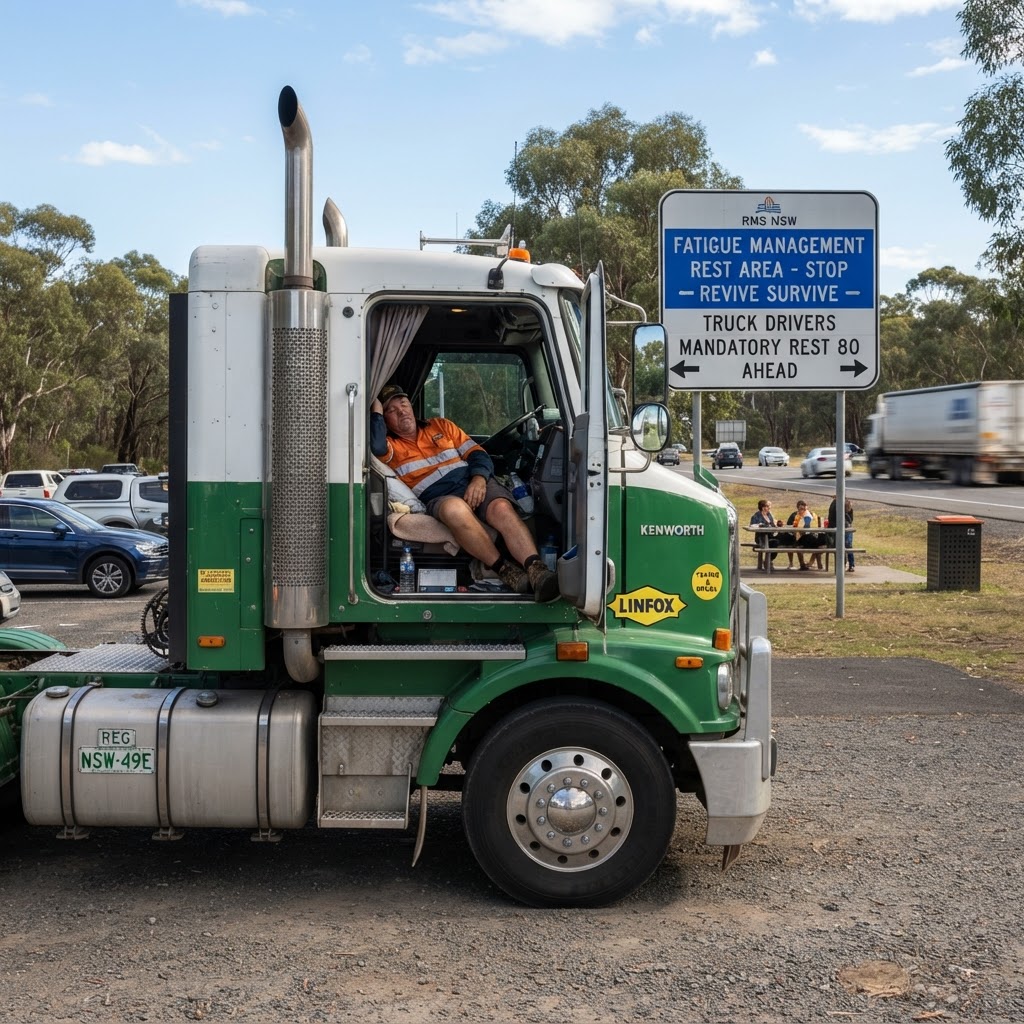
- Breaks: At least 15 minutes of rest after every 5 hours of work time
These limits apply to all work time, not just driving. Loading, unloading, refuelling, and vehicle inspections all count toward your work hours. Rest time only counts when you are not working and can rest properly. Understanding the difference between work time and rest time is critical for compliance with NHVR fatigue law.
What Is Basic Fatigue Management (BFM)?
Basic Fatigue Management (BFM) is an NHVR accreditation option that allows drivers and operators to work more flexible hours than Standard Hours, provided they operate within an approved fatigue management system. BFM increases the maximum work limits but requires additional training, record-keeping, and compliance commitments.
Under BFM, the key limits are:
- Maximum work in 24 hours: 14 hours (up from 12 under Standard)
- Maximum work in 7 days: 84 hours (up from 72 under Standard)
- Maximum work in 14 days: 144 hours
- Minimum stationary rest in 24 hours: 6 continuous hours (with specific conditions)
- Requires: NHVR accreditation, TLIF0005 training for drivers, TLIF0006 for schedulers
The extra 2 hours of work per day and 12 hours per week can significantly boost productivity for long-haul and regional operators. However, BFM accreditation is a serious commitment. Operators must maintain a documented fatigue management system, conduct internal audits, and ensure all drivers and schedulers complete the required BFM accreditation training.
Want to operate under BFM? You need the right training first.
Enrol in the BFM Course at Kells Safety CentreWhat Is Advanced Fatigue Management (AFM)?
Advanced Fatigue Management (AFM) is the most flexible fatigue management option under the HVNL. Instead of fixed hour limits, AFM allows operators to tailor work and rest schedules based on a risk-assessed fatigue management plan approved by the NHVR. This means operators can design schedules that suit their specific operations, provided they can demonstrate that fatigue risks are properly managed.
AFM is suited to large operators with complex routes and scheduling needs. The application process is more demanding than BFM, requiring a comprehensive fatigue management system, detailed risk assessments, and ongoing compliance monitoring. Drivers and schedulers must complete additional training to operate under AFM.
Standard vs BFM vs AFM: Side-by-Side Comparison
| Limit | Standard Hours | BFM | AFM |
|---|---|---|---|
| Max work / 24 hours | 12 hours | 14 hours | Flexible (NHVR-approved) |
| Max work / 7 days | 72 hours | 84 hours | Flexible (NHVR-approved) |
| Max work / 14 days | 144 hours | 144 hours | Flexible (NHVR-approved) |
| Min stationary rest / 24 hours | 7 continuous hours | 6 continuous hours | Risk-assessed |
| Accreditation required | No | Yes (NHVR) | Yes (NHVR) |
| Driver training | Not required | TLIF0005 | TLIF0005 + AFM-specific |
| Scheduler training | Not required | TLIF0006 | TLIF0006 + AFM-specific |
Choosing the right option depends on your operation. Most small to medium operators find BFM gives enough flexibility without the administrative burden of AFM. Standard Hours suit local and short-haul drivers who rarely approach the 12-hour daily limit.
How Do Work and Rest Hours Apply in NSW?
NSW operates under the HVNL, which means the NHVR enforces work and rest hour limits for all fatigue-regulated heavy vehicles. A fatigue-regulated heavy vehicle is one with a GVM over 12 tonnes, or a combination vehicle over 12 tonnes. Heavy vehicle fatigue management rules in NSW are the same as other HVNL states and territories — there are no NSW-specific exemptions.
NSW police and NHVR officers can stop any heavy vehicle at any time to check work diary records, EWD data, and driver fatigue compliance. Breaches carry significant penalties, including fines, licence suspensions, and potential CoR liability for operators and schedulers.
Work Diary and Record-Keeping Requirements
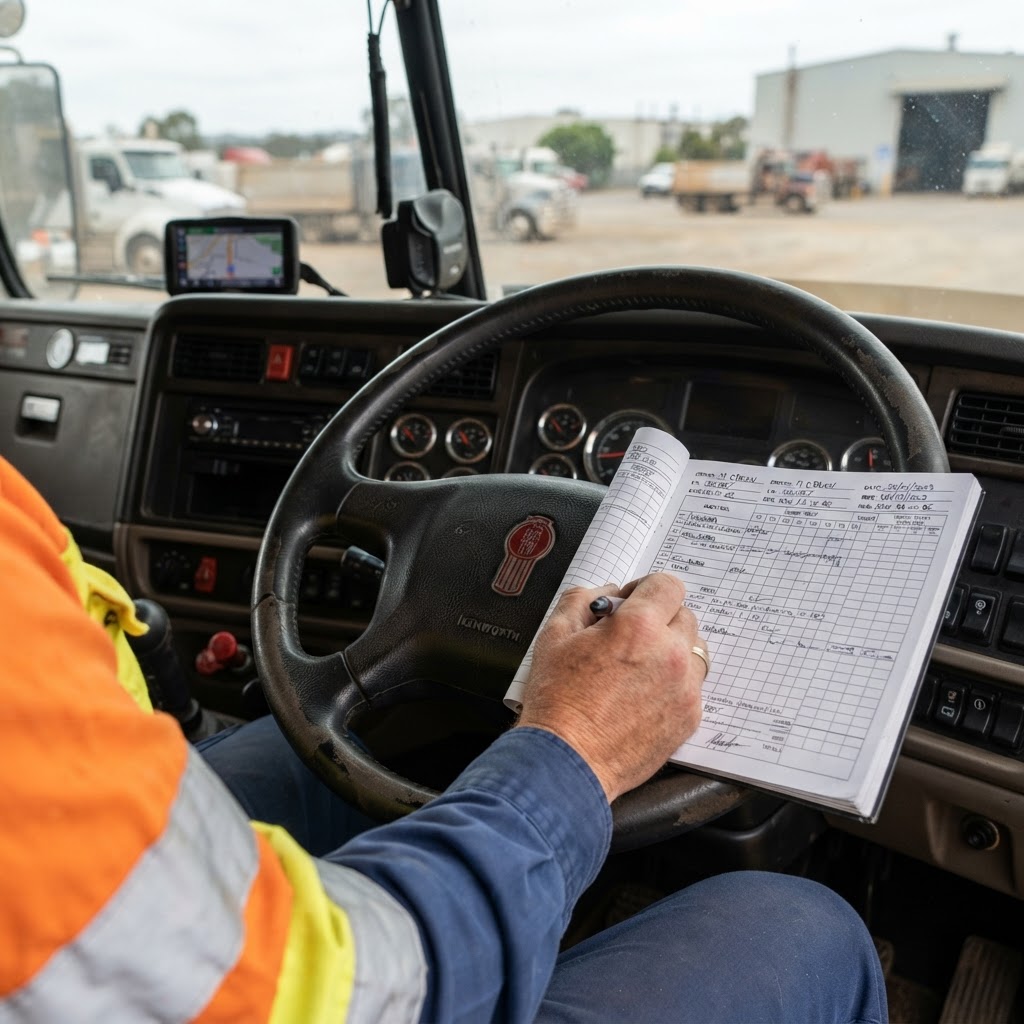
Every driver who operates a fatigue-regulated heavy vehicle more than 100km from their base must keep a work diary. This can be a paper work diary issued by the NHVR or an approved Electronic Work Diary (EWD). The work diary records all work and rest times, and must be accurate and up to date.
Drivers operating within 100km of their base do not need a work diary but must still comply with work and rest hour limits. Operators must keep records of driver rosters and schedules for all drivers, regardless of distance. You can read more about the rules on the NHVR fatigue management page or through Transport for NSW.
Which Fatigue Management Option Should You Choose?
For most NSW drivers and operators, the choice comes down to Standard Hours or BFM:
- Local and short-haul drivers: Standard Hours are usually sufficient. If you rarely exceed 10 hours of work per day, the 12-hour limit gives plenty of buffer.
- Long-haul and regional drivers: BFM is the practical choice. The extra 2 hours per day and 12 hours per week allows for longer runs without cutting into rest time.
- Large fleet operators: AFM may be worth the investment if you have complex routes and scheduling needs that fixed limits cannot accommodate.
Whatever option you choose, completing the right training is mandatory. Kells Safety Centre offers the BFM course (TLIF0005) for drivers and the schedulers fatigue management course (TLIF0006) at our Wetherill Park training centre, both delivered face-to-face in one day.
Common Compliance Mistakes to Avoid
- Counting loading time as rest: Time spent loading or unloading counts as work time, not rest. Only time where you are free to rest counts as rest.
- Not keeping a work diary: Even if you think you are under 100km, you must carry a work diary if there is any chance your route exceeds the threshold.
- Skipping breaks: The 15-minute break after 5 hours of work is mandatory under Standard Hours. Plan your route with designated rest stops.
- Exceeding limits without accreditation: Working 14 hours without BFM accreditation is a serious breach. Make sure your accreditation is current before exceeding Standard Hours.
Frequently Asked Questions
What are the maximum work hours for a heavy vehicle driver in NSW?
Under Standard Hours, a heavy vehicle driver in NSW can work a maximum of 12 hours in any 24-hour period and 72 hours in any 7-day period. Under BFM accreditation, the limits increase to 14 hours in 24 hours and 84 hours in 7 days. AFM offers flexible limits based on an NHVR-approved fatigue management plan.
How much rest does a truck driver need under Standard Hours?
Under Standard Hours, a driver must take at least 7 continuous hours of stationary rest in any 24-hour period, and at least 24 continuous hours of stationary rest in any 7-day period. Drivers must also take a minimum 15-minute rest break after every 5 hours of work time.
What is the difference between Standard Hours and BFM?
Standard Hours allow a maximum of 12 hours work per 24 hours, while BFM allows up to 14 hours. Over a 7-day period, Standard Hours cap work at 72 hours, while BFM allows up to 84 hours. BFM requires NHVR accreditation and TLIF0005 driver training, while Standard Hours do not require accreditation.
Do I need a work diary if I only drive locally in NSW?
If you operate a fatigue-regulated heavy vehicle within 100km of your base, you do not need to keep a work diary. However, you must still comply with all work and rest hour limits. If there is any chance your route may exceed 100km from base, you must carry and maintain a work diary.
What training do I need to operate under BFM in NSW?
Drivers must complete TLIF0005 (Apply a fatigue management system) to operate under BFM. Schedulers and supervisors must complete TLIF0006 (Administer a fatigue management system). Both courses are available at Kells Safety Centre in Wetherill Park NSW, delivered face-to-face in one day.
What happens if I exceed my work hour limits?
Exceeding work hour limits is a breach of the HVNL. Penalties range from infringement notices for minor breaches to court prosecution and licence suspension for serious or repeated offences. Under Chain of Responsibility laws, operators, schedulers, and managers can also be held liable for scheduling drivers to exceed limits.
Can I use an Electronic Work Diary instead of a paper one?
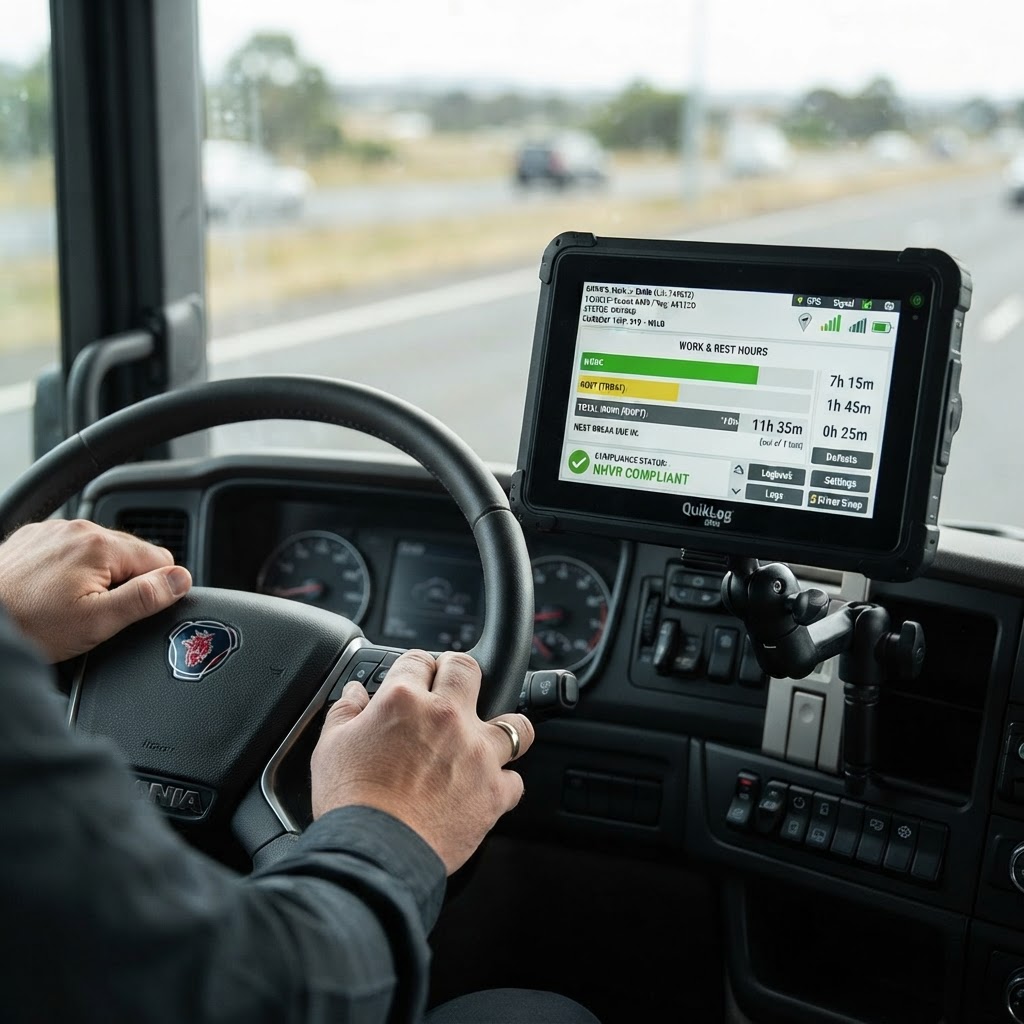
Yes. The NHVR approves Electronic Work Diaries (EWDs) that record work and rest times digitally. An approved EWD replaces the paper work diary. Drivers must ensure the EWD is NHVR-approved and functioning correctly at all times.
How does Chain of Responsibility affect work and rest hours?
Under Chain of Responsibility (CoR) laws, every party in the transport chain — including operators, schedulers, loaders, and consignors — shares responsibility for ensuring drivers do not exceed work and rest limits. A scheduler who pressures a driver to exceed the 12-hour limit can be prosecuted, even if they are not in the vehicle.
Is AFM worth it for small operators?
For most small operators, AFM is not worth the administrative burden. The application process, risk assessments, and ongoing compliance monitoring required for AFM are designed for large fleets with complex scheduling needs. BFM provides enough flexibility for the majority of NSW transport operators without the overhead of AFM.
Stay compliant with NHVR work and rest hour limits. Get the training you need at Kells Safety Centre.
View All Training Courses