
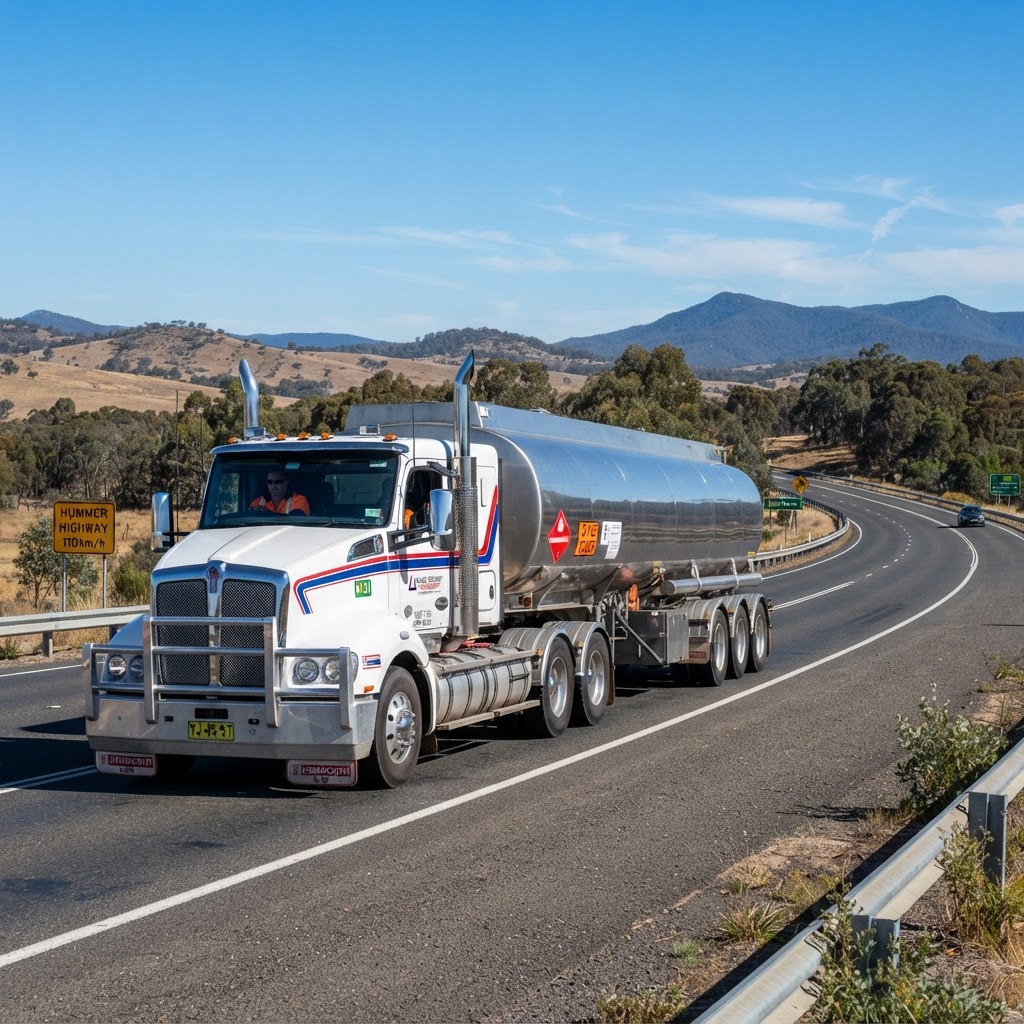
Class 3 dangerous goods are flammable liquids — the most commonly transported DG class on NSW roads. From petrol and diesel to paints, solvents, and industrial chemicals, Class 3 substances account for a significant portion of dangerous goods movements across Australia. If you drive a heavy vehicle in NSW carrying flammable liquids, you need to understand the classification, licensing, placarding, and emergency requirements that apply under the Australian Dangerous Goods (ADG) Code.
Kells Safety Centre (RTO 91528) delivers dangerous goods training in Wetherill Park and Wollongong to help NSW drivers and transport operators stay compliant with Class 3 transport rules. In this guide, we break down everything you need to know.
Need your DG licence to transport flammable liquids legally in NSW?
Enrol in the DG Licence CourseWhat Are Class 3 Dangerous Goods?
Class 3 dangerous goods are defined in the ADG Code as liquids, or mixtures of liquids, or liquids containing solids in solution or suspension, that give off a flammable vapour at temperatures of 60°C or below (closed cup test). In simple terms: if it is a liquid and it can catch fire, it is almost certainly Class 3.
The classification covers a wide range of substances transported daily across NSW — from consumer products like nail polish remover (acetone) to bulk industrial fuels. The risk with Class 3 flammable liquids is vapour ignition. A spill or leak can produce vapour that, in the right concentration with air and an ignition source, can explode or flash-fire.
Class 3 is divided into three packing groups based on the degree of danger:
- Packing Group I — Great danger (e.g. diethyl ether, carbon disulfide) — flashpoint below 23°C, initial boiling point below 35°C
- Packing Group II — Medium danger (e.g. petrol/gasoline, acetone) — flashpoint below 23°C, initial boiling point 35°C or above
- Packing Group III — Minor danger (e.g. diesel, kerosene, heating oil) — flashpoint 23°C to 60°C
The packing group determines packaging requirements, placard sizes, and some segregation rules — so knowing your substance’s packing group matters for compliance.
Common Class 3 Substances You’ll Transport in NSW
If you are driving freight in and around Sydney, Wollongong, Newcastle, or regional NSW, you will encounter these Class 3 substances regularly:
| UN Number | Proper Shipping Name | Packing Group | Common Use |
|---|---|---|---|
| UN 1203 | Petrol / Motor spirit | II | Service station fuel deliveries |
| UN 1202 | Diesel / Gas oil | III | Industrial and agricultural fuel |
| UN 1268 | Petroleum distillates | II/III | Solvents, thinners, cleaning agents |
| UN 1090 | Acetone | II | Manufacturing, nail salons, laboratories |
| UN 1133 | Adhesives | II/III | Construction, flooring, automotive |
| UN 1210 | Printing ink | II/III | Commercial printing |
| UN 1266 | Paint | II/III | Industrial, automotive, residential |
| UN 1863 | Fuel, aviation, turbine engine | III | Aviation refuelling |
This is not an exhaustive list — the ADG Code lists over 200 Class 3 entries. But these are the substances NSW drivers will most commonly see on manifests and consignment declarations.
Do You Need a Dangerous Goods Licence to Transport Class 3?
Under NSW law, administered by the NSW EPA, you need a dangerous goods licence to transport Class 3 flammable liquids in bulk — that is, in a tank vehicle or bulk receptacle with a capacity exceeding 500 litres or 500 kg.
If you are carrying packaged Class 3 goods (drums, IBCs, jerrycans) the licence requirement depends on whether the load crosses the placard load threshold. As a general rule:
- Bulk transport (tankers): DG licence always required regardless of quantity
- Packaged goods exceeding placard load threshold: DG licence required
- Packaged goods below placard load threshold: DG licence not required, but awareness training is strongly recommended
The TLILIC0001 dangerous goods licence course at Kells Safety Centre (RTO 91528) covers the full requirements for transporting all DG classes, including Class 3. The course runs over two days and includes the EPA-issued licence processing.
Transport Category Thresholds for Class 3
Under the ADG Code (Edition 7.9), Class 3 dangerous goods are assigned to transport categories that determine placard load thresholds. The transport category affects how much you can carry before placarding and additional requirements kick in.
| Transport Category | Placard Load Threshold |
|---|---|
| Category 1 | 0 kg/L — any quantity requires placarding (e.g. Packing Group I, highly flammable) |
| Category 2 | 1,000 kg/L — placards required above this threshold (e.g. most Packing Group II) |
| Category 3 | 10,000 kg/L — placards required above this threshold (e.g. most Packing Group III, including diesel) |
For most NSW drivers transporting flammable liquids, the critical threshold is 1,000 litres for Category 2 substances (petrol, most solvents). If you carry more than that in packaged form, it is a placard load — and you need a DG licence, placards on the vehicle, and compliance documentation. For a full breakdown of the calculation process, see our placard load calculator guide.
Placarding Requirements for Class 3 Loads
When your Class 3 load reaches the placard load threshold, the vehicle must display:
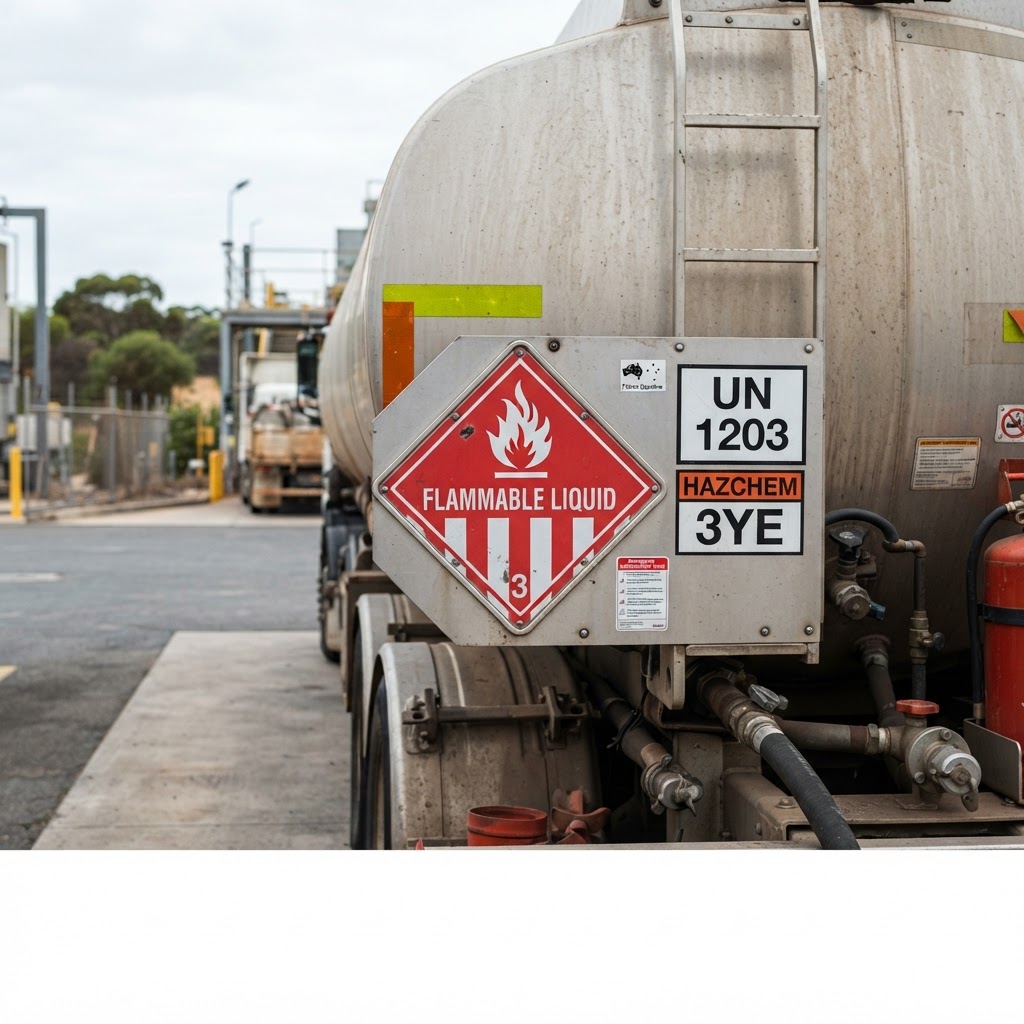
- Class label (placard): The Class 3 flammable liquid diamond — red upper half, white lower half, with the flame symbol and the number “3” at the bottom. Minimum 250mm x 250mm for bulk transport, 100mm for packaged goods.
- Emergency Information Panel (EIP): A panel showing the four-digit UN number, Hazchem code, and emergency contact details. Required for bulk transport (tank vehicles).
- Rear and front placards on the vehicle, visible from outside.
Detailed guidance on EIP specifications is available in our EIP panel guide and EIP panel types comparison. For the full placard requirements across all DG classes, see our DG placards guide.
Segregation Rules for Class 3 Flammable Liquids
Class 3 flammable liquids must be segregated from certain other dangerous goods when transported together. The ADG Code segregation table specifies which classes can and cannot be loaded on the same vehicle.
Key segregation rules for Class 3:
- Class 1 (Explosives): Must NOT be transported with Class 3
- Class 4.1 (Flammable solids): May be transported together with segregation
- Class 5.1 (Oxidisers): Must be segregated — oxidisers can ignite flammable liquids
- Class 5.2 (Organic peroxides): Must NOT be transported with Class 3
- Class 6 (Toxic substances): Generally no segregation required
- Class 8 (Corrosives): May require segregation depending on the substance
For the complete segregation rules across all DG classes, see our dangerous goods segregation rules guide. Getting segregation wrong is one of the most common compliance failures identified in NSW transport inspections.
Storage and Handling of Class 3 Dangerous Goods
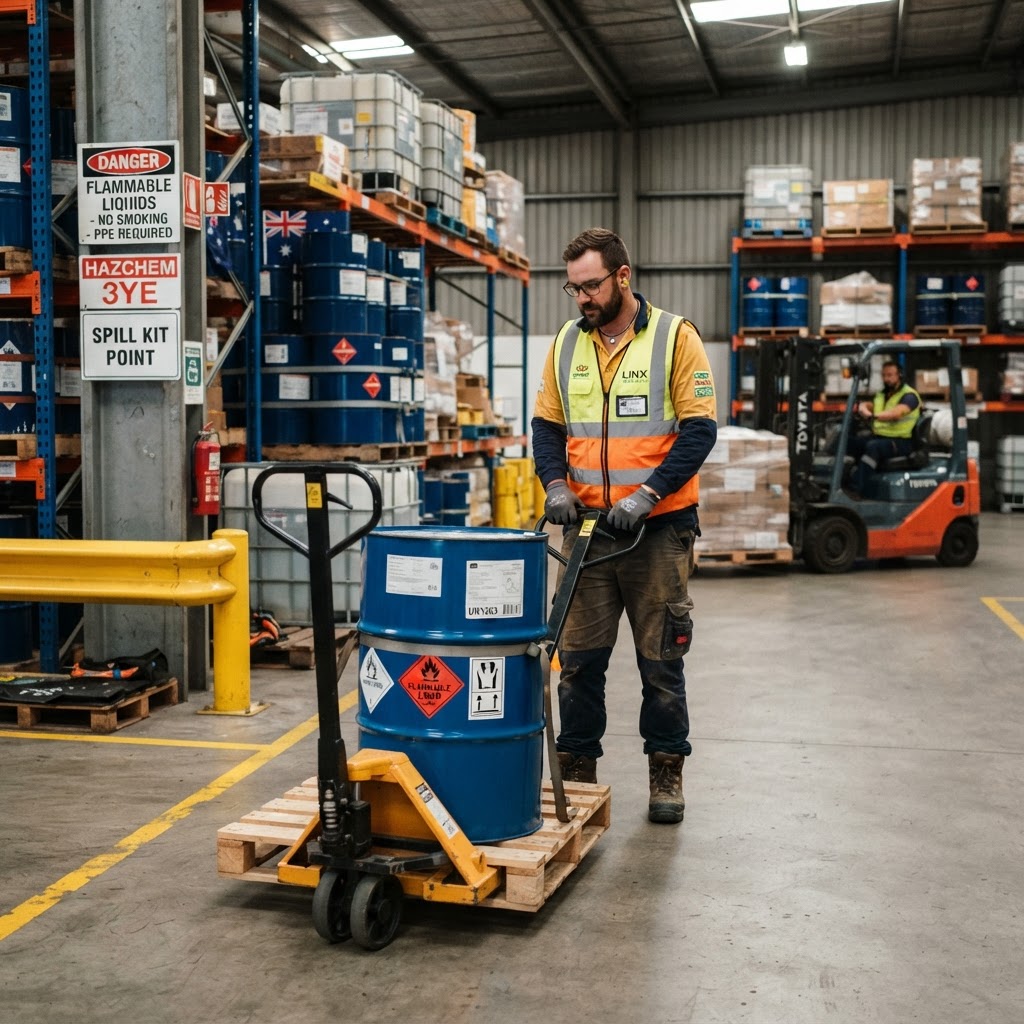
Class 3 flammable liquids are not just a transport issue — they also pose significant storage and handling risks. Warehouses, depots, and transport yards in NSW must comply with Safe Work NSW requirements for flammable liquid storage, including:
- Bunding and spill containment for all Class 3 storage areas
- Separation from ignition sources (minimum 3 metres from any spark-producing equipment)
- Appropriate fire protection — fire extinguishers rated for liquid fires (Class B)
- Maximum quantity limits based on the storage area’s fire resistance rating
- No-smoking signage and enforcement in storage zones
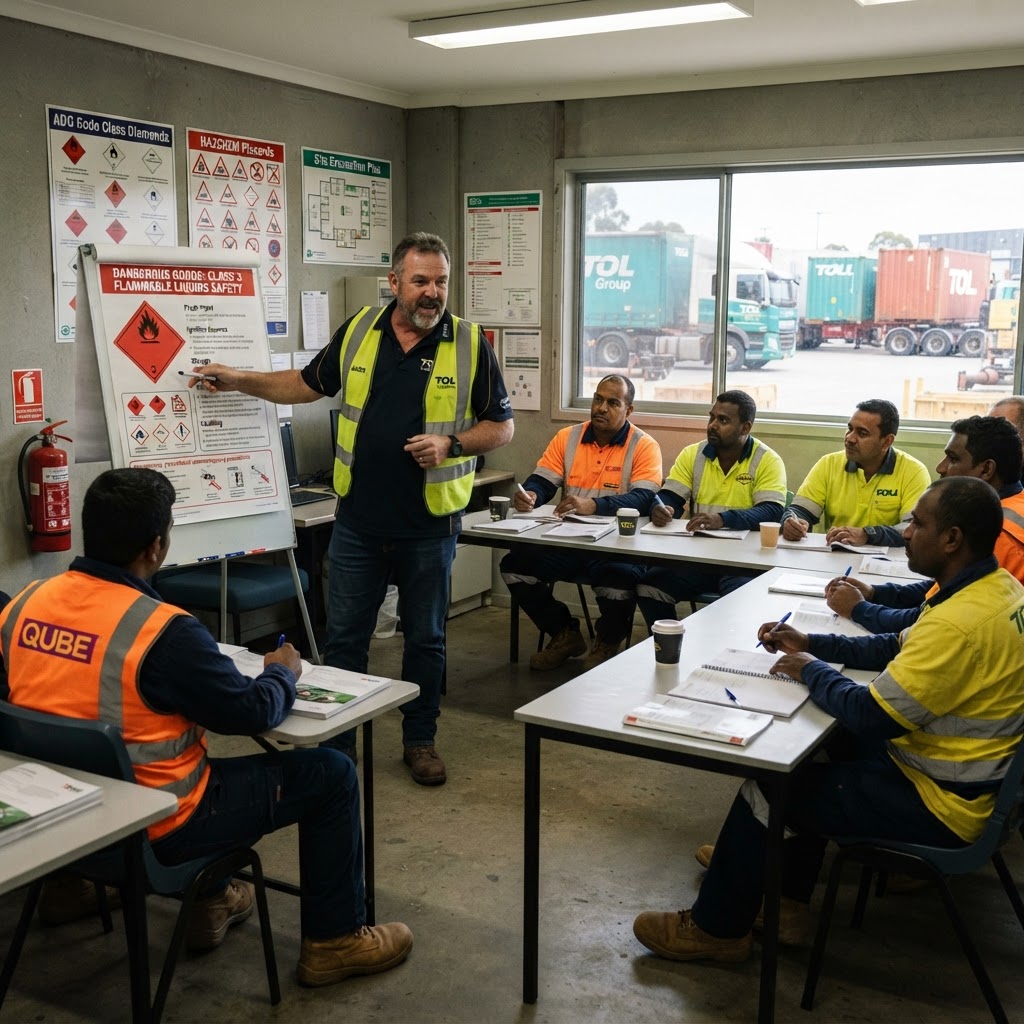
Workers handling Class 3 substances should complete store and handle dangerous goods training to understand WHS obligations under the Safe Work NSW framework.

Emergency Equipment Every Class 3 Vehicle Must Carry
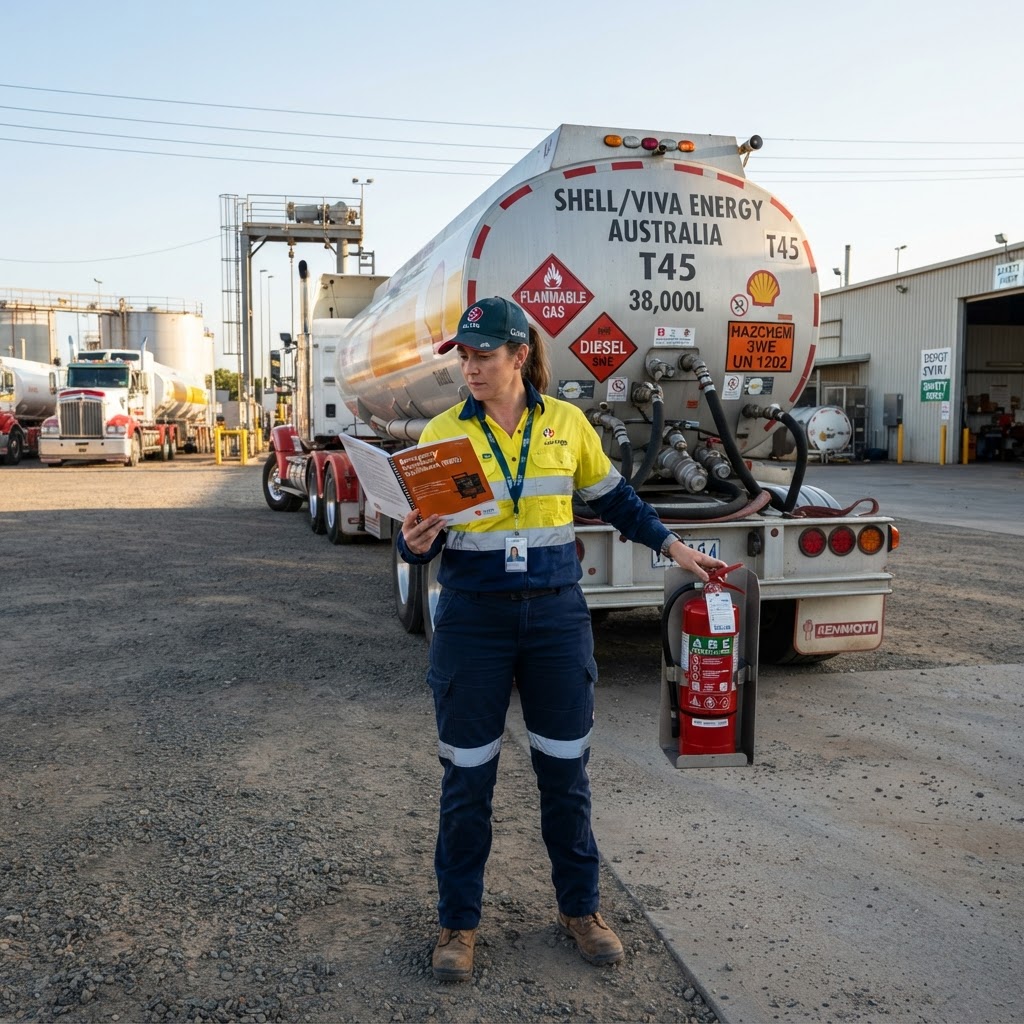
When transporting a placard load of Class 3 flammable liquids, the ADG Code requires specific emergency equipment on the vehicle. At minimum:
- Fire extinguisher(s): As specified by ADG Code Table 12.1, based on vehicle type and load. Typically a minimum of one 10B-rated or 30B-rated extinguisher.
- Personal protective equipment (PPE): Chemical-resistant gloves, safety goggles, and a high-visibility vest
- Emergency response guidebook or transport document set with operating procedures for the substance carried
- Spill kit: Appropriate for the quantity and type of flammable liquid being transported
- Wheel chocks for tank vehicles
For the right fire extinguisher ratings and sizes, see our DG fire extinguisher guide. Spill kits and other Class 3 emergency equipment are available through our safety equipment shop.
Training Requirements for Class 3 Transport
NSW transport operators moving Class 3 flammable liquids must ensure their drivers hold the appropriate qualifications. The training pathway depends on the role and the type of transport:
| Role | Required Training | Duration |
|---|---|---|
| DG bulk licence holder (tanker driver) | TLILIC0001 Dangerous Goods Licence Course | 2 days |
| Packaged DG driver (placard load) | TLILIC0001 Dangerous Goods Licence Course | 2 days |
| Warehouse / depot worker handling Class 3 | Store and Handle Dangerous Goods Course | 1 day |
| Driver below placard load threshold | DG Awareness Training (recommended) | 4 hours |
| Consignment preparer / document handler | Prepare for Transport of Dangerous Goods | 1 day |
Kells Safety Centre (RTO 91528) delivers all of these courses from our Wetherill Park training centre, with online options available for awareness and some theory components. The DG licence course is the primary credential for any driver transporting Class 3 flammable liquids in bulk or above the placard threshold.
Key Takeaways for Class 3 Transport in NSW
- Class 3 covers all flammable liquids — fuels, solvents, paints, and industrial chemicals commonly moved across NSW
- A DG licence (TLILIC0001) is required for bulk transport and packaged loads above the placard threshold
- Transport categories determine placard thresholds: 0 for Cat 1, 1,000 L/kg for Cat 2, 10,000 L/kg for Cat 3
- Class 3 segregation from oxidisers (Class 5.1) and explosives (Class 1) is mandatory
- Fire extinguisher ratings, spill kits, and PPE are essential emergency equipment for placard loads
- Workers handling Class 3 in warehouses need Store and Handle training
Kells Safety Centre (RTO 91528) delivers DG licence training, awareness courses, and store and handle courses in Wetherill Park and Wollongong. Get the qualifications you need to transport Class 3 flammable liquids legally in NSW.
View All Training CoursesFrequently Asked Questions
What are Class 3 dangerous goods?
Class 3 dangerous goods are flammable liquids — substances that give off flammable vapour at 60°C or below. This includes petrol, diesel (above flashpoint threshold), acetone, paints, solvents, and many industrial chemicals. Class 3 is one of the nine dangerous goods classes defined in the ADG Code and is the most commonly transported DG class on NSW roads.
Do I need a dangerous goods licence to transport Class 3 liquids in NSW?
You need a DG licence (TLILIC0001) if you transport Class 3 liquids in bulk (tanker) or packaged quantities above the placard load threshold. The threshold depends on the transport category: 0 for Category 1, 1,000 L/kg for Category 2, and 10,000 L/kg for Category 3. Below the threshold, a licence is not legally required but awareness training is strongly recommended.
What is the placard load threshold for Class 3 flammable liquids?
It depends on the transport category assigned to the specific substance. Most Class 3 Packing Group II substances (like petrol) are Category 2, with a 1,000 kg/L threshold. Most Packing Group III substances (like diesel) are Category 3, with a 10,000 kg/L threshold. Packing Group I substances are Category 1, where any quantity requires placarding.
What placard do I need for Class 3 dangerous goods?
The Class 3 placard is a diamond shape with a red upper half and white lower half, the flame symbol, and the number “3” at the bottom. For bulk transport, minimum 250mm x 250mm. For packaged goods, minimum 100mm x 100mm. Bulk vehicles also need an Emergency Information Panel (EIP) showing the UN number and Hazchem code.
Can I transport Class 3 with other dangerous goods classes?
Class 3 can be transported with some other classes, but must be segregated from Class 1 (explosives), Class 5.2 (organic peroxides), and requires segregation from Class 5.1 (oxidisers). The ADG Code segregation table specifies exactly which combinations are permitted and what separation distances are required.
What fire extinguisher do I need for Class 3 flammable liquids?
Class 3 flammable liquid fires require a Class B-rated fire extinguisher. The ADG Code Table 12.1 specifies the minimum B-rating based on vehicle type and load. Most placard-rated vehicles need at least a 10B-rated extinguisher, with larger tankers requiring 30B or higher. Never use a water jet on a Class 3 fire — it can spread the burning liquid.
Is diesel a Class 3 dangerous good?
Diesel (UN 1202) is classified as a Class 3 flammable liquid, but with a higher flashpoint than petrol (typically 55°C or above), placing it in Packing Group III and Transport Category 3. This means the placard load threshold for diesel is 10,000 kg/L, much higher than petrol’s 1,000 L threshold. However, bulk transport of diesel still requires a DG licence.
What training do I need to handle Class 3 in a warehouse?
Warehouse and depot workers handling Class 3 flammable liquids should complete the Store and Handle Dangerous Goods course. This covers WHS obligations, safe storage practices, spill response, and fire safety. The course is available at Kells Safety Centre in Wetherill Park and runs for one day.
Where can I get my DG licence in NSW for Class 3 transport?
Kells Safety Centre (RTO 91528) delivers the TLILIC0001 Dangerous Goods Licence course in Wetherill Park and Wollongong. The course runs over two days and includes EPA licence processing. You can enrol online or contact us for upcoming course dates.
What happens if I transport Class 3 without a DG licence in NSW?
Transporting Class 3 flammable liquids in bulk or above the placard threshold without a DG licence is an offence under NSW dangerous goods law, enforced by the NSW EPA. Penalties include significant fines and potential licence disqualification. Repeat offences can result in prosecution and criminal charges.