
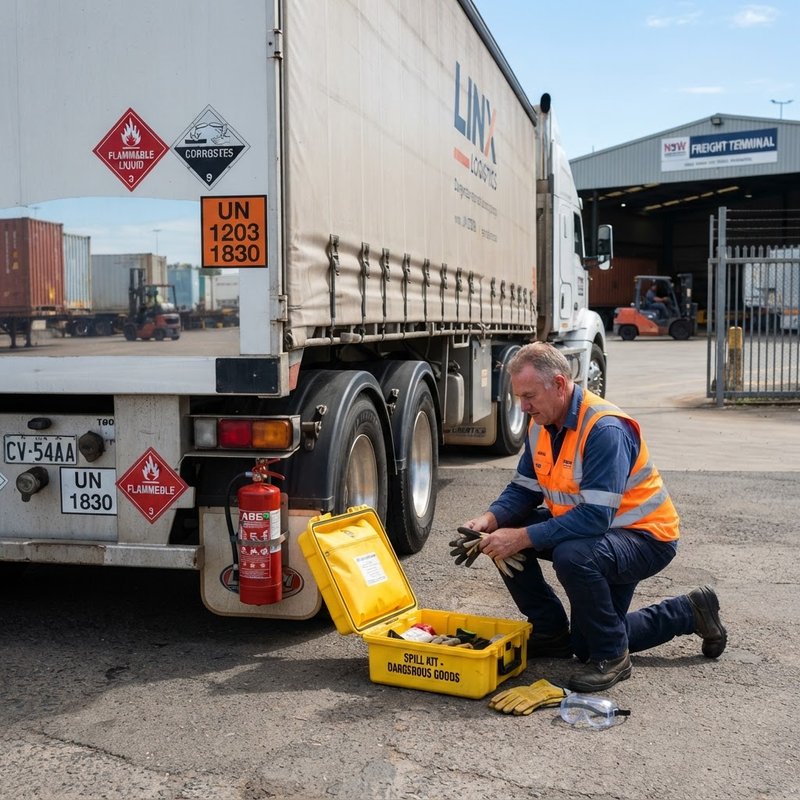
Driving a placard-loaded dangerous goods vehicle without the right emergency equipment isn’t just a compliance breach — it’s a direct risk to your life, your load, and every motorist sharing the road with you. Under the Australian Dangerous Goods (ADG) Code, every vehicle transporting placard quantities of dangerous goods must carry specific emergency equipment, and failing to carry it can result in on-the-spot fines, licence suspension, or prosecution.
In NSW, the NSW EPA enforces ADG Code compliance for dangerous goods transport. Every driver carrying a dangerous goods licence needs to know exactly what equipment their vehicle must carry, where it must be stored, and how to use it in an emergency. This checklist covers the complete list — from fire extinguishers and spill kits to PPE, EIP panels, and written emergency procedures.
Quick Summary: What Every Placard Vehicle Must Carry
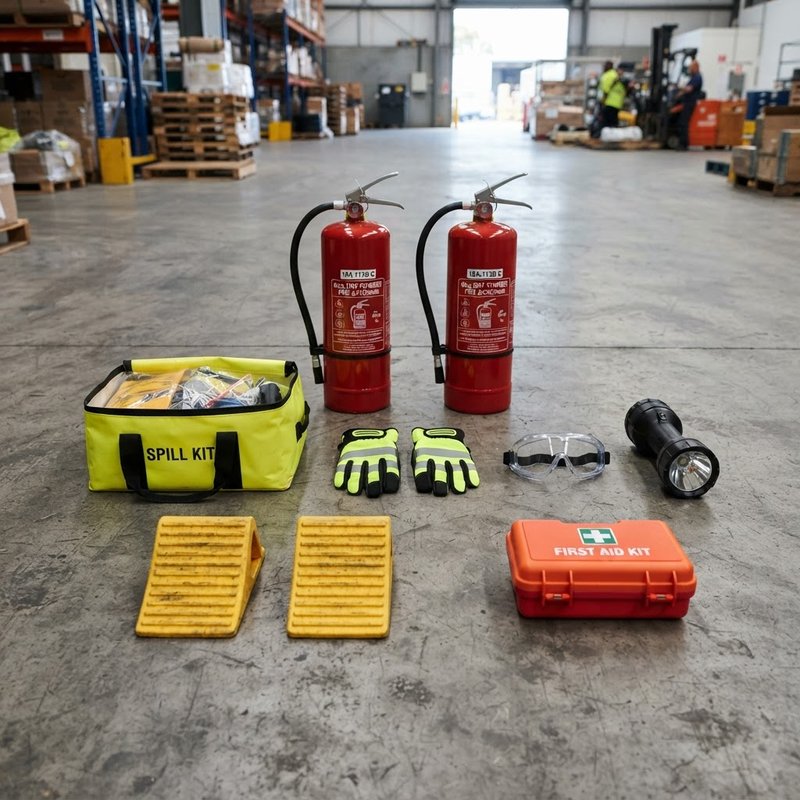
Under ADG Code Chapter 8, a placard vehicle transporting dangerous goods by road in NSW must carry:
- Fire extinguisher(s) — minimum capacity and quantity depend on vehicle size
- Personal protective equipment (PPE) — gloves, goggles, protective clothing
- Spill kit — appropriate for the dangerous goods class being carried
- Emergency information panel (EIP) — mounted on both sides and rear
- DG class placards — displayed on all four sides of the vehicle
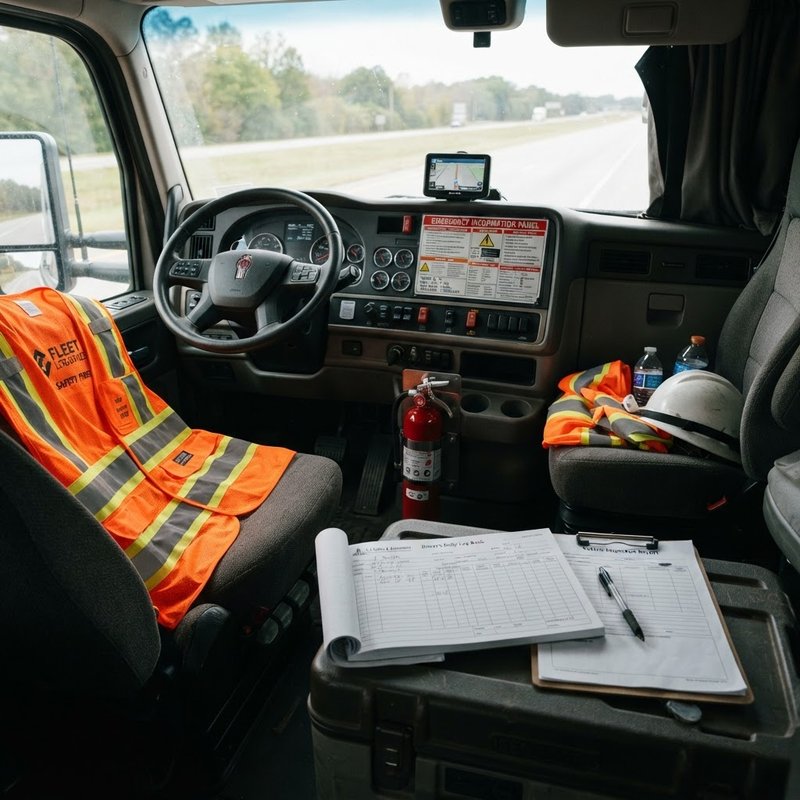
- Written emergency procedures — carried in the cab, accessible to the driver
- Wheel chocks — where the vehicle is a tank vehicle or has a capacity over 3,500L
- Torch/flashlight — working and accessible
- First aid kit — standard workplace kit
If you’re a driver or operator in NSW, the team at Kells Safety Centre (RTO 91528) covers the full ADG Code emergency equipment requirements in our TLILIC0001 Dangerous Goods Licence Course and Dangerous Goods Awareness Course. Understanding what to carry — and why — is central to passing your assessment and staying compliant on the road.
Why Emergency Equipment Matters for DG Transport
Dangerous goods incidents on NSW roads happen every year — spills, fires, leaks, and roll-overs. When they do, the difference between a contained incident and a catastrophe comes down to two things: driver training and emergency equipment. The ADG Code sets out minimum equipment requirements precisely so that drivers can respond immediately to an incident before emergency services arrive.
Safe Work NSW and the NSW EPA both enforce these requirements. A driver caught transporting placard quantities without the correct fire extinguisher or spill kit faces not only financial penalties but potential criminal charges if an incident occurs and equipment was missing.
The Complete DG Emergency Equipment Checklist
1. Fire Extinguishers
Every placard vehicle must carry at least one fire extinguisher. The minimum requirements under ADG Code Chapter 8.1.5 depend on the vehicle’s gross mass:
- Vehicles under 3.5 tonnes: at least one 2.5 kg dry powder extinguisher
- Vehicles 3.5 to 12 tonnes: at least two extinguishers with a combined minimum of 8 kg dry powder
- Vehicles over 12 tonnes: at least two extinguishers with a combined minimum of 12 kg dry powder
Extinguishers must be inspected and tested regularly, mounted securely, and easily accessible from the cab. For a detailed breakdown of fire extinguisher sizes and ratings for DG vehicles, see our DG fire extinguisher size guide.
2. Spill Kits
A spill kit appropriate to the dangerous goods class being transported must be carried on every placard vehicle. Different DG classes require different absorbents — a general-purpose kit won’t necessarily handle a Class 8 corrosive spill or a Class 3 flammable liquid leak. Spill kits should include absorbent pads, booms, disposal bags, and PPE. For a complete class-by-class breakdown, see our spill kits by DG class guide and browse available safety equipment.
3. Personal Protective Equipment (PPE)
Drivers must carry PPE suitable for the class of dangerous goods on board. At minimum, this includes chemical-resistant gloves, safety goggles, and protective clothing. For certain classes, respiratory protection may also be required. PPE must be stored in a location that is accessible without entering the load area.
4. Emergency Information Panels (EIPs)
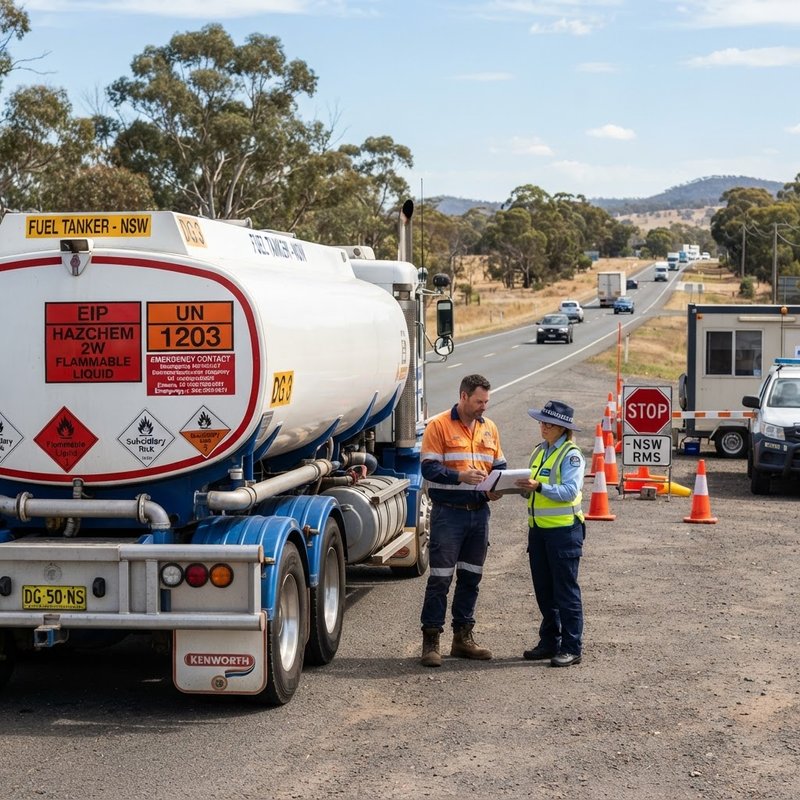
The EIP is one of the most critical pieces of emergency information on a DG vehicle. It displays the Hazchem code, emergency contact number, and other critical response information. EIPs must be mounted on both sides and the rear of the vehicle, clearly visible. For a comparison of EIP panel types, see our EIP panel types comparison guide.
5. DG Class Placards
Class placards (diamond-shaped labels showing the DG class number and hazard symbol) must be displayed on all four sides of the vehicle when carrying placard quantities. Placards must be at least 250mm x 250mm, weather-resistant, and clearly visible. For the full ADG Code requirements on placards and vehicle markings, see our DG vehicle marking requirements guide.
6. Written Emergency Procedures
A written emergency plan must be carried in the cab, accessible to the driver at all times. This document must include: the Hazchem code for the load, emergency contact numbers, procedures for spill containment, fire response, evacuation, and notification of authorities. The emergency procedures should be specific to the classes of dangerous goods being carried.
7. Wheel Chocks
For tank vehicles and any vehicle with a capacity over 3,500 litres, at least one wheel chock must be carried. The chock must be sized appropriately for the vehicle’s wheel diameter and must be used whenever the vehicle is parked during loading, unloading, or emergency stops.
8. Additional Equipment
- Working torch/flashlight (accessible from cab)
- First aid kit (standard workplace kit, in date)
- Two reflective warning triangles or portable warning devices
- Basic hand tools for emergency use (e.g. adjustable wrench)
Ensure your drivers are trained in DG emergency equipment and response procedures. Enrol in the DG Licence Course at Kells Safety Centre
How Equipment Requirements Vary by DG Class
The ADG Code doesn’t treat all dangerous goods the same way. Different classes carry different risks, and the emergency equipment requirements reflect that. For example, a vehicle carrying Class 3 flammable liquids needs fire-ready equipment and vapour-suppressing foam, while a Class 8 corrosive load needs corrosion-resistant PPE and neutralising absorbents. Understanding your load’s class and its specific Hazchem code tells you exactly what equipment you need.
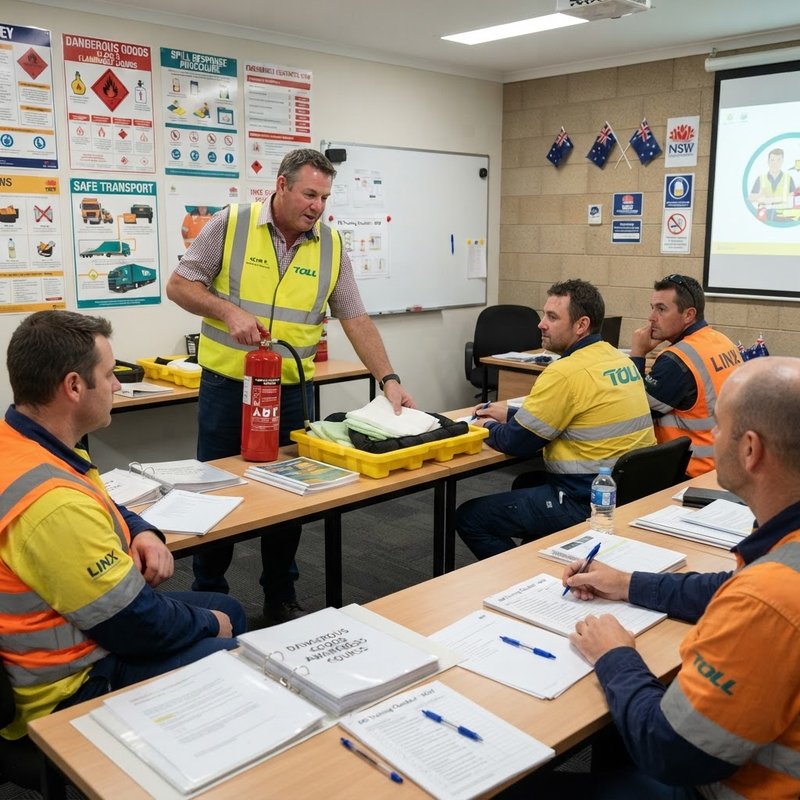
Drivers in our Store and Handle Dangerous Goods course learn class-specific equipment requirements hands-on, including correct PPE selection, spill response procedures, and storage segregation rules for warehouse and transport environments.
Who Is Responsible for Emergency Equipment?
Under Chain of Responsibility (CoR) laws, both the driver and the operator share responsibility for ensuring the vehicle carries the correct emergency equipment. The driver must check equipment before departure and at each stop. The operator must ensure the vehicle is equipped, that equipment is maintained and in date, and that drivers are trained to use it. A missing fire extinguisher or expired spill kit is a breach for both parties.
Kells Safety Centre covers CoR obligations in its TLILIC0001 course and fatigue management courses, ensuring drivers understand their personal liability as well as their employer’s. For route compliance including restricted roads and tunnel conditions, see our DG route planning guide.
Common Equipment Failures Found During Inspections
- Fire extinguishers past test date or discharged
- Spill kit wrong class for the load being carried
- PPE missing gloves or goggles (incomplete sets)
- EIP faded, damaged, or displaying incorrect Hazchem code
- Written emergency procedures not carried in the cab
- Wheel chocks absent on tank vehicles
- Torch batteries flat or missing
NSW EPA and Safe Work NSW inspections target exactly these items. Drivers should conduct a pre-departure check every time the vehicle is loaded with placard quantities.
How to Check Your Equipment Before Every Trip
- Verify fire extinguisher gauge is in the green zone and test tag is current
- Confirm spill kit is sealed, in date, and correct for your DG class
- Check PPE is present, undamaged, and accessible from the cab
- Inspect EIP panels for legibility and correct Hazchem code for the load
- Verify class placards are displayed on all four sides
- Confirm written emergency procedures are in the cab and current
- Test torch is working
- Check wheel chocks are present (if required for your vehicle type)
Frequently Asked Questions
What emergency equipment must a dangerous goods vehicle carry in NSW?
Under ADG Code Chapter 8, a placard vehicle transporting dangerous goods must carry fire extinguisher(s), a spill kit appropriate to the DG class, PPE (gloves, goggles, protective clothing), an emergency information panel on both sides and rear, class placards on all four sides, written emergency procedures, wheel chocks (for tank vehicles and capacity over 3,500L), a working torch, and a first aid kit. The exact requirements depend on the vehicle’s gross mass and the class of dangerous goods being carried.
How many fire extinguishers does a DG truck need in NSW?
The minimum number and capacity of fire extinguishers depends on the vehicle’s gross mass. Vehicles under 3.5 tonnes need at least one 2.5 kg dry powder extinguisher. Vehicles between 3.5 and 12 tonnes need at least two extinguishers with a combined minimum of 8 kg. Vehicles over 12 tonnes need at least two extinguishers with a combined minimum of 12 kg of dry powder. All extinguishers must be tested, tagged, and mounted securely.
Do I need a different spill kit for each dangerous goods class?
Yes. Different DG classes require different absorbents and response materials. A general-purpose spill kit may not safely contain a Class 8 corrosive or a Class 3 flammable liquid. The spill kit you carry must be appropriate for the specific class of dangerous goods on your vehicle. Drivers should check that the kit matches the load class before every trip.
What is an EIP and why is it required on a DG vehicle?
The Emergency Information Panel (EIP) is a panel mounted on both sides and the rear of a dangerous goods vehicle. It displays critical emergency response information including the Hazchem code, emergency contact number, and product details. The EIP tells emergency responders exactly how to handle an incident involving your load. It must be clearly visible, legible, and accurate for the current load.
Who checks DG emergency equipment during inspections?
In NSW, the NSW EPA and Safe Work NSW conduct inspections of dangerous goods vehicles. Inspectors check fire extinguishers, spill kits, PPE, EIP panels, placards, and written emergency procedures. Both the driver and the operator can be held responsible for missing or non-compliant equipment under Chain of Responsibility laws.
Can I transport dangerous goods without an EIP?
No. The Emergency Information Panel is mandatory for any vehicle transporting placard quantities of dangerous goods. Operating without an EIP is a serious breach of the ADG Code and can result in immediate fines, vehicle impoundment, and prosecution. The EIP must display accurate Hazchem information for the current load at all times.
Where should emergency equipment be stored on a DG vehicle?
Fire extinguishers must be mounted securely and accessible from the cab. PPE must be stored where the driver can access it without entering the load area. Spill kits should be easily accessible from outside the vehicle. Written emergency procedures must be kept in the cab. All equipment must be stored in a way that it can be retrieved quickly in an emergency.
Does Kells Safety Centre teach emergency equipment requirements?
Yes. Kells Safety Centre (RTO 91528) covers the full ADG Code emergency equipment requirements in its TLILIC0001 Dangerous Goods Licence Course, Dangerous Goods Awareness Course, and Store and Handle Dangerous Goods course. Drivers learn what equipment is required, how to check it, and how to use it in real emergency scenarios at our Wetherill Park training centre.
Make sure your drivers know exactly what emergency equipment their vehicle needs. View all training courses at Kells Safety Centre