When dangerous goods are involved in a road incident, the first 10 minutes matter most. How a driver responds — and how prepared they are — can be the difference between a contained spill and a major emergency.
This guide covers what NSW dangerous goods drivers need to know about emergency response: legal obligations, the steps to take at an incident scene, and how proper DG training prepares you to act correctly under pressure.
Kells Safety Centre (RTO 91528) delivers the TLILIC0001 Dangerous Goods Licence course at Wetherill Park and Wollongong. View all training courses →
Why Emergency Response Is a Core DG Competency
The Australian Dangerous Goods Code (ADG Code) requires that drivers transporting dangerous goods above the placard quantity are trained in emergency response procedures. This is a mandatory competency within the TLILIC0001 Dangerous Goods Licence — not an optional add-on.
Incidents involving DG vehicles can include:
- Leaks or spills from packaging failures or collision damage
- Fire involving the vehicle or load
- Vehicle rollover with tank or IBC compromise
- Road traffic accidents with secondary hazard risk from the cargo
In each scenario, the driver’s training determines whether the situation is managed safely or escalates into a public health and safety incident.
Immediate Steps at a Dangerous Goods Incident
If you’re involved in or first on the scene of a DG incident in NSW, the priority sequence is:
1. Assess and protect yourself first
Do not approach the vehicle if there is fire, visible vapour cloud, or strong chemical odour without appropriate PPE. Your safety comes first. An injured or incapacitated driver cannot help anyone.
2. Call 000 immediately
Report the incident to emergency services. Provide:
- Your exact location (GPS coordinates if available, otherwise landmarks and road name)
- The nature of the incident (crash, spill, fire)
- The hazchem code and UN number from the vehicle placards
- Visible signs of leakage, fire, or vapour
- Number of people involved or injured
3. Use the Emergency Information Panel (EIP)
The EIP fitted to the vehicle contains the hazchem code, UN number, and an emergency contact telephone number — a 24/7 line staffed by DG specialists who can advise first responders on the specific hazards involved. This number must be provided to emergency services.
4. Refer to the Emergency Response Guide
Drivers must carry the relevant Emergency Response Guide (ERG) or equivalent documentation for the goods on board. The guide provides hazard information, protective action distances, and first-response advice for the specific class of goods.
5. Secure the scene
If safe to do so:
- Switch off the vehicle ignition
- Apply the handbrake and engage wheel chocks if available
- Keep bystanders and other vehicles at a safe distance
- Place warning triangles upwind and at the distances set out in the ADG Code
- Do not allow smoking or open flames near the scene
6. Contain the spill if safe
Only if trained and if it’s safe to do so, use your on-board spill kit to contain minor leaks. Do not attempt to manage a major spill or fire — this is the role of hazmat-trained emergency services.
What Must Be on Board for Emergency Response
ADG Code requirements for DG vehicles include carrying specific emergency equipment. Before every run, verify:
- ☐ Emergency Information Panel (EIP) fitted and legible
- ☐ Emergency Response Guide (or equivalent documentation) in the cab
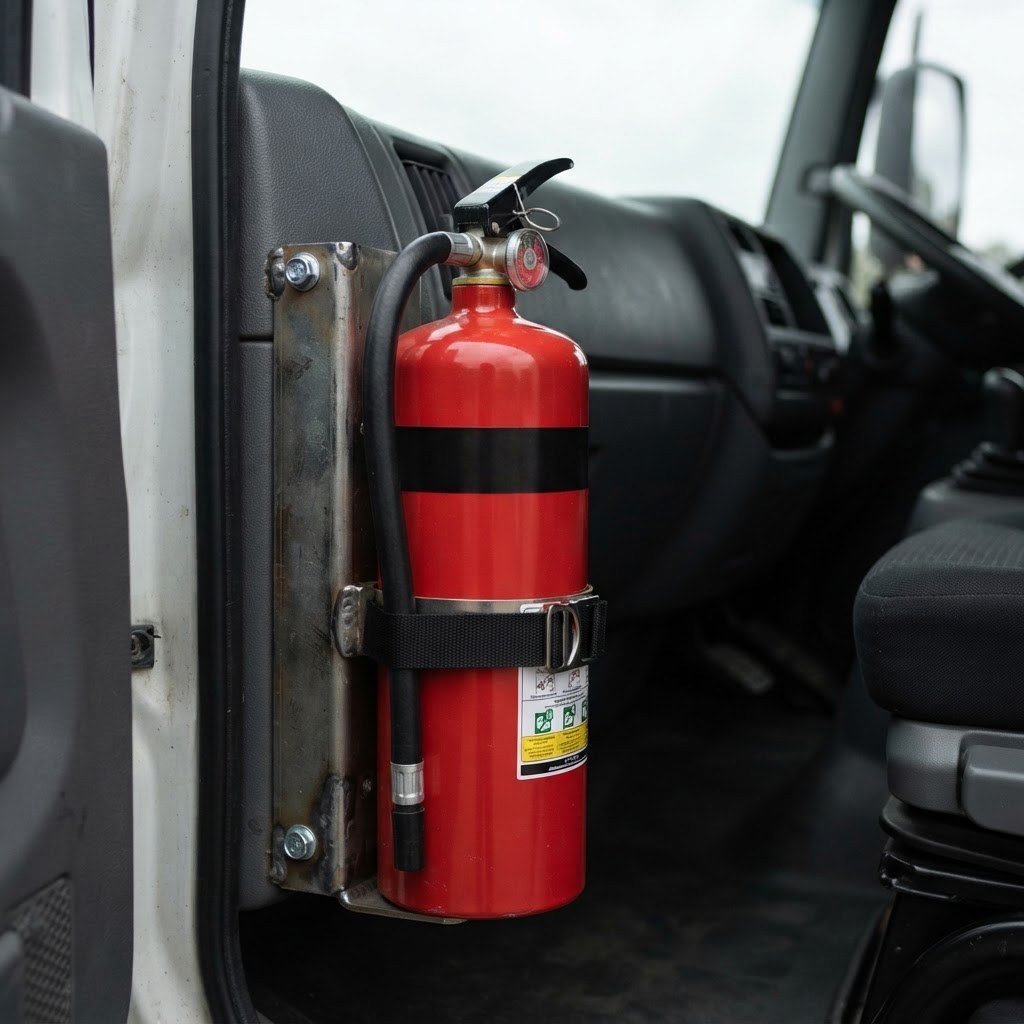
- ☐ Fire extinguisher — correct type for the load, in-date, accessible
- ☐ Spill kit appropriate to the goods being transported
- ☐ PPE appropriate to the hazard class (gloves, goggles, overalls)
- ☐ Dangerous goods consignment note with emergency contact number
Our full Dangerous Goods Transport Compliance Checklist covers pre-trip requirements in detail.
Loaders, warehouse staff, and anyone who handles DG loads need to understand emergency procedures too. Kells delivers an accredited DG Awareness course for support staff across NSW.
Chain of Responsibility at a DG Incident
Under the Heavy Vehicle National Law and NSW dangerous goods legislation, Chain of Responsibility (CoR) extends into incident management. If an investigation finds that a DG incident was caused or worsened by inadequate training, missing equipment, or non-compliant loading — everyone in that chain can face liability.
Need to get certified? Kells Safety Centre (RTO 91528) delivers Dangerous Goods Licence (TLILIC0001) in Wetherill Park and Wollongong, NSW.
This includes:
- Employers who sent an unlicensed driver or failed to ensure emergency equipment was fitted
- Consignors who provided incorrect documentation or improperly packaged goods
- Schedulers who dispatched a vehicle knowing of a compliance gap
The NHVR’s Chain of Responsibility guidelines apply to the full transport chain — not just the driver behind the wheel.
How DG Licence Training Prepares Drivers for Emergencies
The TLILIC0001 Dangerous Goods Licence course delivered by Kells Safety Centre includes emergency response as a core practical unit. Participants learn:
- How to read and interpret hazchem placards and the ADG Code hazard table
- The correct sequence of emergency actions for different DG classes
- How to use the Emergency Response Guide and EIP contact system
- Spill containment procedures for common goods classes
- Fire extinguisher types — which to use and when not to use them
- Communication with emergency services — what information to provide
The course is delivered face-to-face over 2 days at Kells’ Wetherill Park and Wollongong locations. Assessment includes both written and practical components. A current DG licence is the minimum standard for anyone transporting bulk dangerous goods in NSW.
Frequently Asked Questions
Am I required to stop and respond at a DG incident I didn’t cause?
All road users in NSW have a duty of care under general road rules to stop and render assistance at an accident scene. If you are a licensed DG driver and have appropriate emergency equipment, you may be able to assist — but only if it is safe to do so. Call 000 first regardless.
What is the hazchem code and how do I read it?
The hazchem code appears on the Emergency Information Panel fitted to DG vehicles. It’s a 2-3 character code that tells first responders what firefighting media to use, what PPE is required, and whether evacuation is needed. Your DG licence training covers hazchem interpretation in detail.
Can I use any fire extinguisher on a DG vehicle fire?
No. The correct extinguisher type depends on the class of goods. Using the wrong type can accelerate a fire or cause a chemical reaction. DG licence training covers extinguisher selection and use for different hazard classes.
What happens if I don’t have an Emergency Response Guide on board?
Carrying the ERG or equivalent documentation is a legal requirement under the ADG Code for placardable loads. Missing documentation is an enforceable offence and can result in fines and vehicle prohibition.
Does DG awareness training cover emergency response?
Yes — the DG Awareness course includes an introduction to emergency procedures, appropriate for staff who handle or work near DG but don’t drive. The full DG licence course provides deeper emergency response training for drivers.
How do I get a DG licence that includes emergency response training?
Enrol in the TLILIC0001 Dangerous Goods Licence course at Kells Safety Centre. The 2-day course covers all ADG Code competencies including emergency response, placarding, documentation, and load compliance. Delivered in Wetherill Park and Wollongong.
Kells Safety Centre (RTO 91528) delivers accredited dangerous goods training across NSW. View all courses and enrol today →
Ready to Book Your Training?
Accredited transport safety courses — Wetherill Park & Wollongong. EPA processing included. RTO 91528.